Licensed and insured concrete and masonry contractors serving Central Florida. Quality work, honest pricing, no surprises.
Contact Info
Not all garage floor coatings are built the same — and in Florida's climate, the wrong choice shows fast. Here's what you need to know before you commit.
If you’ve ever watched a garage floor coating peel up six months after installation, you already know the frustration. It looked great on day one. Then it didn’t. And now you’re wondering whether the product failed, the installer cut corners, or both.
The truth is usually somewhere in the middle — and it almost always comes back to preparation, product chemistry, and whether the contractor actually understood what they were working with. This guide covers all of it. By the time you finish reading, you’ll know the difference between coating types, what makes each one perform or fail, and what to look for when you’re hiring someone to do the work.
Epoxy has been the standard garage floor coating for decades, and for good reason — it bonds well to concrete, holds up to light chemical exposure, and comes in a wide range of colors and finishes. A properly installed epoxy system can look sharp and last several years without much maintenance.
That said, “properly installed” is doing a lot of work in that sentence. Epoxy is sensitive to surface prep, moisture, and temperature during application. When any of those variables are off, the coating doesn’t fail slowly — it fails visibly, and usually sooner than you’d expect.
Standard epoxy has a well-documented weakness in climates like Lake County: it yellows under UV exposure. Not over decades — over months. A garage in Clermont or Eustis that gets morning or afternoon sunlight through the door opening can show visible discoloration within a year of installation. If you’ve seen a garage floor that looked almost greenish-yellow where the light hits, that’s epoxy doing what epoxy does in this region.
Heat is the other issue. Concrete surface temperatures in Central Florida can exceed 120°F in direct summer sun. When you park a car that’s been sitting in that heat, the warm rubber tires can bond slightly to the softened epoxy surface. When the car moves, it pulls. Over time, this is how you get those characteristic tire-mark patches where the coating lifts away from the slab. It’s called hot tire pickup, and it’s one of the more common coating complaints we hear from homeowners across Lake County.
None of this means epoxy is a bad product. It means epoxy is a product that requires the right topcoat — specifically a UV-stable polyaspartic finish — to perform reliably in this environment. A two-coat system with an epoxy base and a polyaspartic topcoat addresses the yellowing and heat sensitivity directly. The problem is that not every contractor uses that system, and not every homeowner knows to ask.
The other thing worth understanding is that epoxy’s performance ceiling is largely determined before the first coat ever goes down. Up to 80% of coating failures trace back to surface preparation, not the product itself. Acid washing alone — which some contractors still use — doesn’t open the concrete pores deeply enough for a mechanical bond. Diamond grinding is the professional standard, and it’s the difference between a coating that lasts and one that starts lifting at the edges within a year.
A lot of homeowners don’t know what a professional epoxy installation involves until after they’ve hired someone who skipped half the steps. Here’s what the process should look like when it’s done right.
It starts with moisture testing. Lake County’s concrete slabs — especially in an area with over 1,000 lakes — sit above soil that holds moisture year-round. That moisture moves upward through the slab as vapor, and if there’s no vapor barrier and the slab is too wet, the coating will bubble from below. A contractor who doesn’t test for moisture before applying anything is taking a shortcut that often ends badly.
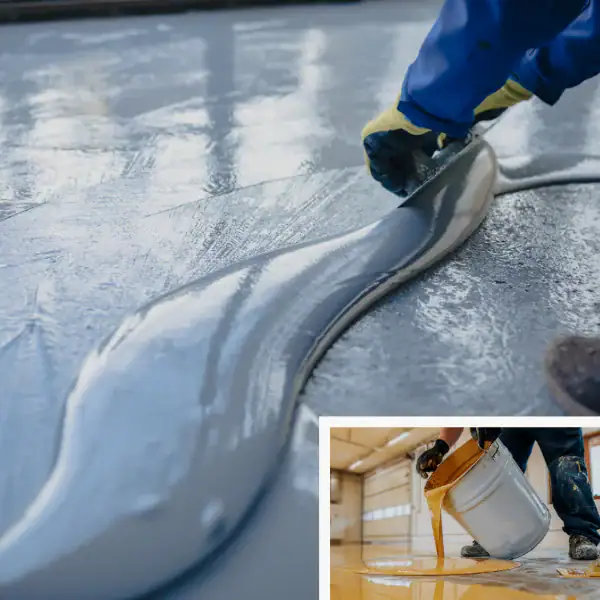
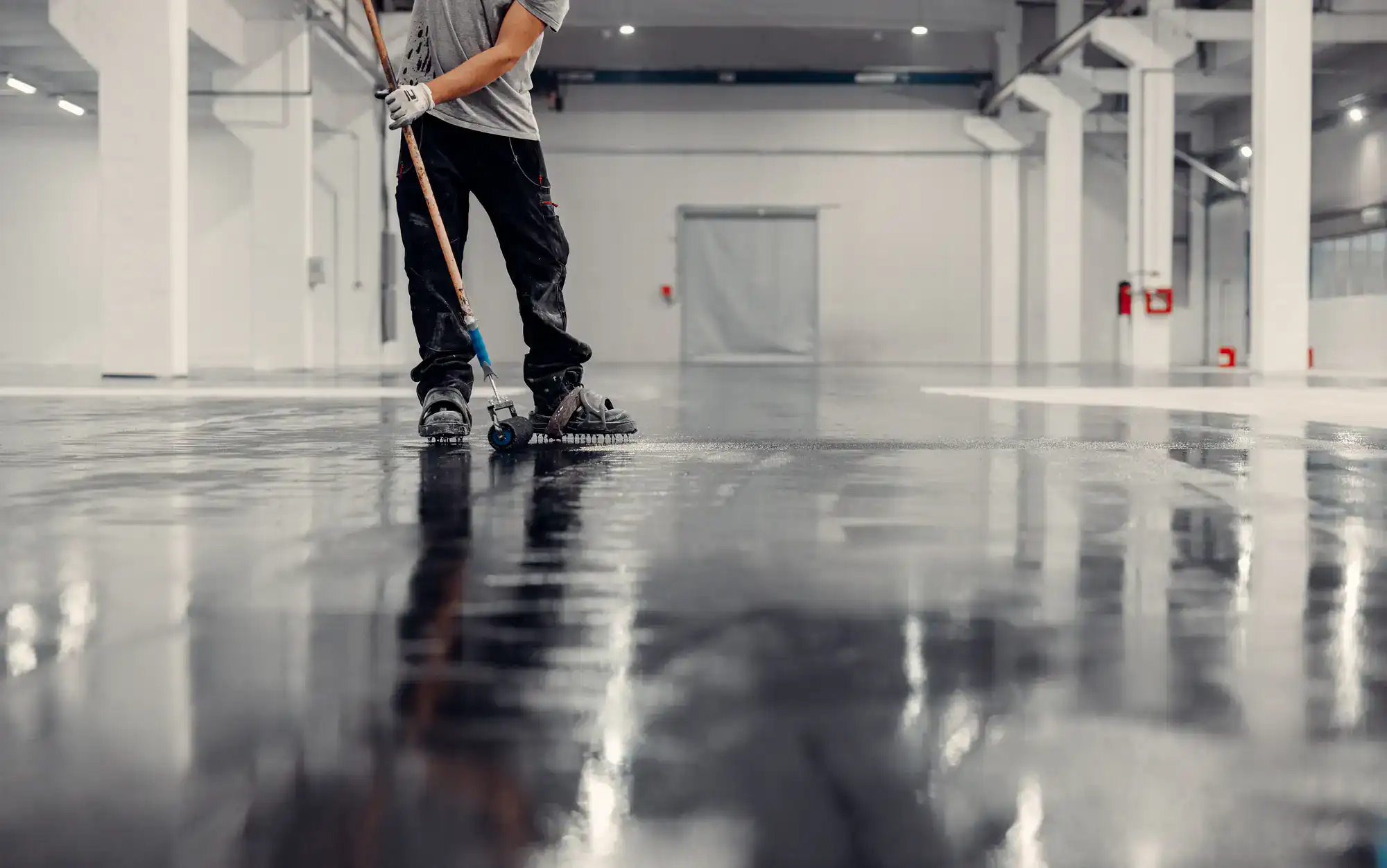
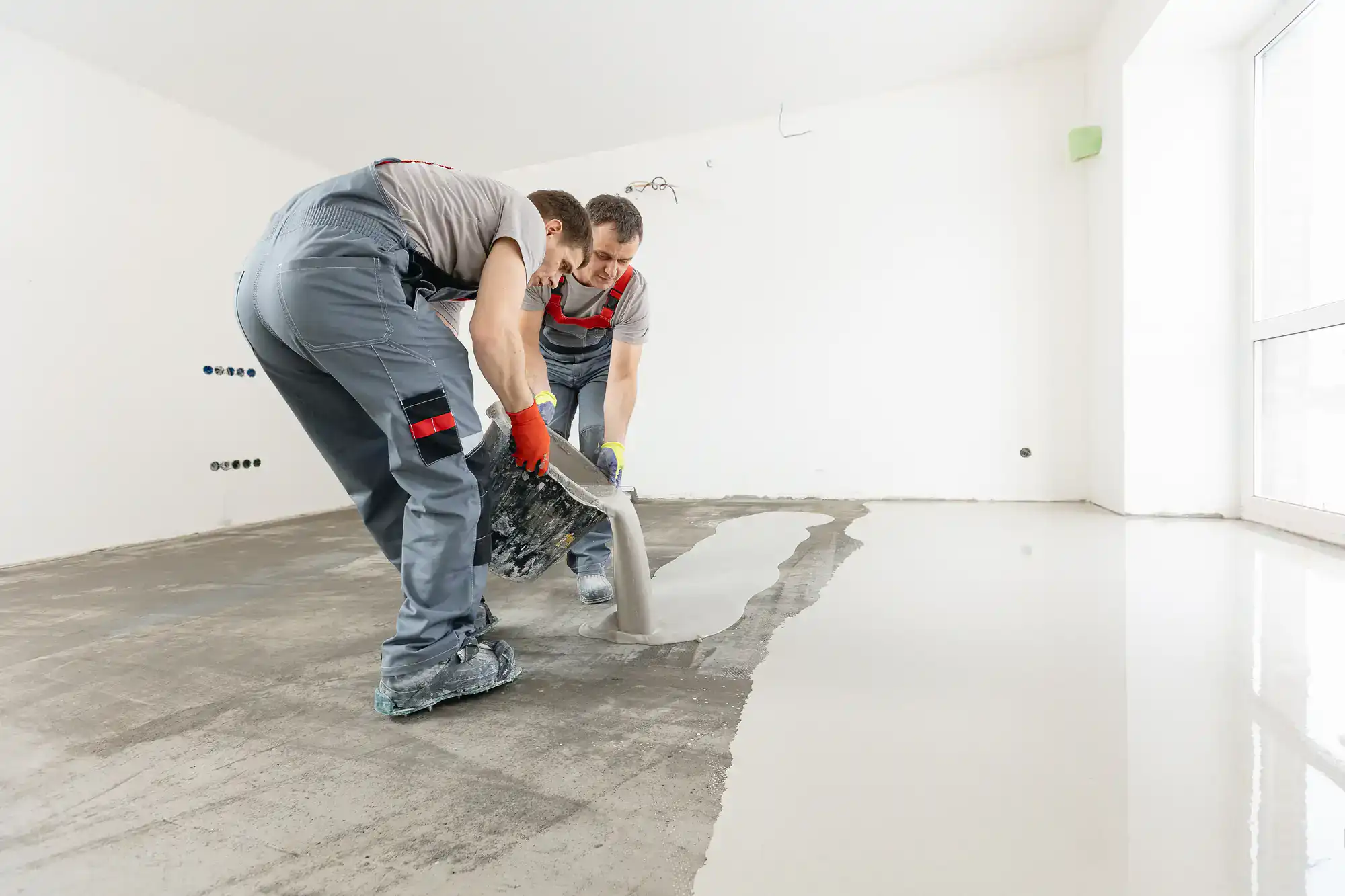
After moisture testing comes surface preparation. Diamond grinding profiles the concrete — it opens the pores and creates the mechanical texture the coating needs to grip. Then any cracks or divots get filled with a fast-cure polymer patch before the primer coat goes down. From there, it’s a primer, a base coat, the decorative layer (usually vinyl flakes or a solid color), and a clear topcoat. Each layer has a purpose, and skipping any of them compromises the system.
What we bring to this process that a flooring-only contractor typically can’t is a masonry-trained perspective on the substrate itself. We assess the concrete before we coat it — looking for structural issues, moisture infiltration points, and surface instability that would cause problems down the line. Coating over a compromised slab without addressing the underlying issues is one of the most common reasons floors fail prematurely. Our background in masonry means we catch those things before they become your problem after the job is done.
Want live answers?
Connect with a Stone Forge USA expert for fast, friendly support.
Polyurea is a newer coating chemistry that has largely replaced epoxy as the professional standard for residential garage floors, and the reasons are straightforward. It’s more flexible, more durable, UV-stable, and it cures dramatically faster — a polyaspartic topcoat (which is a subtype of polyurea) can be ready for foot traffic in 30 to 60 minutes.
For homeowners in Lake County who need their garage back in service quickly, that cure time alone is a significant advantage. You’re not shutting down your garage for two days. A professional polyurea installation is typically a one-day job, with vehicle parking possible within 24 hours.
The comparison between polyurea and epoxy comes down to flexibility and chemistry. Concrete expands and contracts with temperature changes — it’s a natural material behavior that never fully stops. Epoxy is relatively rigid, so when the concrete moves, the coating resists. Over time, that resistance creates stress at the bond line, and the coating starts to crack or lift. Polyurea flexes with the concrete instead of fighting it, which is why it holds up significantly better through Lake County’s temperature swings and wet-dry cycles.
The UV stability difference is equally important here. Standard epoxy yellows and chalks when exposed to sunlight, but polyaspartic topcoats are UV-stable by design. They don’t discolor. A garage floor coated with a polyurea base and polyaspartic topcoat in Leesburg or Mount Dora will look the same in year five as it did in year one, assuming it was installed correctly.
Chemical resistance is another category where polyurea leads. Oil, gasoline, brake fluid, and household cleaners are all common garage floor hazards, and polyurea handles them better than standard epoxy. For homeowners in Groveland or Minneola who use their garage as an actual workspace — not just a parking spot — that resistance to chemical penetration matters.
The cost difference between epoxy and polyurea is real, and we’re not going to pretend otherwise. A professional polyurea system costs more upfront than a basic epoxy installation. But the relevant comparison isn’t installation cost — it’s lifetime cost. An epoxy floor in Florida’s climate typically needs attention within three to seven years. A quality polyurea system installed correctly can last 15 to 20 years. When you factor in the cost of recoating, the math shifts considerably.
Not every homeowner wants a standard gray chip floor. Metallic epoxy systems have become genuinely popular among homeowners who want a garage that looks like a design choice rather than an afterthought — and the results can be striking. Swirling pigments in copper, silver, pearl, or custom color combinations create a three-dimensional visual effect that’s hard to achieve with any other flooring material.
Metallic systems require more skill to apply than standard flake floors. The pigment movement during application is part of what creates the final pattern, which means the installer’s technique directly determines the outcome. Done well, a metallic epoxy floor in a Lake County home looks like something you’d find in a high-end showroom. Done poorly, it looks like a mistake. This is one area where experience with decorative concrete work — not just coating application — makes a real difference.
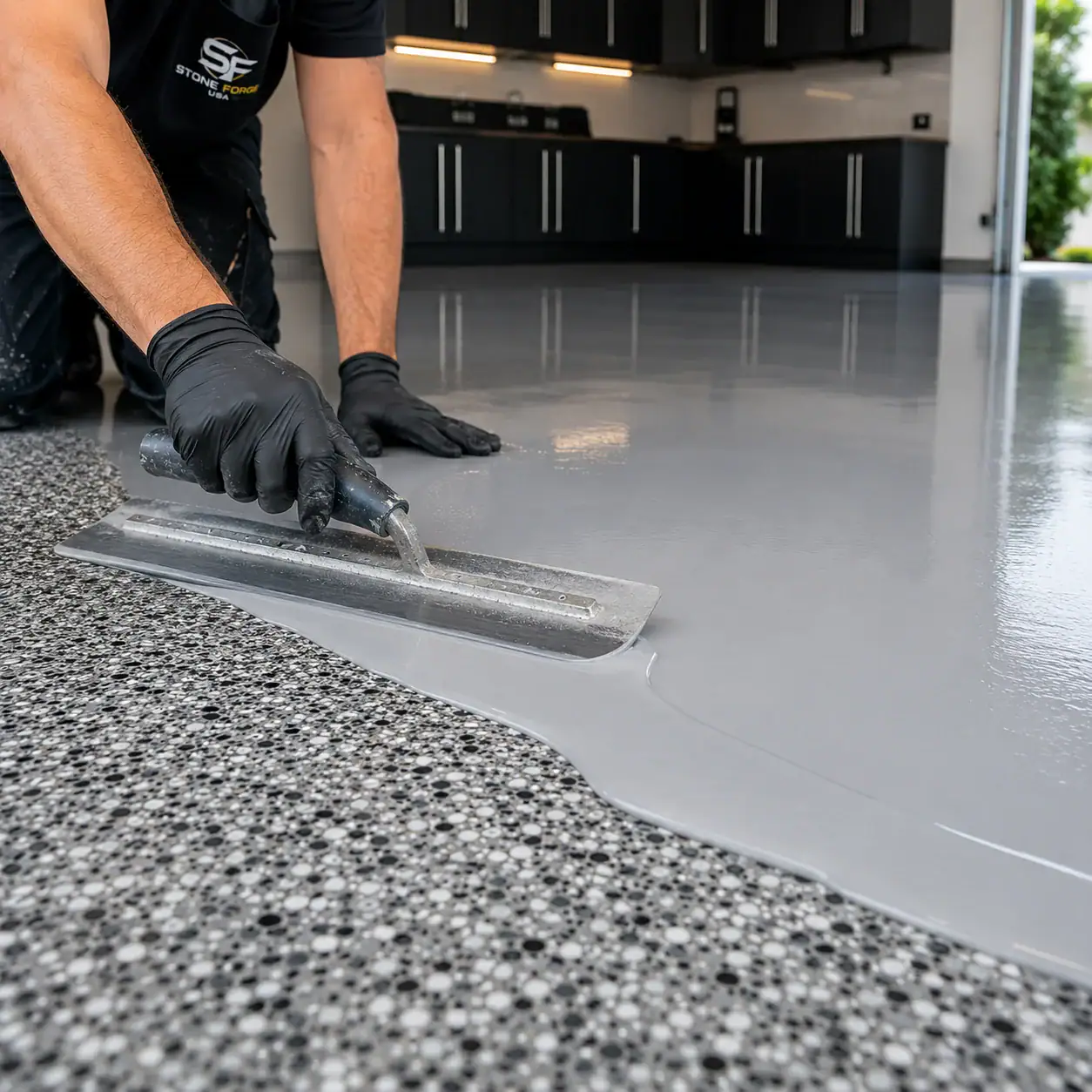
Vinyl flake systems remain the most popular choice for most residential garages, and for good reason. They’re durable, they hide dirt and minor imperfections well, and they come in enough color combinations to complement virtually any garage aesthetic. The flakes are broadcast into the wet base coat, sealed under a clear topcoat, and the result is a textured, slip-resistant surface that’s easy to clean and holds up to heavy use.
For homeowners near Lake County’s lakefront communities — think boat trailers, kayaks, paddleboards, and the general chaos of an active outdoor lifestyle — a textured flake system provides the grip and durability that a smooth finish can’t always match. If your garage sees more traffic than most, that texture is a practical choice, not just an aesthetic one. Whatever direction you go, the decorative layer is always the last decision. The coating system underneath it determines how long it lasts.
The short version: if you want a floor that holds up in Lake County’s heat, humidity, and year-round UV exposure, a polyurea base with a polyaspartic topcoat is the most reliable system available right now. Standard epoxy can work with the right topcoat, but it requires more careful product selection and leaves less margin for error in this climate.
Whatever system you choose, the installation matters as much as the product. Moisture testing, diamond grinding, proper crack repair, and a multi-coat application process are what separate a floor that lasts from one that doesn’t. Ask any contractor you’re considering how they handle surface prep and moisture — their answer tells you a lot.
If you’re in the Lake County area and want a straight answer about what your floor actually needs, we’re happy to take a look. We’ll tell you what we see, explain your options clearly, and give you a price that doesn’t change when the job starts.
Summary:
Share: