Epoxy Floor Coatings: Durability and Protection

Not all epoxy floors are built the same — especially in Florida. Here's what you need to know before coating your garage, warehouse, or outdoor slab.

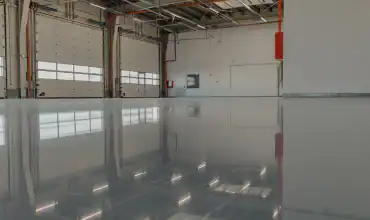
Polished epoxy flooring in a spacious industrial garage with high ceilings.

Most people start thinking about their garage floor after the stain won’t come out, the concrete is starting to pit, or a neighbor’s newly coated floor makes theirs look like a job site. If that’s where you are, you’re not alone — and the good news is that a quality epoxy coating fixes all of it.

The harder part is figuring out which system is right for your space, what it’s actually going to cost, and how to avoid the mistakes that turn a weekend project into a two-year headache. We’ve broken it all down here — coating types, real pricing, the installation process, and what makes a floor last in Lake County’s specific climate — so you can make a confident decision before anyone picks up a grinder.

Epoxy Floor Systems: What They Are and How They Work

Epoxy floor systems are two-component coatings — a resin and a hardener — that chemically bond together and cure into a hard, seamless surface directly on top of your concrete. They’re not paint. They’re not a sealer. The cured result is a surface that resists chemicals, impacts, moisture, and heavy traffic in a way that bare or painted concrete simply can’t.

Most professional epoxy flooring systems are built in layers: a primer or moisture vapor barrier goes down first, followed by the base coat, a decorative broadcast layer if desired, and a protective topcoat. Each layer has a job. Skip one, and the whole system is weaker for it. That’s the core reason professionally installed epoxy flooring systems outlast DIY kits by a decade or more.

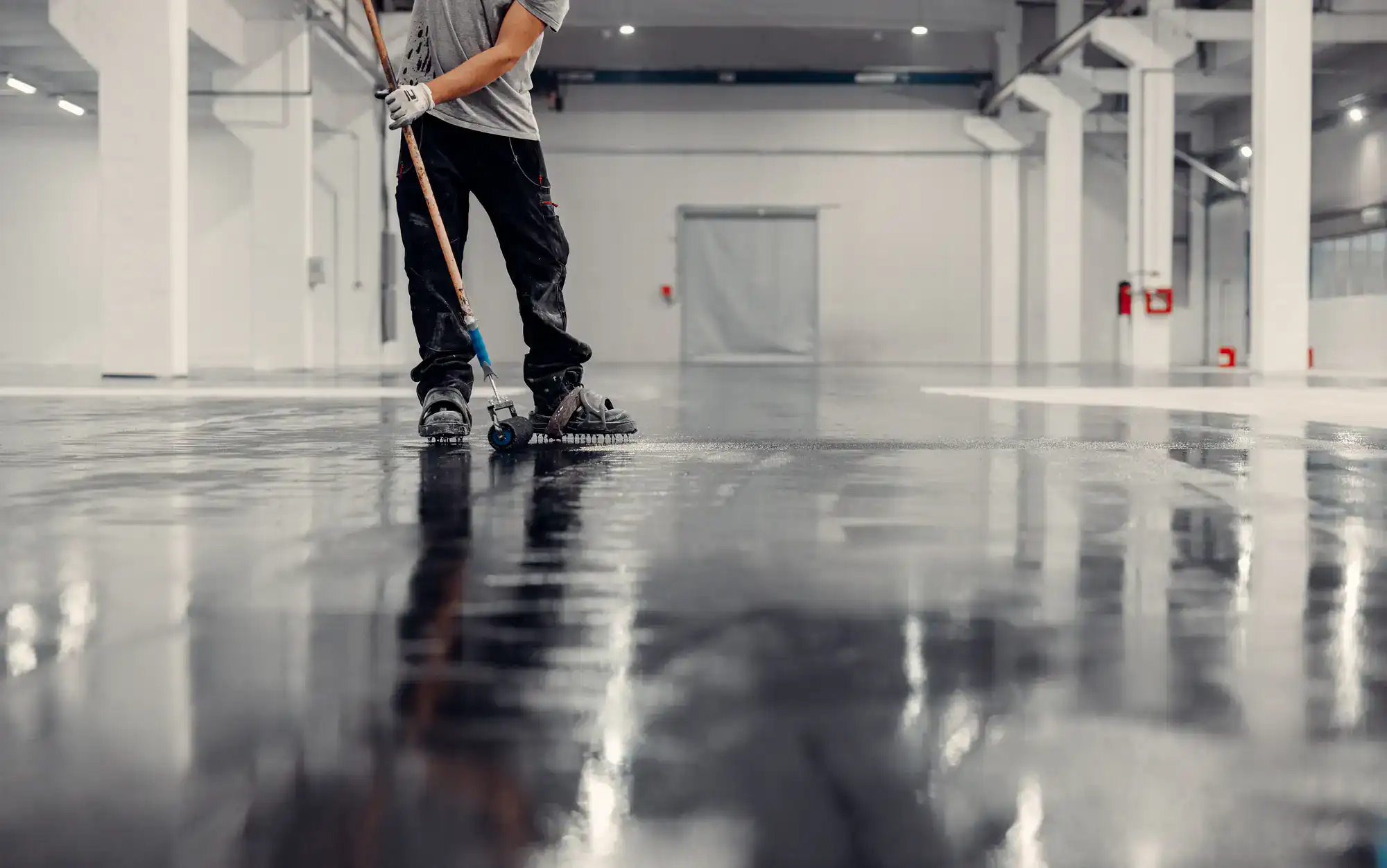
Polished epoxy flooring in a large warehouse with yellow safety lines.

Epoxy vs. Polyaspartic vs. Polyurea: Which Coating System Is Right for Your Floor?

Standard epoxy is the baseline — durable, chemical-resistant, and cost-effective for many applications. But in a Lake County garage, it has a real weakness: UV exposure. Traditional epoxy yellows and chalks under sunlight, and in summer heat, concrete surface temperatures can hit 120–140°F. That’s when hot tire pickup becomes a problem — where the softened coating bonds to a warm tire and pulls away from the slab when you back out. It’s one of the most common complaints we hear from homeowners who went with a budget system.

Polyaspartic coatings address both of those issues. They’re UV-stable, which means they won’t yellow or chalk in Florida’s sun, and they cure fast — often hard enough for foot traffic within hours and vehicle traffic within 24 hours. For most residential garages in Lake County, a polyaspartic topcoat over a proper epoxy base is the standard we recommend. You get the adhesion and build of epoxy with the UV and abrasion resistance of polyaspartic on top.

Polyurea floor coating is the industrial-strength option. It’s more flexible than standard epoxy, which makes it better suited for environments with temperature swings, heavy mechanical loads, or exposure to harsh chemicals. It’s also extremely fast-curing, which matters for commercial clients who can’t afford extended downtime. If you’re running a warehouse, food production facility, or auto shop in the Leesburg or Clermont corridor, polyurea is worth a serious look.

The right system depends on your specific slab, how the space is used, and what you’re asking the floor to handle. A garage in Mount Dora that stores a boat and a golf cart has different demands than a distribution center off US-27. Getting that match right is where the real expertise lives.

100% Solids Epoxy vs. Water-Based: What's Actually in the Can Matters

This is where a lot of buyers get misled. The epoxy kits at big-box stores are water-based, which means a significant portion of what’s in the can evaporates during curing. What’s left behind is a thin, relatively soft film — not the dense, load-bearing coating you’re picturing. Water-based epoxy costs $30–$50 per gallon and typically lasts one to three years under real use before peeling, bubbling, or showing wear.

100% solids epoxy is a different product entirely. Nothing evaporates — every drop cures into the finished coating. The result is a thicker, denser surface with far greater resistance to abrasion, chemical exposure, and impact. It costs $45–$150 per gallon depending on the formulation, but the installed system can last 10 to 20 years with basic maintenance. For a two-car garage in Clermont or a commercial floor in Tavares, the math on that lifespan is straightforward.

The other factor that separates professional systems from store-bought kits is what comes before the coating. We use diamond grinding to mechanically open the concrete surface and create a profile that the epoxy bonds to at a structural level. Acid etching — the prep method included in most DIY kits — doesn’t come close. Add in Lake County’s moisture vapor transmission issues, where humidity migrates through the slab and breaks the bond from underneath, and you start to understand why so many DIY jobs fail within a year even when the homeowner followed the directions exactly.

We test every slab for moisture before we coat it. If readings are high — which they often are in Lake County’s humid environment — we apply a moisture vapor barrier primer first. That one step is the difference between a floor that holds for 15 years and one that starts lifting at the edges by the second summer.

Want live answers?

Connect with a Stone Forge USA expert for fast, friendly support.

Epoxy Cost: What You Should Expect to Pay in Lake County

Pricing in the epoxy flooring industry is genuinely confusing, and a lot of that confusion is intentional. Low-bid contractors quote cheap to win the job, then add costs once they’re on-site. We don’t operate that way — you get an itemized quote before anything starts, and that number doesn’t move unless the scope does.

Nationally, professional epoxy installation runs $4–$10 per square foot for standard systems, with premium polyaspartic and 100% solids systems reaching $12–$15 per square foot. In Lake County, the specific conditions of your slab — moisture levels, existing damage, previous coatings — can push costs higher, which is why surface preparation needs to be accounted for upfront rather than treated as a surprise add-on.

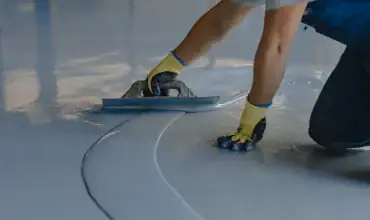
Worker applying epoxy coating to a concrete floor with a squeegee.

Garage Epoxy Cost: What a Realistic Budget Looks Like by Garage Size

For residential garages, professionally installed epoxy floors typically run between $1,447 and $3,006 depending on system quality, surface condition, and what’s included in the quote.

A one-car garage — roughly 200 to 300 square feet — starts around $2,800 for a quality 100% solids system with a polyaspartic topcoat. A standard two-car garage runs $3,800 and up. A three-car garage starts around $4,600. Those are starting points for a complete, professionally installed system — not a water-based coat rolled on over a swept floor.

Surface preparation is typically $500 or more on its own, and it’s the part that determines whether the rest of the investment holds. Decorative upgrades — color flake broadcasts, metallic effects, or custom color systems — add 20–30% to the base cost but dramatically change how the finished floor looks and feels. If you’ve spent time in a well-done garage in The Villages or one of the newer Minneola developments, you already know the difference a quality finish makes.

The cost to finish a garage floor also depends on what’s already there. A new slab in a Groveland build that just hit its 28-day cure mark is a straightforward job. A 20-year-old garage floor in Eustis with oil stains, hairline cracks, and a failed DIY coat from three years ago requires more prep work — and that prep work needs to be priced honestly before the job starts, not billed as an extra after the grinder is already running.

Commercial Epoxy Floor Coating Cost and Industrial Epoxy Flooring in Lake County

Commercial and industrial epoxy flooring involves a different set of requirements than a residential garage. The systems are heavier, the prep is more involved, and the stakes are higher — a floor failure in a warehouse or food production facility isn’t just an aesthetic problem, it’s a safety and operational one.

For commercial epoxy floor coating, expect costs in the $5–$12 per square foot range for standard systems, with heavy-duty industrial epoxy floor coating — including epoxy mortar systems, self-leveling epoxy, and chemical-resistant coatings — running $8–$15 per square foot or more depending on thickness and system complexity. The best commercial epoxy floor coating for a given space depends on load requirements, chemical exposure, hygiene standards, and how much downtime the operation can absorb during installation.

Lake County’s industrial corridor along US-27, US-441, and SR-50 has been growing steadily, with distribution centers, light manufacturing, and logistics facilities expanding across the Clermont and Leesburg areas. Most of those facilities need floors that can handle forklift traffic, pallet jacks, chemical spills, and daily cleaning cycles — and most of them are underserved by local contractors who focus almost exclusively on residential garages.

We work in both spaces. For commercial clients, we also offer emergency response for floor failures and urgent restoration needs — which matters when a cracked or delaminating floor creates a safety hazard or shuts down operations. Leesburg’s healthcare facilities, Mount Dora’s boutique commercial properties, and the growing retail and hospitality sector around Clermont all represent applications where a seamless, non-porous epoxy floor isn’t just a preference, it’s a functional requirement.

Choosing the Right Epoxy Floor Contractor in Lake County

A good epoxy floor starts long before the coating goes down. It starts with the right system for your specific slab, honest pricing before work begins, and surface preparation that actually creates a bond — not just a clean surface. Those three things are where most jobs either succeed or fail, and they’re the things that are hardest to evaluate from a quote alone.

Lake County’s climate — the heat, the humidity, the UV intensity, the rainy season — puts real pressure on floors that weren’t designed for it. What works in a Minnesota garage doesn’t automatically work here. The best epoxy for a basement floor in Leesburg, the most durable garage floor coating for a Clermont home that stores a boat and a trailer, the right industrial system for a warehouse near the US-27 corridor — these are specific decisions, not one-size-fits-all answers.

If you’re ready to stop guessing and get a straight answer about what your floor actually needs, we’re here. We’ll walk you through the options, give you a clear price before anything starts, and follow up after the job is done to make sure the floor is performing the way it should.

Summary:

Choosing the right epoxy floor coating in Lake County means accounting for more than just aesthetics. Florida’s heat, humidity, and UV exposure put real pressure on coatings that look great in a showroom but fail on a Central Florida slab. This guide walks through every major coating system — from standard epoxy and polyaspartic to industrial-grade and decorative finishes — with honest breakdowns of cost, durability, and what the installation process actually involves. Whether you’re coating a garage in Clermont or a warehouse near Leesburg, the goal is the same: a floor that holds up long after the last coat dries.

Table of Contents

Article details:

Share: