Concrete Repair in Longwood, FL

Longwood's Aging Concrete Deserves More Than a Patch Job

From Sanlando Springs to Sabal Point, concrete in Longwood takes a beating and most repairs don’t address why it failed in the first place. We fix that.
Worker cutting concrete blocks at construction site for repair project.

Hear From Our Clients

[Add Trustindex Slider Here]
Concrete being poured into a foundation form for repair work in Altamonte Springs, FL.

Concrete Repair Longwood Homeowners Trust

What Changes When the Repair Is Done Right

When a crack runs diagonally across your driveway slab or a section of your patio drops half an inch, that’s not just surface wear. Longwood sits on karst limestone with sandy soil on top the kind of ground that shifts, settles, and leaves voids beneath your concrete without any visible warning. A repair that only addresses what’s on the surface will fail again, usually faster than the first time.

Getting it done correctly means the water stops finding its way in, the slab stops moving, and you stop watching the problem get worse every rainy season. For homes in Rolling Hills or the older sections of Sanlando Springs where driveways and walkways may be 30 to 50 years old the right repair can extend the life of your concrete by a decade or more without the cost of full replacement.

There’s also the HOA angle. If you live in Springs Landing or Sabal Point, a cracked or sunken driveway isn’t just a maintenance issue it’s visible to every neighbor and every board member who drives by. A properly restored surface doesn’t just hold up structurally. It reflects well on your property in a community where curb appeal genuinely matters.

Masonry Contractor Serving Longwood, FL

One Company That Handles the Whole Property

We’re a masonry company built around one idea: homeowners in Longwood shouldn’t need three different contractors to fix three things on the same property. Cracked driveway, deteriorating retaining wall, pool deck that needs resurfacing that’s one call, one project, one invoice. No finger-pointing between separate crews about whose scope covers what.

Longwood has real range from the historic homes near Church Avenue and Warren Avenue to the master-planned subdivisions off Markham Woods Road and Wekiva Springs Road. That range in housing age means a range in concrete conditions, and we have the experience across all of it. Whether it’s a restoration job on an older property near the historic district or a driveway repair in a Seminole County HOA community, our approach is the same: assess honestly, quote clearly, and do the work correctly.

Transparent pricing isn’t a selling point here it’s just how our estimates work. You get a written, itemized number before anything starts, and that number doesn’t change unless you ask for something different.

Close-up of textured concrete surface with contrasting colors.

How Concrete Repair Works in Longwood

No Guesswork Here's Exactly What to Expect

It starts with an honest assessment. Before any work is scoped or priced, we evaluate the condition of your concrete not just what’s visible on the surface, but what’s likely happening underneath. In Longwood, that means looking for signs of soil settlement or subsurface voids, which are common in Seminole County’s sandy, karst-influenced ground. A crack that looks cosmetic sometimes isn’t, and catching that early changes what the right repair actually looks like.

From there, you get a written estimate. Itemized, specific, and not subject to revision unless the scope changes by your request. If a permit is required for the work which depends on the project type and whether it falls under Seminole County’s building jurisdiction we handle that as part of the process, not hand it off to you to figure out. Contractors working in Longwood need to meet Seminole County’s specialty classification requirements, carry current workers’ compensation coverage, and in some cases hold a county registration on top of their state license. That documentation is available before work begins.

Once the job starts, you have visibility into where things stand. Materials, scheduling, progress tracked and communicated so you’re not calling our office to find out if anyone is showing up tomorrow. After the work is complete, we follow up. Not because something is expected to go wrong, but because that’s when most issues surface if they’re going to and it’s better to catch them early than to find out nine months later that no one is returning your calls.

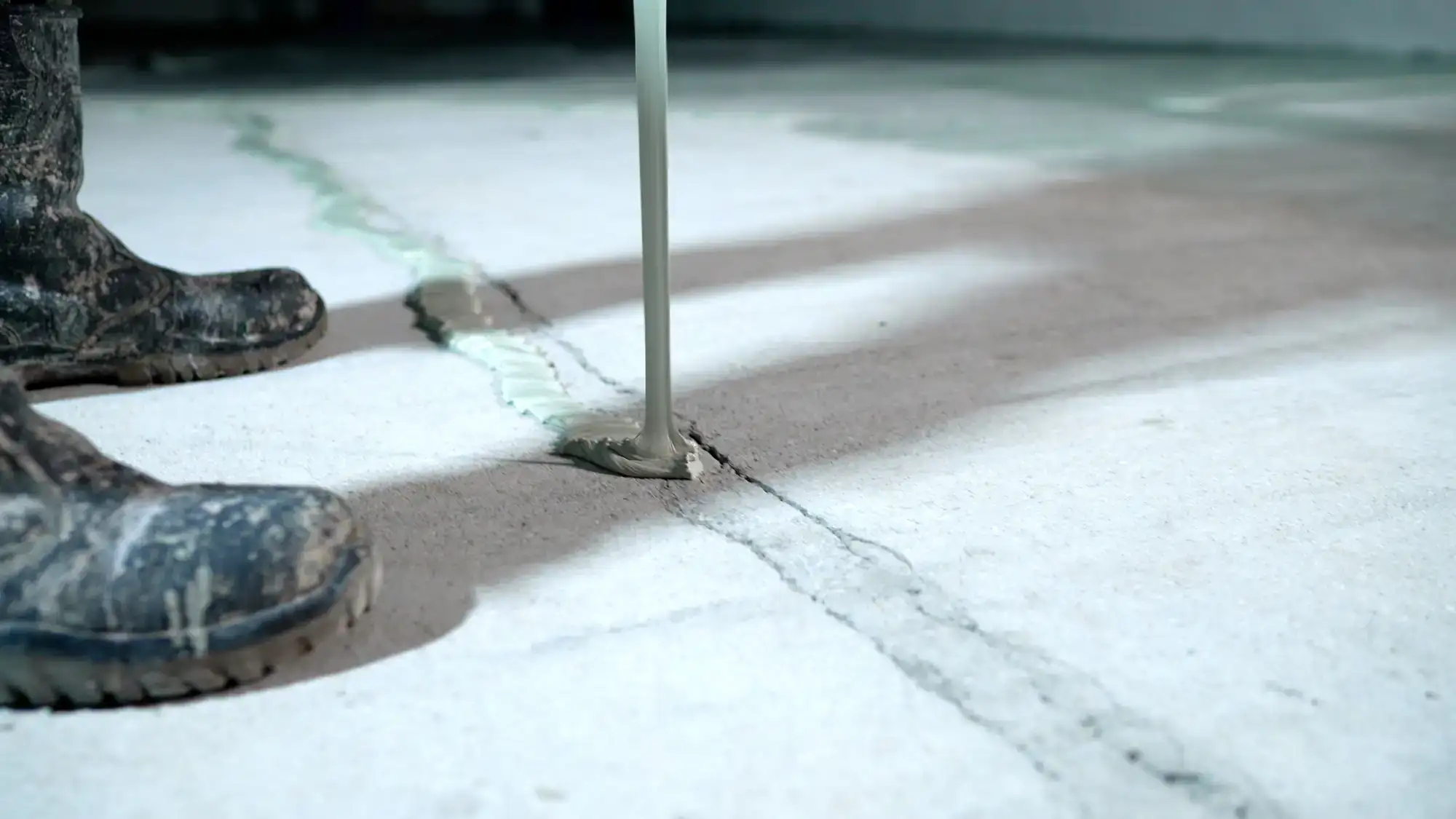
Concrete crack being sealed by professional repair in Altamonte Springs, FL.

Concrete Repair Services in Longwood, FL

Every Surface, Every Repair One Contractor

We handle the full scope of concrete and masonry repair driveway repair and resurfacing, patio and pool deck restoration, sidewalk and walkway repair, slab leveling and lifting, retaining wall repair, and brick, block, and stone restoration. For Longwood homeowners dealing with multiple issues at once, that means one assessment covers everything rather than scheduling separate contractors for each surface.

For sunken or uneven slabs a common issue in Longwood given the area’s soil movement and high water table near the Little Wekiva River corridor polyurethane foam injection is one of the most effective tools available. It fills the void beneath the slab, lifts it back to grade, and cures quickly without the disruption of tearing out and replacing the concrete. Epoxy resin repair handles structural cracks in a way that bonds to the existing concrete and holds up through Florida’s thermal cycling and rainy season moisture. These aren’t shortcuts they’re the methods that actually last in this climate.

For properties in the historic district or older sections of Sanlando Springs, restoration work gets treated differently than a standard residential repair. Our goal is to preserve what’s there where possible, match materials and finish appropriately, and avoid the kind of heavy-handed replacement that changes the character of a property that’s been standing for decades. Whatever the surface and whatever the scope, we do the work with the materials and methods suited to this specific environment not a generic approach that ignores what Central Florida actually does to concrete over time.

Cracked and peeling white wall surface for concrete repair in Altamonte Springs, FL.

Why does concrete crack and sink so often in Longwood, FL?

Longwood sits on Central Florida’s karst limestone geology, with sandy topsoil over a substrate that is inherently prone to shifting and void formation. When the limestone beneath slowly dissolves and voids develop, the sandy soil above loses its support and settles unevenly. Concrete slabs poured over that kind of ground driveways, patios, pool decks crack, tilt, and sink in patterns that have more to do with what’s happening underground than with the surface itself.

Seminole County is documented as a sinkhole-affected county, and Longwood is specifically listed among municipalities with recorded sinkhole incidents. That doesn’t mean every crack is a sinkhole, but it does mean soil movement is a real and ongoing factor here. The rainy season compounds it from May through October, water infiltrates the sandy soil, erodes the substrate, and accelerates settlement. When the dry season arrives, the soil contracts and leaves voids where the water used to be. That cycle, repeated over years, is one of the primary reasons concrete in Longwood develops the sunken, cracked profiles that drive repair demand.

In most cases, repair is the right answer and it’s significantly less expensive than full replacement. Whether a crack can be repaired effectively depends on its width, depth, pattern, and whether there’s any underlying movement still occurring. A hairline crack that’s been stable for years is a different situation than a diagonal crack with vertical displacement, which suggests active soil settlement beneath the slab.

For Longwood driveways, the age of the concrete matters too. Homes in Sanlando Springs and Rolling Hills often have driveways that are 30 to 50 years old at or past the typical service life of untreated concrete in Florida’s climate. At that point, the honest assessment sometimes is that patching individual cracks won’t address the broader deterioration, and resurfacing or targeted replacement of specific sections makes more sense. We give you an accurate picture of what you’re working with so you can make a decision based on real information, not just what’s cheapest or easiest to sell.

It depends on the scope of work. Minor crack repairs and surface patching typically don’t require a permit. But more substantial work slab replacement, retaining wall construction or significant repair, structural concrete work generally falls under Seminole County’s building and permitting jurisdiction, with the City of Longwood’s Community Development Department handling permits for work within city limits.

What matters most for you as a homeowner is that any contractor pulling permits for work on your property needs to meet Seminole County’s specific requirements: a current Florida state license in the appropriate specialty classification, a local business tax receipt, proof of workers’ compensation coverage, and in some cases a Seminole County registration if they hold a Registered rather than Certified state license. If a contractor pulls permits without meeting those requirements, those permits are invalid which can create real complications when you sell your home. Asking a contractor to show you their documentation before work begins is a reasonable and smart thing to do.

Done correctly with the right materials, concrete repairs in Florida can last 10 to 15 years or more. The key phrase is “with the right materials.” Generic patch products from a home improvement store often fail within one or two seasons in Central Florida the summer heat causes them to expand and pop out of the repair zone, or rainy season moisture infiltrates the bond line and breaks the adhesion. Florida’s thermal cycling, UV exposure, and humidity are genuinely hard on repair materials that weren’t engineered for this environment.

Polymer-modified repair mortars, polyurethane foam injection for subsurface voids, and epoxy resin systems for structural cracks are the methods that hold up here. They cure properly in high temperatures, remain flexible enough to handle the expansion and contraction that comes with Longwood’s seasonal temperature swings, and bond to existing concrete without the shrinkage that causes generic patches to fail at the edges. The repair method matters as much as the repair itself and that’s especially true in a climate like this one.

October through April is the optimal window. Longwood’s dry season brings lower humidity, more moderate temperatures, and minimal rain disruption all of which support better curing conditions and fewer scheduling delays. Concrete and masonry work done during the dry season has more predictable timelines and, in many cases, better long-term results because the material cures in stable conditions rather than fighting through afternoon thunderstorms.

That said, waiting until October isn’t always an option. If a storm in July cracks your pool deck or a summer downpour leaves a section of your driveway sunken and creating a trip hazard, that’s not something you want to leave unaddressed for three or four months. Emergency repairs during the rainy season are absolutely doable it just requires a contractor with the experience to work in Florida’s summer conditions and the materials that perform in heat and humidity. The season affects timing and planning; it doesn’t have to determine whether you can get the work done.

The written estimate you receive before work begins is the number on your invoice. It’s itemized by scope materials, labor, and any permit costs so you know exactly what you’re paying for and why. If something genuinely unexpected is discovered once work starts, you’ll be told about it before anything changes, and no additional scope gets added without your explicit approval. There are no verbal quotes that “might shift depending on what we find.”

This matters in Longwood specifically because the market here has a documented history of the opposite experience. A homeowner in this area spent nine months trying to get a local concrete contractor to return and address a driveway that began failing shortly after installation and never got a response. Transparent pricing and a post-job follow-up call aren’t features added to a service package; they’re the baseline for how a contractor should operate. You should be able to reach someone after the job is done, and the price you agreed to should be the price you paid. That’s the standard we hold ourselves to on every project in Seminole County.

Other Services we provide in Longwood