Licensed and insured concrete and masonry contractors serving Central Florida. Quality work, honest pricing, no surprises.
Contact Info
Hear From Our Clients
If you’ve had epoxy peel, bubble, or yellow within a year or two, it wasn’t bad luck it was the wrong product installed the wrong way. Standard big-box epoxy kits aren’t built for Apopka’s climate. The humidity alone, sitting around 74% year-round and spiking hard from May through October, creates moisture pressure beneath concrete slabs that most DIY coatings simply can’t handle. The result is delamination, and it usually starts showing up right around the time you thought the floor was finally done.
A professionally installed system changes that. We use the right coating applied over properly prepared, moisture-tested concrete to seal the slab, resist the daily UV exposure Apopka gets nearly year-round, and hold up against oil, chemicals, and the kind of wear that comes from two vehicles, outdoor gear, and a garage that actually gets used. Whether you’re in a newer build off the Kelly Park corridor or an established home in Errol Estate, the concrete underneath your feet has specific needs, and the coating has to match them.
The end result isn’t just a better-looking floor. It’s a surface that’s easier to clean, safer to walk on, and genuinely adds value to a home in a market where median property values are pushing toward $440,000. That’s a return worth protecting.
We specialize in masonry and concrete coating work across Central Florida and that specialization matters more than it might seem. Understanding concrete at a structural level, not just as a surface to coat, is what separates an installation that lasts from one that fails in the first Florida summer.
Every project we handle comes with transparent pricing before anything starts. You’ll know the full cost, the timeline, and exactly what’s included before a single piece of equipment comes off the truck. After the job is done, we follow up. Not because it’s a policy, but because a follow-up call is how we make sure the coating cured right, you’re satisfied, and you have what you need to maintain it long-term.
Apopka is one of the fastest-growing cities in the tri-county area, and the demand for reliable contractors who actually communicate has never been higher. From the new construction slabs going in near SR-429 to older garage floors in the Wekiva area, we know what the concrete here looks like and what it takes to coat it correctly.
The coating itself is only part of the job. What happens before it goes down is what determines whether it lasts five years or fifteen. The first step is always a concrete assessment checking for moisture content, existing damage, oil staining, and surface profile. In Apopka, this step is non-negotiable. Concrete slabs in northwest Orange County deal with real moisture pressure, and if the slab reads above the acceptable threshold, the coating won’t bond properly no matter how good the product is.
Once the slab is cleared, surface preparation begins. This typically means diamond grinding or mechanical abrasion to open up the concrete and give the epoxy something to grip. For older floors in neighborhoods like Oak Hill Reserve or Errol Estate slabs that have seen years of Florida humidity, vehicle fluids, and temperature cycling this step takes longer, and that’s fine. Rushing prep is the most common reason epoxy fails.
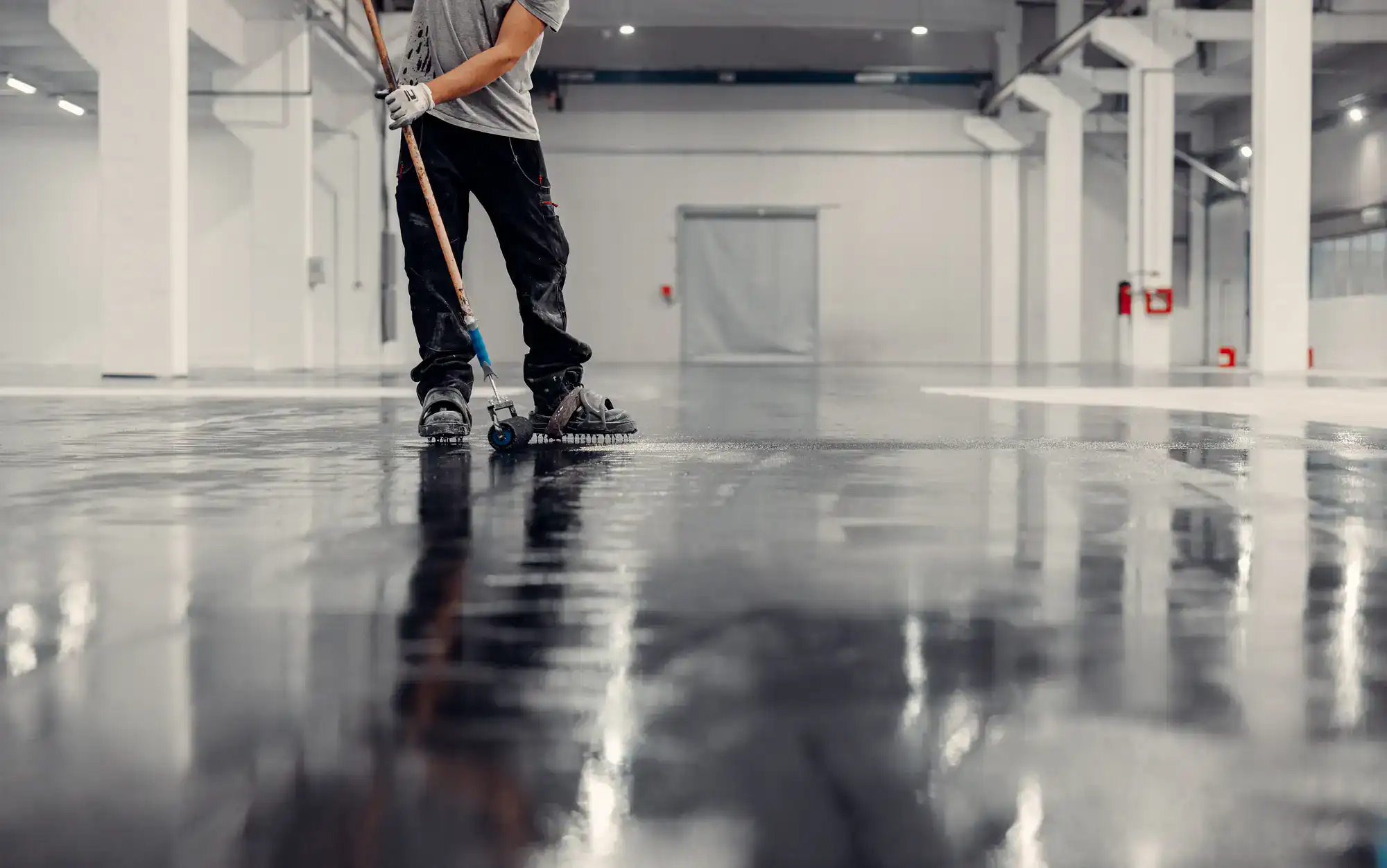
After prep, we apply the coating system in stages: a base coat, a broadcast layer if you’re going with a flake finish, and a topcoat that’s UV-stable and sealed for durability. Curing time depends on the system polyaspartic coatings used in most residential installs cure in hours, not days, so you’re typically back in your garage the same day or within 24 hours. If your slab is new construction, it needs to cure for a minimum of 28 days before any coating is applied something worth knowing upfront if you’re moving into one of the new developments near Wyld Oaks or Wekiva Ranch.
Ready to get started?
Most homeowners in Apopka don’t just have one concrete problem they have several. A garage floor with oil stains. A pool deck that’s cracking and slippery. A driveway that’s faded and pitted from years of UV exposure and summer rain. Hiring a different contractor for each surface is how projects drag on, costs stack up, and nothing ever quite matches.
We handle anything-masonry work, which means one assessment, one conversation, and one team handling all of it. For garage floors and interior slabs, we apply a high-build epoxy base with a polyaspartic or polyurea topcoat durable, chemical-resistant, and available in solid colors or decorative flake finishes. For pool decks, patios, and driveways in Apopka’s intense sun, UV-stable coatings are the only real option. Standard epoxy degrades under prolonged UV exposure, yellowing and chalking within a year or two. The right exterior system is formulated to hold its color and finish through Central Florida’s 300-plus days of direct sunlight.
For commercial properties whether that’s a warehouse unit in the Mid-Florida Logistics Park area, a retail space along US-441, or a facility in Apopka’s growing industrial corridor the requirements shift toward slip resistance, chemical tolerance, and OSHA-compliant surface ratings. We install those systems. The scope of the job changes. The standard doesn’t.
The most common reason is moisture. Concrete slabs in Central Florida especially in areas with muck soil or high water tables like parts of northwest Orange County hold moisture vapor that pushes up through the slab over time. If that moisture content isn’t tested and addressed before the coating goes down, the coating loses its bond and starts to lift, usually within the first year.
The second reason is surface prep. Most DIY kits and some lower-end contractors skip proper mechanical grinding, which is what actually opens up the concrete so the epoxy can grip it. Without that, you’re essentially painting over a sealed surface and hoping it sticks. In Apopka’s humidity, it won’t for long. We test the slab, prep the surface correctly, and use a coating system that’s rated for Florida’s climate not a product designed for a garage in Ohio.
A properly installed epoxy or polyaspartic system in Florida should last anywhere from 10 to 20 years with basic maintenance sweeping, occasional mopping, and avoiding harsh chemical cleaners that can break down the topcoat over time. The range depends on the system used, how much traffic the floor sees, and whether the installation was done correctly from the start.
In Apopka specifically, UV exposure is one of the bigger long-term factors for any surface that gets indirect or direct sunlight think garage floors near open doors, pool decks, or driveways. Standard epoxy isn’t UV-stable and will start to yellow and chalk within a couple of years outdoors. Polyaspartic and polyurea topcoats are formulated to resist that degradation, which is why they’re the standard recommendation for anything in Central Florida’s sun. Interior garage floors with minimal UV exposure and moderate vehicle traffic are where you’ll see the longest lifespan.
In most cases, no. Epoxy flooring applied to an existing interior concrete surface like a garage floor is considered a surface treatment rather than structural work, and typically doesn’t require a building permit through the City of Apopka or Orange County. That said, it’s always worth confirming with the city’s building department if you have any doubt, especially for commercial properties where code requirements may apply.
There are a couple of other regulatory factors worth knowing about. If your home is in one of Apopka’s HOA-governed communities Errol Estate, Rock Springs Ridge, and many of the newer subdivisions near SR-429 have active HOAs there may be restrictions on exterior concrete coating colors or finishes for driveways and visible surfaces. Checking your HOA documents before selecting a color or finish is a simple step that saves a headache later. For commercial and industrial properties, OSHA slip-resistance standards apply to floor surfaces, and the coating system needs to meet those requirements. That’s something a qualified contractor should be factoring in from the start.
Epoxy is a two-part resin system that creates a hard, durable surface it’s been the standard for garage floors for decades and holds up well under vehicle traffic, chemical spills, and daily use. Polyaspartic is a newer coating technology that cures significantly faster, handles UV exposure better, and performs well in a wider range of temperatures and humidity levels. For Florida’s climate, that last point matters.
In practical terms for an Apopka homeowner: epoxy makes an excellent base coat because of its thickness and build, but a polyaspartic topcoat over it gives you the UV stability and faster cure time that the climate here demands. Most professional installations use both epoxy down first for the build and bond, polyaspartic on top for the finish and protection. The result is a floor that cures fast enough for you to be back in your garage within 24 hours, holds its color through years of Central Florida sun, and doesn’t require the kind of careful temperature management that a pure epoxy system does during Apopka’s hot, humid summers.
For a standard two-car garage in Apopka, you’re typically looking at somewhere between $1,500 and $3,500 for a professional installation, depending on the condition of the concrete, the coating system selected, and whether any repairs are needed before coating. A single-car garage generally runs $1,000 to $2,000. Larger three-car garages or garages with significant damage, heavy staining, or previous failed coatings that need to be removed will run higher.
The biggest variable in pricing is surface prep. A new slab in one of Apopka’s newer developments near the Kelly Park corridor is going to require less prep work than a 25-year-old garage floor in an established neighborhood that’s seen oil stains, moisture damage, and a failed DIY epoxy kit. Be cautious of quotes that seem unusually low in most cases, that reflects skipped prep work, which is exactly what leads to peeling and delamination within a year or two. A transparent, itemized quote that breaks out prep, materials, and labor is what you should be looking for before signing anything.
With median home values in Apopka approaching $440,000 up dramatically from where they were just a decade ago homeowners here are sitting on a significant asset, and the improvements that protect and enhance that asset tend to pay off. Epoxy flooring is one of the more cost-effective upgrades you can make to a garage or exterior concrete surface because it addresses both function and appearance at the same time.
From a practical standpoint, a sealed garage floor is easier to clean, resists oil and chemical staining, and reduces the concrete dust that accumulates in uncoated garages. For homes near Wekiwa Springs or Kelly Park where outdoor gear, bikes, and kayaks are a regular part of the garage inventory, that easy-clean surface makes a real difference in daily use. From a resale standpoint, a finished garage floor is a visible, tangible upgrade that buyers notice and in Apopka’s competitive housing market, details like that contribute to first impressions. It’s not a guaranteed dollar-for-dollar return, but it’s a practical improvement that makes the home more functional while you’re in it and more appealing when it’s time to sell.
Other Services we provide in Apopka