Licensed and insured concrete and masonry contractors serving Central Florida. Quality work, honest pricing, no surprises.
Contact Info
Hear From Our Clients
Most homes in Silver Lake were built between 1970 and 1999. That means a lot of garage floors, patios, and lanais are sitting on concrete that’s 25 to 50 years old absorbing moisture, collecting stains, and slowly breaking down from the inside out. A properly installed epoxy system seals that surface and stops the cycle before it turns into a structural problem.
Living near the lake isn’t just a lifestyle it’s a moisture condition. Silver Lake sits at the edge of a 385-acre freshwater lake and within the broader Harris Chain of Lakes system, which means ambient humidity around here stays elevated even on dry days. That ground moisture is exactly what causes bare concrete to effloresce, crack, and pit over time. Epoxy flooring creates a non-porous barrier that keeps that moisture from working its way through the slab.
Beyond protection, the practical difference is immediate. Concrete dust disappears. Oil spills, paint drips, and garden chemical stains wipe up in seconds. Your garage whether it’s storing a golf cart for a round at Silver Lake Country Club, doubling as a workshop, or just holding 30 years of accumulated life becomes a space that’s actually easy to maintain. That’s not a small thing when you’re living in it every day.
Stone Forge USA is a masonry services company serving communities throughout Lake County and Central Florida. We’ve worked on properties near Silver Lake Drive, around the Leesburg corridor, and across the 34788 zip code so the conditions here aren’t a mystery to us. We know what lake-adjacent humidity does to concrete over time, and we know how to prepare a slab correctly before a single drop of epoxy goes down.
What sets our work apart isn’t a sales pitch it’s the process. Every project starts with a transparent, itemized quote. No hidden fees, no scope changes mid-job, no vague estimates that balloon after the fact. You know what you’re getting before we start, and we follow up after we finish to make sure it held up exactly as expected.
We carry full licensing and insurance that meets Lake County’s contractor certification requirements. That matters more than most people realize until something goes wrong with an unlicensed crew and by then, the liability is already yours.
The first thing that happens on any epoxy job is surface preparation and this is where most cheap installations fail. Before any coating goes down, the concrete gets ground or shot-blasted to open the surface and remove contaminants. In Silver Lake, where slabs have often spent decades absorbing moisture from the lake-adjacent water table, we also test for moisture vapor emission. If that step gets skipped, the coating delaminates. It’s that simple.
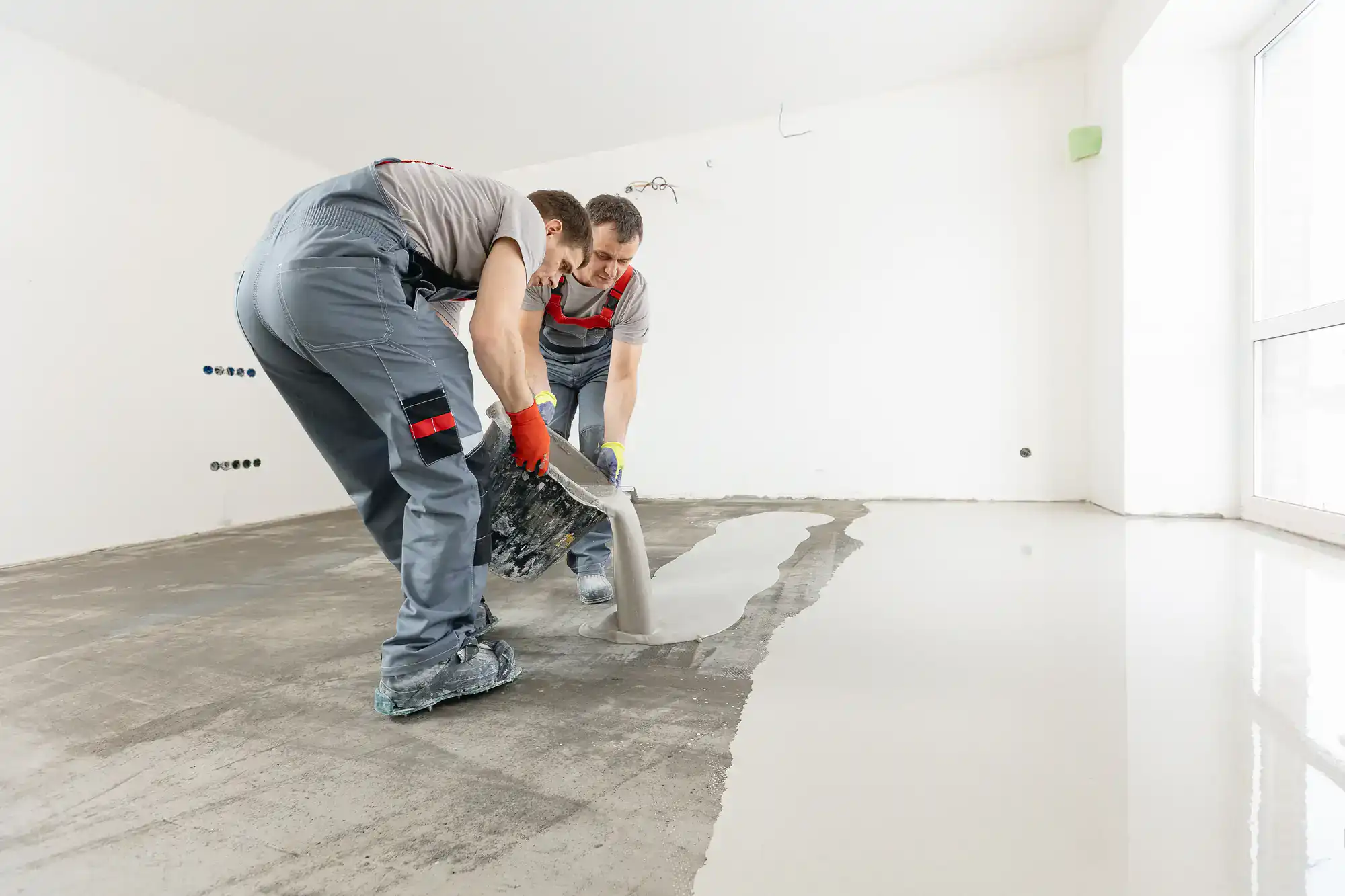
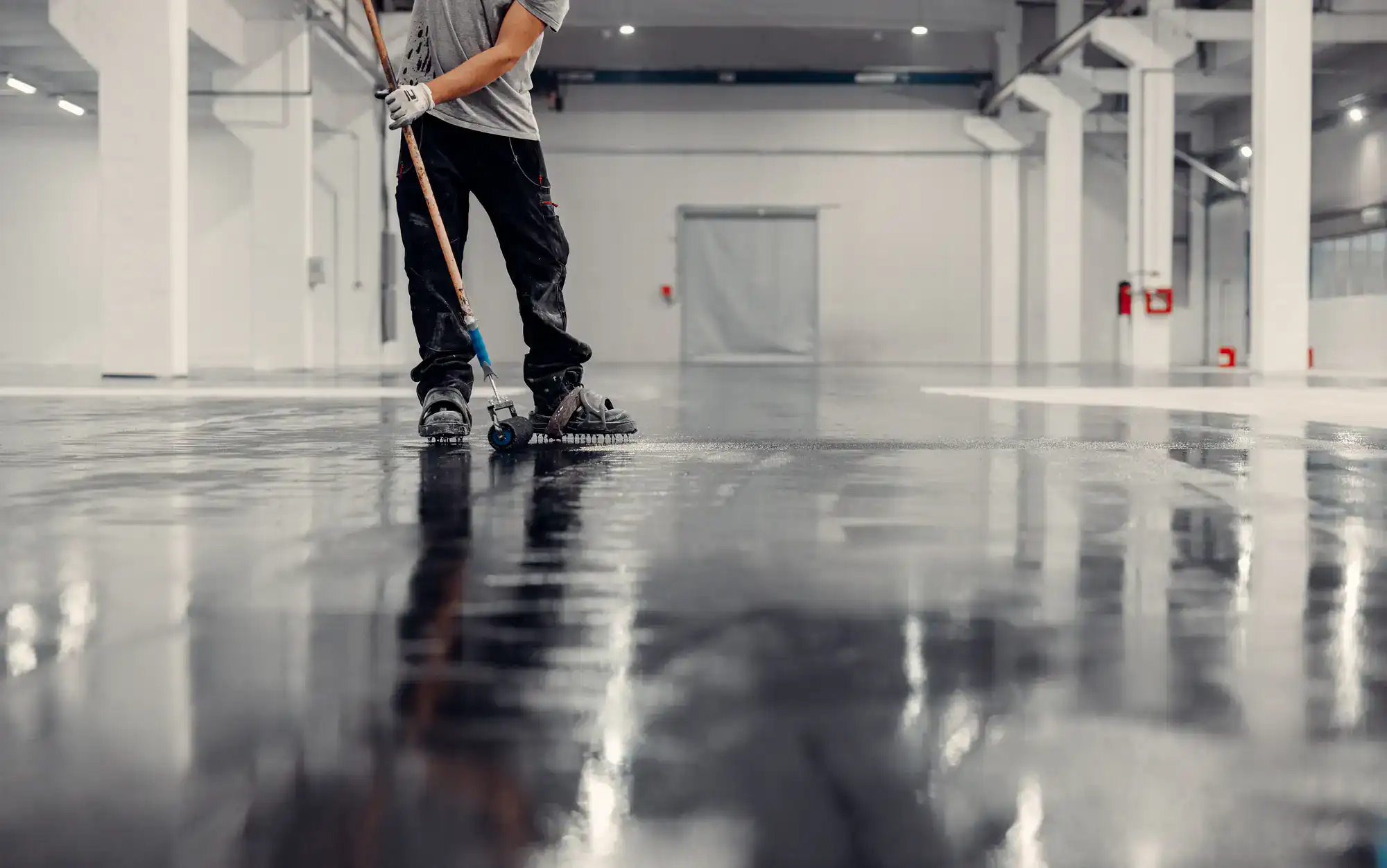
Once the surface is properly prepared, any cracks or joints get repaired and the primer goes down. Then the epoxy system is applied whether that’s a decorative flake system, a solid color, or a metallic finish followed by a protective topcoat. Most residential garage floors in Silver Lake are completed in a single day. Full cure typically takes 24 to 72 hours depending on the system and the ambient humidity at the time of installation.
One thing worth knowing: the best window for epoxy installation in Central Florida is November through April, when humidity levels drop and temperatures stay in the 60s and 70s. Summer installs are absolutely doable we account for the conditions but if you have flexibility on timing, the drier months give the coating the cleanest cure. We’ll tell you this upfront rather than after you’ve already scheduled.
Ready to get started?
Epoxy flooring in Silver Lake isn’t one-size-fits-all. The homes here range from 1970s-era slabs with decades of wear to brand-new concrete in communities like Silver Lake Estates II, where KB Home has been delivering fresh construction along Morningside Drive. Both situations call for different prep approaches, and we treat them that way. New slabs need moisture testing and proper cure confirmation before coating. Older slabs need grinding, crack repair, and sometimes more extensive prep work. You get the process that fits your actual floor not the fastest version of it.
For Silver Lake homeowners, the most common applications are garage floors, pool decks, patios, and lanais. Each surface has its own exposure profile: garages deal with oil, tire marks, and daily foot traffic; pool decks need slip-resistant finishes and UV-stable topcoats; outdoor patios take the full brunt of Lake County’s rainy season from May through October. We spec the right system for each surface rather than applying the same product everywhere and hoping it holds.
Since Silver Lake is an unincorporated CDP, all permitting falls under Lake County’s Office of Building Services not a city government. Standard epoxy coating applications typically don’t require a permit, but if your project involves structural concrete repair or commercial-use surfaces, we’ll walk you through what Lake County requires before anything starts. No surprises on the back end.
Done right, a professionally installed epoxy system should last 10 to 20 years or more but that range depends heavily on two things: surface preparation and the quality of the topcoat. In Silver Lake specifically, the lake-adjacent moisture environment means the prep stage is non-negotiable. Concrete that hasn’t been properly ground and moisture-tested before coating will delaminate within a few years, sometimes sooner. That’s not a product failure it’s a prep failure.
The topcoat matters too. A standard epoxy without a polyaspartic or urethane topcoat will yellow and wear faster under Florida’s UV exposure and foot traffic. When both the prep and the product are right, you’re looking at a floor that holds up through Lake County’s rainy seasons, resists the humidity that comes with living near the water, and still looks clean and solid a decade later. We’ll tell you exactly what system we’re recommending for your slab and why before the job starts.
Epoxy is the coating system it bonds to the concrete and provides the protective layer. Polyaspartic is typically used as the topcoat over the epoxy base, and it’s what gives the floor its UV resistance, scratch resistance, and long-term durability. In Florida’s climate, skipping the polyaspartic topcoat and leaving bare epoxy exposed to sunlight is one of the most common reasons garage floors yellow and dull within a few years.
For most Silver Lake homeowners, the right answer is an epoxy base system with a polyaspartic topcoat especially for garage floors and any outdoor surfaces like pool decks or patios that get direct sun. Polyaspartic also cures faster than straight epoxy, which matters during the summer months when humidity can extend cure times. If you’re doing an interior space with minimal UV exposure, the calculus changes a bit. We’ll look at your specific situation and give you a straight recommendation, not the upsell version of it.
For a standard residential epoxy coating grinding the existing slab and applying a coating system you typically do not need a building permit in Florida. The work is considered a surface treatment, not a structural alteration. That said, Silver Lake is an unincorporated CDP, which means all permitting authority falls under Lake County’s Office of Building Services rather than a city government. If your project involves anything beyond a standard coating structural crack repair, drainage modifications, or a commercial-use space Lake County may have specific requirements that apply.
The honest answer is: most garage and patio epoxy jobs in Silver Lake go through without any permit involvement. But if there’s any question about your specific project, we’ll confirm with Lake County before we start rather than leaving you to sort it out later. Licensing and compliance aren’t afterthoughts for us they’re part of how we protect you from liability if anything ever comes up down the road.
For a standard two-car garage floor in the Silver Lake area, most homeowners are looking at somewhere in the range of $1,200 to $2,500 depending on the size of the slab, the condition of the concrete, and the system selected. A basic single-color epoxy with a topcoat sits at the lower end of that range. A decorative flake system or metallic finish with a polyaspartic topcoat runs higher. If the slab has significant cracking, staining, or moisture issues that require additional prep work, that affects the number too.
What you should be cautious of is a quote that’s dramatically lower than that range it almost always means the prep is being cut short. In Silver Lake’s lake-adjacent environment, skipping moisture testing or using a light grind to save time is exactly how you end up with a peeling floor two years later. Stone Forge USA provides itemized quotes so you can see exactly what you’re paying for. The cost of living in the 34788 zip code is reasonable, and we price competitively for this market but we won’t cut the steps that determine whether your floor actually lasts.
Yes and for Silver Lake homeowners with outdoor concrete surfaces, it’s one of the more practical upgrades you can make. Florida’s rainy season runs May through October and delivers 60 to 70 percent of the region’s annual rainfall in that window. Uncoated pool decks and patios go through repeated wetting and drying cycles during those months, which accelerates surface degradation, staining, and cracking. A properly applied coating system seals the surface and dramatically slows that process.
For pool decks specifically, the coating system needs to include a slip-resistant finish this isn’t optional, it’s a safety and code consideration. UV stability is also critical for any outdoor surface in Central Florida, which is why polyaspartic topcoats are standard for exterior applications. We’ve coated pool decks and patios across Lake County properties, and the prep process for outdoor surfaces is more involved than a garage floor drainage patterns, sun exposure, and existing surface texture all factor into the spec. We’ll assess the surface before quoting so the recommendation fits the actual conditions.
Yes and the conditions here are specific enough that they’re worth understanding before any coating work starts. Silver Lake sits adjacent to a 385-acre freshwater lake within the broader Harris Chain of Lakes system. That proximity keeps ground moisture and ambient humidity consistently elevated, even compared to other parts of Lake County. Concrete slabs in this area especially in homes built between the 1970s and 1990s have often been absorbing that moisture for decades. Testing for moisture vapor emission before coating isn’t just a best practice here, it’s what separates a floor that holds for 15 years from one that starts peeling in two.
We serve communities throughout central Lake County, including the Leesburg corridor and the Silver Lake area. We understand how the housing stock here was built, what the soil and drainage conditions look like near the water, and what Lake County’s contractor certification requirements mean for your protection as a homeowner. When you call us, you’re not explaining your location to someone who’s never worked near the water you’re talking to a crew that already knows what they’re walking into.
Other Services we provide in Silver Lake