Licensed and insured concrete and masonry contractors serving Central Florida. Quality work, honest pricing, no surprises.
Contact Info
Hear From Our Clients
A repaired driveway or patio isn’t just about looks. In Altamonte Springs, where most homes were built in the 1970s and 1980s, the concrete on your property has been through four or five decades of Seminole County summers heavy rain, intense UV, and sandy soil that never stops moving underneath. When that concrete is finally addressed properly, the surface is stable, the edges aren’t a trip hazard, and water drains the way it’s supposed to instead of pooling against your foundation.
The difference between a surface patch and a real repair is what happens below grade. Altamonte Springs sits on sandy subgrade that drains fast when it’s dry creating voids beneath slabs and turns unstable when it’s saturated during rainy season. A repair that doesn’t account for that cycle will crack again before the next summer. What you actually want is a contractor who fills those voids, stabilizes the base, and then addresses the surface. That’s the work that holds.
When it’s done correctly, you’re not watching a crack slowly widen every time you pull into your driveway. You’re not worrying about a guest tripping on an uneven edge near your front walk. And you’re not looking at a $6,000 to $10,000 full slab replacement that could have been avoided with a $300 repair two years earlier. The math on early concrete repair is hard to argue with and in a neighborhood like Spring Valley or Country Creek, protecting that investment just makes sense.
We’re a masonry services company serving Altamonte Springs and the surrounding Seminole County area. What sets our work apart isn’t a tagline it’s the scope. Most contractors in this market do one thing: driveways, or foundations, or brick. If your property has a cracked concrete driveway, a deteriorating block retaining wall along the back fence, and a patio that’s starting to heave near the pool, you’d normally be coordinating three separate contractors and hoping their timelines align. With us, that’s one call, one estimate, and one crew.
We operate with transparent, written pricing meaning the number you’re quoted is the number on your invoice, not a starting point for change orders. Every project includes follow-up contact after completion to confirm the work is holding up. For homeowners in established Altamonte Springs subdivisions who’ve dealt with contractors who disappear after cashing a check, that kind of accountability isn’t standard. It should be.
It starts with an honest assessment. Before any work is quoted or scheduled, we evaluate the condition of your concrete not just the visible surface, but what’s happening underneath. In Altamonte Springs, that means checking for void formation beneath the slab, which is extremely common given the city’s sandy soil profile. A crack on the surface is often the last symptom of a problem that started below grade months earlier. Knowing that upfront changes what the repair looks like and what it costs.
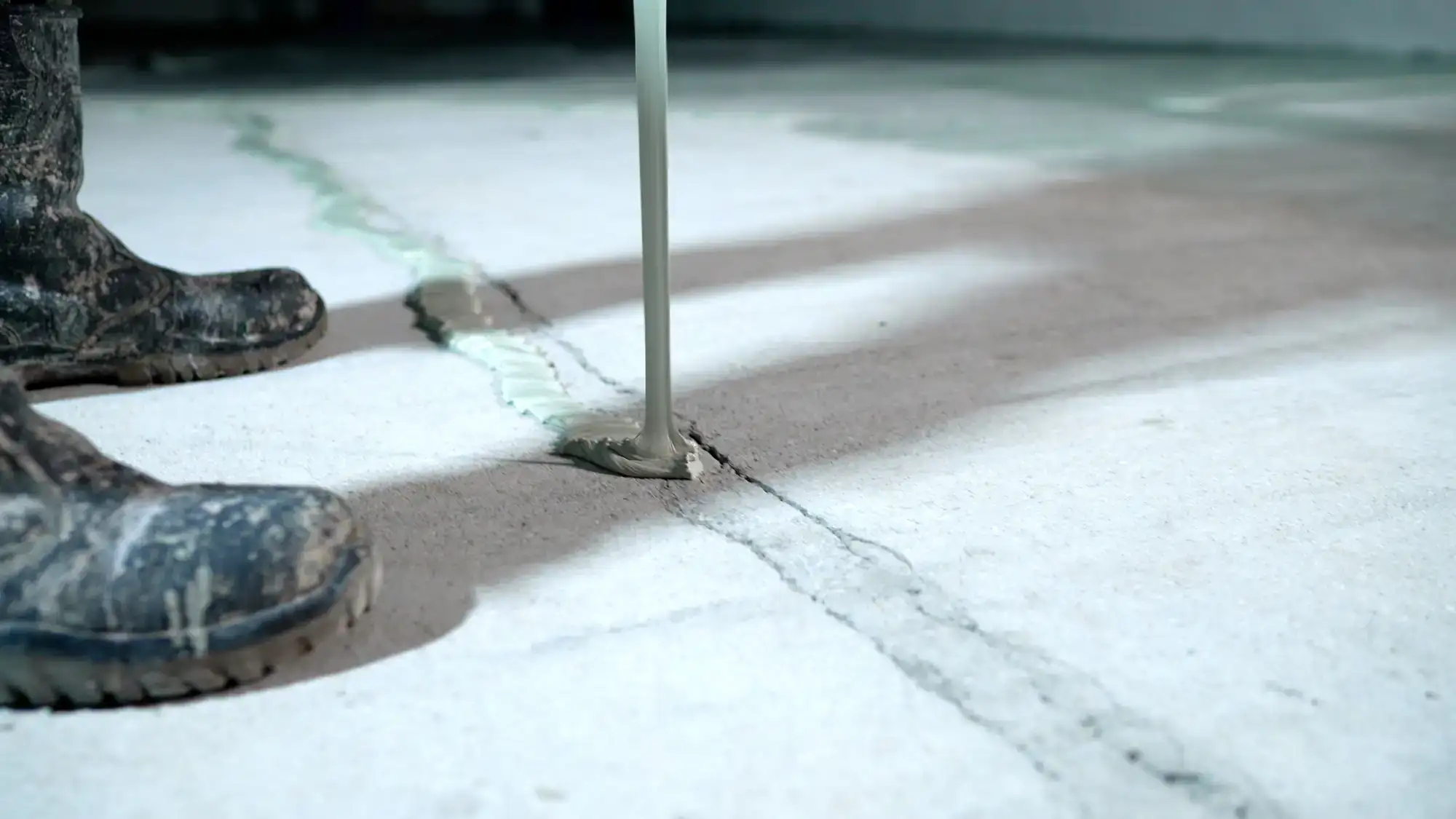
From there, we match the right method to the actual problem. Sunken or uneven slabs are typically addressed with polyurethane foam injection a process that fills the voids beneath the slab, lifts it back to grade, and leaves the surface ready to use in about 15 to 30 minutes. That’s not a shortcut; it’s genuinely the better method compared to traditional mudjacking, which takes 24 to 48 hours to cure and uses heavier fill material that can add load to already-compromised soil. Structural cracks get epoxy injection. Surface deterioration gets the appropriate overlay or resurfacing treatment.
Before any permitted work begins, we provide the documentation that Altamonte Springs’ Building and Fire Safety Department requires Florida state contractor license, business tax receipt, and workers’ compensation coverage. If you’ve ever had a contractor pull a permit that failed inspection because their paperwork wasn’t in order, you already know why this matters. After the job wraps, you’ll receive a follow-up to confirm everything is performing as expected. If something isn’t right, we address it.
Ready to get started?
Concrete repair in Altamonte Springs covers more ground than most homeowners initially realize. The obvious ones are driveways and walkways surfaces that get daily use and show age quickly in Florida’s climate. But the same sandy soil conditions and seasonal rainfall that crack your driveway are also working on your patio, your pool deck, your retaining walls, and any concrete steps or borders on your property. We handle all of it, which matters when you’re looking at multiple surfaces that need attention at the same time.
For sunken or uneven concrete a common issue in older Altamonte Springs neighborhoods where the housing stock dates back to the 1960s and 1970s polyurethane foam injection is typically the most effective and least disruptive approach. It works through small, minimally invasive injection points, lifts the slab back to its original position, and cures fast enough that your driveway isn’t out of commission for two days. For cracks that have penetrated the full depth of the slab, epoxy injection restores structural integrity rather than just sealing the surface. Spalling, scaling, and surface deterioration are addressed with appropriate overlays and sealers that are formulated to hold up under Seminole County’s UV exposure and seasonal rain cycles.
If your property includes brick borders, block walls, or stone features alongside the concrete which is common in subdivisions like Brantley Estates and Spring Lake Hills those are handled under the same project. One scope, one timeline, one point of contact.
It depends on the scope of work. In Altamonte Springs, surface-level repairs crack filling, resurfacing, patching typically don’t require a permit. That’s good news for most homeowners dealing with standard driveway or patio damage, because it means less paperwork and faster scheduling.
Where permits do come into play is structural work: new concrete slabs, retaining walls above a certain height, and foundation-related repairs. When a permit is required, it goes through Altamonte Springs’ own Building and Fire Safety Department not just the county. The contractor pulling that permit needs to provide a valid Florida state contractor license, a business tax receipt, and proof of workers’ compensation coverage. If they hold a “Registered” license rather than a “Certified” one, they also need current Seminole County registration. This is a two-tier requirement that catches a lot of homeowners off guard when they’ve hired someone who’s state-licensed but not properly registered locally. We carry all required documentation and can provide it before work begins.
The honest answer is that most cracked concrete in Altamonte Springs does not need to be replaced it needs to be repaired before the damage reaches the point where replacement becomes unavoidable. The deciding factor is usually structural integrity. If the slab is cracked but still stable, level, and not showing signs of significant void formation underneath, repair is almost always the right call. If the slab is severely sunken, broken into multiple shifting pieces, or the subgrade beneath it has eroded to the point where there’s nothing solid to lift back to, replacement may make more sense.
A general rule used across the industry: if repair costs approach 50% of full replacement cost, replacement is likely the better long-term investment. For most residential concrete in Altamonte Springs driveways, patios, pool decks, walkways repair comes in well below that threshold. Professional crack filling runs roughly $1 to $3 per linear foot. A full driveway replacement in Seminole County can run $3,000 to $10,000 or more depending on size and complexity. Getting an honest assessment upfront, rather than a contractor who defaults to replacement because it’s a larger job, is what protects your budget.
The main culprit is the sandy soil that sits beneath most of Altamonte Springs’ residential slabs. Sandy subgrade drains quickly during dry conditions which sounds like a good thing, but what it actually does is create voids beneath the concrete as moisture leaves the soil and the ground compacts unevenly. When the rainy season arrives between May and October and that same soil becomes saturated, it loses its load-bearing stability. The slab above it settles, shifts, and eventually cracks.
This cycle repeats every year, which is why concrete damage in Altamonte Springs tends to be progressive rather than sudden. A small crack in April becomes a significant structural problem by November if it’s left alone through another rainy season. The age of the housing stock amplifies this most Altamonte Springs homes were built between the 1960s and 1980s, meaning the concrete was poured before modern polymer-modified mixes and base preparation standards were common. Older concrete on compromised subgrade, in a climate that delivers over 50 inches of rain per year, is a predictable combination. Understanding that is the first step toward fixing it correctly.
A properly executed concrete repair one that addresses the subgrade, uses the right materials for the application, and is sealed appropriately can realistically last 10 to 15 years or more under Florida conditions. The key phrase there is “properly executed.” A surface patch that doesn’t account for void formation beneath the slab, or a crack fill that uses a material incompatible with Florida’s UV exposure and thermal cycling, may fail within a year or two. That’s not a repair that’s a delay.
In Altamonte Springs specifically, longevity comes down to a few factors: whether the void beneath the slab was addressed before the surface was treated, whether the materials used are rated for high-UV and high-moisture environments, and whether the repair was done during a window of stable weather typically the October through April dry season, when humidity is lower and there’s no risk of rain interrupting the cure. Polyurethane foam injection cures in 15 to 30 minutes and is not sensitive to humidity the way some traditional repair materials are. Epoxy crack injection, when properly mixed and applied, bonds to concrete at the molecular level and typically outlasts the surrounding slab. The method matters as much as the material.
The October through April window is generally the best time to schedule concrete repair in Altamonte Springs. Seminole County’s rainy season runs from May through October, delivering roughly 60 to 70 percent of the area’s annual rainfall in those six months. Rain during or immediately after certain types of concrete work can interfere with curing, wash away surface treatments, and in some cases compromise the bond of repair materials. Scheduling outside that window eliminates most weather-related risk.
That said, not all repair methods are equally sensitive to weather. Polyurethane foam injection, which is used for slab lifting and void filling, cures in minutes and is not significantly affected by humidity. If you’re dealing with a safety hazard a sunken slab, a cracked walkway that’s become a trip hazard, or storm damage waiting until fall isn’t necessarily the right call. The more weather-sensitive work, like concrete overlays and surface resurfacing, benefits most from the dry season timing. If you’re unsure whether your situation can wait, the straightforward approach is to get an assessment now and schedule accordingly based on what the repair actually requires.
Yes. Altamonte Springs has a significant amount of commercial and multi-family property particularly along the SR 436 and SR 434 corridors and in the denser Uptown Altamonte district, where condo complexes, apartment communities, and mixed-use developments are concentrated. Property managers and HOA boards overseeing these properties deal with the same concrete deterioration issues as residential homeowners, just at a larger scale: parking lot cracking, uneven walkways, deteriorating curbs, and common-area concrete that’s become a liability concern.
We handle commercial concrete repair with the same transparent pricing and project tracking that applies to residential work which matters when you’re managing a maintenance budget and need to know what a repair will cost before you approve it, not after. For commercial properties in Altamonte Springs, permitted structural work follows the same city requirements as residential: Florida contractor license, business tax receipt, and workers’ comp documentation submitted to the Building and Fire Safety Department before work begins. If you’re managing multiple buildings or a larger property with ongoing maintenance needs, our anything-masonry scope means concrete, brick, block, and stone are all handled under one contractor relationship rather than several.
Other Services we provide in Altamonte Springs