Licensed and insured concrete and masonry contractors serving Central Florida. Quality work, honest pricing, no surprises.
Contact Info
Hear From Our Clients
A crack in your driveway in Tavares isn’t just a cosmetic issue. Every inch of rainfall and Lake County gets a lot of it between May and October finds its way through that crack and starts washing away the sandy soil underneath. That’s not a slow process. Once the subbase erodes, slabs sink, gaps widen, and what started as a $200 repair turns into something that costs ten times more to fix.
The karst limestone bedrock beneath Tavares creates conditions that accelerate this. Soil voids form. Water tables shift with the lake levels. Properties near Lake Dora or along the older neighborhoods surrounding downtown are especially vulnerable because the ground beneath them has been settling and adjusting for decades. When you get ahead of it with a proper repair, you’re not just fixing a crack you’re cutting off the cycle before it gets expensive.
After a concrete repair is done right, you get a surface that drains properly, doesn’t shift underfoot, and doesn’t create a liability every time someone walks across it. For a homeowner in Tavares who’s been watching that crack get a little wider every summer, that’s not a small thing.
We work across Lake County Tavares, Eustis, Mount Dora, Umatilla, and the surrounding communities which means the soil conditions, the seasonal rainfall patterns, and the permit requirements here aren’t new to us. Lake County has specific contractor insurance requirements that catch a lot of out-of-area crews off guard, including the need to name the Lake County Board of County Commissioners as the certificate holder on liability documentation. We carry the right coverage and know the local process.
What that means for you is simpler than it sounds: no licensing surprises, no insurance gaps, and no contractor who disappears after the deposit clears. You get written pricing before any work starts, project updates while it’s underway, and a follow-up call after it’s done because we want to know the repair held up through Tavares’s first hard rain, not just the day we packed up.
It starts with an honest assessment. Before anything gets quoted or scheduled, we look at what you’re actually dealing with not just the surface crack, but what’s happening beneath it. In Tavares, that distinction matters. A crack caused by normal thermal expansion repairs differently than one caused by soil erosion underneath a slab near a lakeshore property. The diagnosis shapes the method, and the method shapes how long the repair lasts.
From there, you get a written estimate with a real number on it. If the repair calls for polyurethane foam injection which lifts a sunken slab by filling the voids beneath it and has the surface ready to use in under 30 minutes we’ll explain that. If it calls for epoxy crack injection or a polymer-modified overlay, same thing. You’ll know what’s being done and why before we start.
Scheduling accounts for Tavares’s weather. Concrete repair work goes best outside the peak rainy season, and we’ll tell you if timing affects your repair’s durability. Once the job is done, we follow up. Not because it’s a sales call but because Florida’s climate will test the work, and we want to know it held.
Ready to get started?
Most concrete companies in the Tavares area specialize in one thing foundation repair, or driveways, or pavers. That means if your property has a cracked driveway, a deteriorating retaining wall near a lakeshore edge, a spalling pool deck, and a brick walkway that needs repointing, you’re managing three different contractors, three different timelines, and three different people to call if something goes wrong.
We cover the full scope: driveway repair and resurfacing, concrete leveling, slab repair, sidewalk and walkway repair, retaining wall repair, pool deck restoration, brick repair, and block wall work. For homeowners in the established neighborhoods around downtown Tavares or the lakefront properties along Lake Dora, that range matters older homes tend to have multiple masonry surfaces at different stages of wear, and it’s rarely just one thing.
Every job is handled with the same approach regardless of size: transparent pricing upfront, proper Lake County permitting where required, and materials rated for Florida’s heat and humidity not generic hardware store products that cure wrong in 90-degree summer conditions. If you’re unsure whether your situation calls for repair or full replacement, we’ll tell you honestly, including when repair is the smarter financial call.
It’s a fair question to ask in Tavares, and you’re not being paranoid for asking it. The city sits on karst limestone bedrock with sandy soils above it the same geology that makes sinkhole activity a documented concern throughout Lake County. That said, most driveway cracks are not sinkhole-related. The more common cause is subbase erosion: water works its way under the slab, washes out the sandy soil beneath it, and the concrete loses its support and begins to crack or sink.
The way to tell the difference is through a proper assessment, not a guess. Active sinkhole activity typically shows specific warning signs beyond surface cracking things like circular depressions, sudden changes in drainage patterns, or cracks that widen rapidly over a short period. A standard settlement crack that’s been slowly widening over a couple of seasons is usually a soil and drainage issue that concrete leveling or polyurethane foam injection can address. If there’s any doubt after we look at it, we’ll tell you and we won’t recommend a surface repair on top of a soil problem that hasn’t been resolved.
The range is wide because the scope varies so much. A straightforward crack fill runs roughly $1 to $3 per linear foot, with most contractors carrying a minimum service call in the $100 to $175 range. A sunken driveway section that needs foam lifting or mudjacking sits in a different price tier depending on how many slabs are affected and how much void space exists beneath them. Full driveway resurfacing in the Lake County area averages around $2,400, though that number moves based on square footage, surface condition, and whether any subbase work is needed first.
What matters more than the number is knowing the number before work starts. The concrete repair market in this area has a documented problem with estimates that grow between quote day and invoice day. We provide written pricing before any work begins what you’re quoted is what you pay. If the scope changes because we find something unexpected during the job, that conversation happens before the work continues, not after.
It depends on the scope. Routine crack repair, sealing, and minor resurfacing typically don’t require a permit. But more substantial work structural repairs, retaining wall work, anything that involves altering drainage or modifying a surface that affects a neighboring property generally does require permitting through either the City of Tavares building services department or Lake County, depending on whether your property is within city limits or in unincorporated Lake County.
One thing worth knowing: Lake County has a specific insurance requirement for contractors pulling permits there. State-certified contractors working in Lake County must provide a Certificate of Liability Insurance that names the Lake County Board of County Commissioners as the certificate holder not just a generic certificate of insurance. A lot of contractors who work across multiple counties aren’t set up for this requirement and either skip the permit or get caught short. We’re already compliant with Lake County’s documentation requirements, so if your project needs a permit, that process doesn’t slow us down.
October through April is the window you want to work with if you have any flexibility. That’s Tavares’s dry season rainfall drops significantly, temperatures are moderate, and concrete repair products cure the way they’re supposed to. Scheduling during the summer rainy season isn’t impossible, but it adds variables: rain delays, humidity that affects cure times, and heat that can cause certain repair materials to set too quickly if they’re not rated for Florida conditions.
That said, some repairs can’t wait for the ideal season. A sunken slab that’s creating a trip hazard, a retaining wall that’s starting to lean, or storm damage after a system like Hurricane Milton those need to be addressed when they happen, not six months later. Polyurethane foam injection, in particular, is relatively weather-tolerant and can often be done in conditions where other repair methods would be postponed. The honest answer is: schedule when you can, but if you have a choice, fall and winter give you the most predictable results.
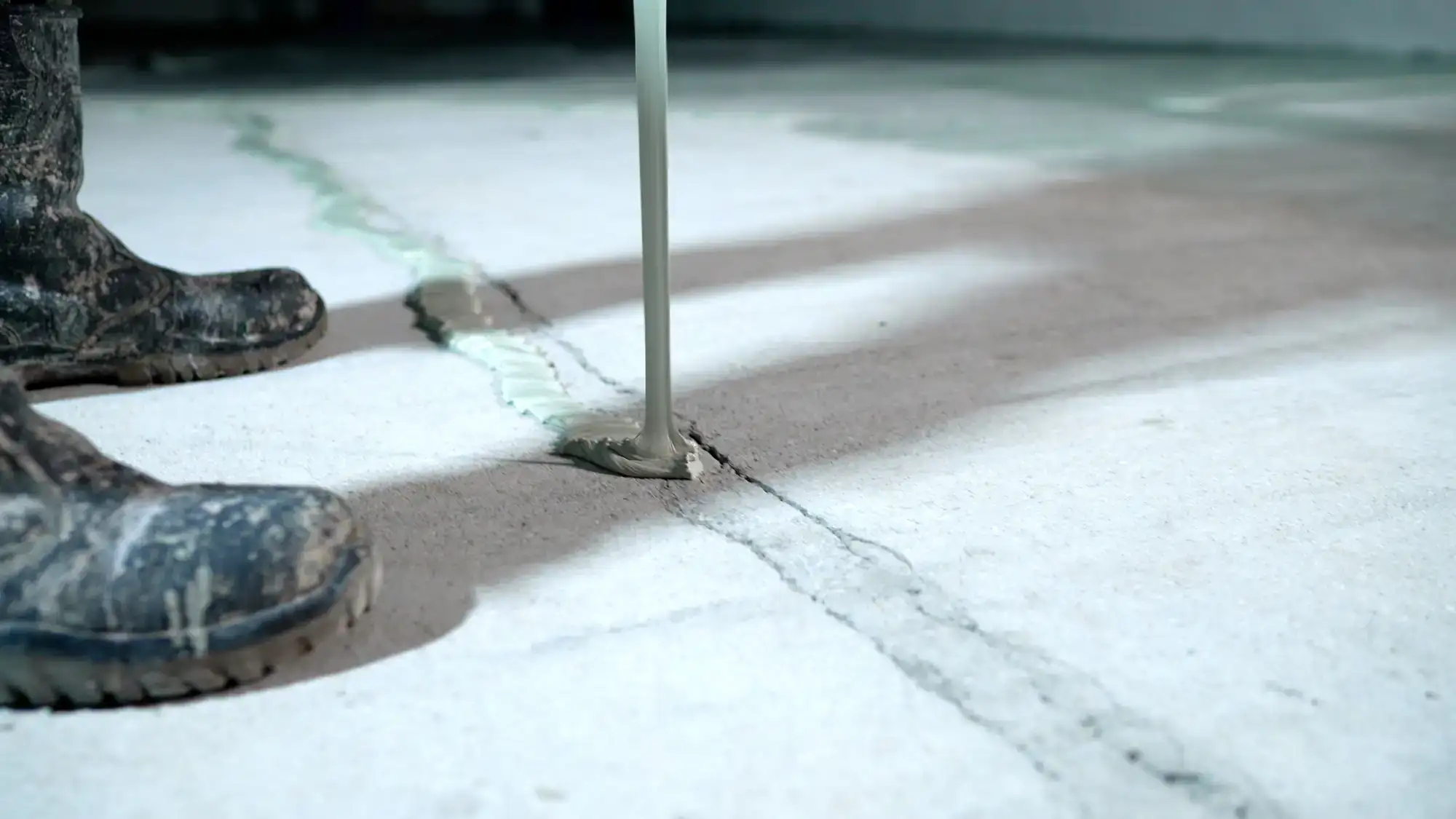
In most cases, yes and it’s significantly less expensive than tearing out and replacing the slab. Polyurethane foam injection is the method most suited to this situation. Small ports are drilled into the affected slab, high-density expanding foam is injected beneath it, the foam fills the voids in the sandy soil, and the slab lifts back toward level as the foam expands and cures. The surface is usable within 15 to 30 minutes, and the foam itself is water-resistant which matters on a property near Lake Dora or any of the other lakes surrounding Tavares, where moisture in the soil is a constant factor.
The caveat is that leveling only makes sense when the slab itself is structurally sound. If the concrete is heavily cracked, crumbling at the edges, or has been sinking unevenly for years, replacement may be the more durable call. We’ll assess the slab’s condition before recommending either direction because lifting a slab that needs to be replaced just delays the inevitable and wastes your money.
Florida requires masonry and concrete contractors to hold a valid state certificate of competency, which is searchable at myfloridalicense.com through the Department of Business and Professional Regulation. You can look up any contractor’s license number before signing anything and any contractor worth hiring will give you that number without hesitation.
Insurance is where it gets more specific in Lake County. Beyond standard general liability and workers’ compensation coverage, contractors pulling permits in Lake County are required to provide a Certificate of Liability Insurance that names the Lake County Board of County Commissioners as the certificate holder. This is a county-level requirement that goes beyond what’s needed in many other Florida counties, and it’s one that out-of-area contractors sometimes aren’t aware of. If a contractor can’t produce that documentation for a permitted job in Lake County, that’s a gap worth taking seriously not because the work won’t get done, but because it can leave you exposed if something goes wrong on your property. Ask for the license number and the insurance certificate before any work begins. A contractor who hesitates on either one is telling you something.
Other Services we provide in Tavares