Licensed and insured concrete and masonry contractors serving Central Florida. Quality work, honest pricing, no surprises.
Contact Info
Hear From Our Clients
A lot of Winter Springs homeowners have already been through this once. They tried a box-store epoxy kit, or hired someone who quoted low and moved fast, and within a season or two the floor was bubbling, peeling, or yellowing in patches. That’s not bad luck it’s what happens when the product and process aren’t matched to what Central Florida concrete actually does.
The homes in Tuscawilla, Chelsea Woods, Seven Oaks, and the surrounding subdivisions were built between the late 1960s and mid-1990s. Those slabs have had decades of exposure to Florida’s moisture cycle. Every rainy season and Winter Springs gets the full force of it from May through October water saturates the ground beneath your slab and pushes moisture vapor upward through the concrete. If that isn’t accounted for before the coating goes down, the bond fails. It’s that straightforward.
What you get with a properly installed epoxy floor isn’t just a cleaner-looking garage. It’s a surface that handles the heat of a Florida summer, resists the hot-tire pickup that destroys cheap coatings, and doesn’t yellow when the garage door is open and the sun is hitting it directly. If you store a golf cart, bikes, or gear for the Cross Seminole Trail, you also get a floor that’s easy to sweep, resistant to oil and drips, and presentable enough to actually match the rest of your home.
We’re not a coating-only operation. Our work starts with masonry understanding what’s happening with the concrete before anything gets applied. That matters more in Winter Springs than most people realize, because the housing stock here isn’t new. Slabs that are 30 to 50 years old come with history: hairline cracks, previous coating residue, surface porosity, moisture issues that a coat of epoxy alone won’t fix.
What sets us apart is that our crew can actually diagnose and address what’s underneath. If the slab needs repair before coating, that gets handled not ignored or flagged as a reason to walk away. Transparent pricing means you know exactly what you’re paying for before anyone shows up, and project tracking means you’re not left wondering what’s happening or when.
Serving homeowners and businesses throughout Winter Springs and Seminole County, we bring the kind of accountability that a $430,000 home investment deserves.
The first thing that happens on a Winter Springs job isn’t mixing epoxy it’s reading the slab. We start with moisture testing. Given the clay-heavy soils common in Seminole County and the sustained ground saturation that comes with Central Florida’s rainy season, moisture vapor transmission is the number one reason coatings fail here. Before any product is applied, the slab gets tested so the right system gets specified. Skipping this step is how you end up with a floor that looks great in November and is blistering by July.
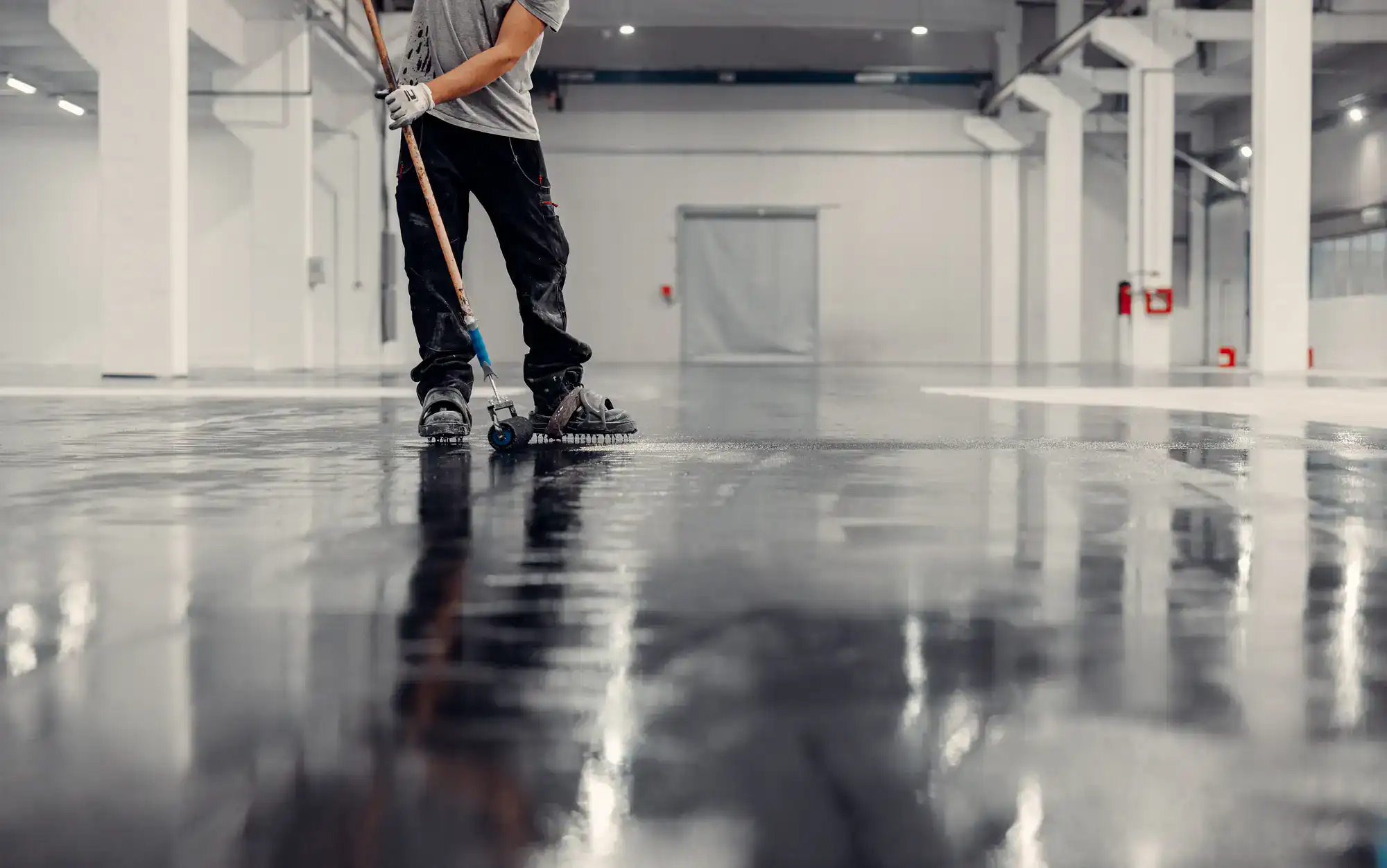
From there, surface preparation is the most labor-intensive part of the job. Grinding, cleaning, crack repair, and any previous coating removal all happen before the primer coat touches the floor. This is where masonry experience pays off knowing what the concrete needs, not just what the product instructions say. Once the substrate is properly prepped, the base coat, decorative flake broadcast (if selected), and UV-stable polyaspartic topcoat go down in sequence.
The best time to schedule in Winter Springs is November through April, when lower humidity and more stable temperatures give the coating the curing conditions it needs. That said, interior garage projects can be managed year-round with the right moisture protocols in place. Most standard two-car garage projects are complete in a single day, with the floor ready for vehicle traffic within 24 hours.
Ready to get started?
We handle both residential and commercial epoxy flooring throughout Winter Springs. On the residential side, that means garages, interior concrete floors, pool decks, and driveways with systems specified for Florida’s UV intensity, thermal cycling, and moisture conditions. For homes in Tuscawilla and surrounding neighborhoods, the aging slab-on-grade construction means surface prep and moisture management are always part of the scope, not optional add-ons.
On the commercial side, the growing business corridor along SR 434 including the Town Center development at SR 434 and Tuskawilla Road creates real demand for commercial-grade flooring that meets slip-resistance requirements and holds up under daily foot traffic and cleaning chemicals. Restaurants, fitness studios, retail spaces, and professional offices all need floors that look professional and stay compliant with ADA and OSHA coefficient-of-friction standards. We bring the same masonry-first approach to commercial work that we apply to residential projects.
Every job includes upfront, itemized pricing not a range with surprise additions on installation day. You’ll know what the surface preparation covers, what system is being installed, and what the topcoat chemistry is before the crew arrives. For homeowners in HOA-governed communities like Tuscawilla’s 28-plus sub-associations, that documentation also makes the approval process cleaner on your end.
The short answer is moisture. Winter Springs sits in the middle of Central Florida’s rainy season corridor, and from May through October, the ground beneath your slab stays heavily saturated. That moisture pushes upward through the concrete as vapor and if the installer didn’t test for it or specify a moisture-compatible system, the coating loses its bond from underneath. You’ll see it as bubbling, blistering, or sections of the floor lifting away from the surface.
The other common failure point is surface preparation. Many lower-cost installers skip or rush the grinding and cleaning phase because it’s the most time-consuming part of the job. On older slabs which describes most of the homes in Tuscawilla and the surrounding Winter Springs subdivisions there’s often prior coating residue, oil contamination, or surface porosity that has to be addressed before anything new will stick. A coating applied over a compromised surface will always fail eventually, no matter how good the product is.
For a standard two-car garage in Winter Springs, you’re generally looking at a range of $1,100 to $4,300 depending on the square footage, the condition of the slab, the system type, and whether you’re adding a decorative flake broadcast or a premium polyaspartic topcoat. Most homeowners in established Tuscawilla subdivisions land in the mid-to-upper portion of that range, partly because the older slabs often require more prep work and partly because the demand for UV-stable, moisture-resistant systems is higher in this climate.
What affects the final number most is the surface preparation scope. A slab with existing cracks, previous coating residue, or confirmed moisture vapor issues will require more work before the coating goes down and that prep is what determines whether the floor lasts two years or twenty. We provide fully itemized pricing before the project starts, so you know exactly what’s included and why, without discovering new line items on installation day.
For Central Florida conditions, a two-coat system with a polyaspartic topcoat is the most reliable specification. Standard aromatic epoxy the chemistry used in most box-store kits and some lower-cost installations is not UV-stable. When sunlight hits it directly, it yellows and chalks over time. In a Winter Springs garage with a south or west-facing door, that degradation happens faster than most homeowners expect.
Polyaspartic topcoats solve the UV problem and also cure faster, which matters during Florida’s humid summers when extended cure windows increase the risk of moisture interference. They’re also more flexible under thermal stress, which is relevant in Central Florida where garage temperatures can exceed 100°F in summer and drop into the 30s during January cold fronts. That temperature range puts real stress on rigid coatings. A properly specified polyaspartic system handles that range without cracking or delaminating at the edges.
For a standard residential garage floor coating, no permit is typically required in Winter Springs. Epoxy is applied to an existing concrete surface and doesn’t alter the structural character of the slab, so it generally falls outside the Florida Building Code’s permit threshold for residential work.
Where it gets more nuanced is on the commercial side. Businesses operating in the SR 434 corridor or the Winter Springs Town Center area may need to document that their floor meets ADA and OSHA slip-resistance standards specifically the required coefficient of friction for public-access areas. That’s not a permit in the traditional sense, but it is a compliance requirement that affects product selection and installation documentation. Our commercial flooring work accounts for these requirements as part of the project scope, not as an afterthought. On the residential side, the more important credential to verify is contractor licensing Florida requires proper state licensing for masonry and concrete work, and homeowners can be left holding liability if a worker is injured on their property and the contractor isn’t properly insured.
A properly installed epoxy floor in Winter Springs meaning one with correct surface prep, moisture testing, and a UV-stable topcoat should realistically last 15 to 20 years under normal residential use. The installations that fail in two or three years almost always share the same root causes: skipped moisture testing, inadequate surface preparation, or the wrong coating chemistry for Florida’s UV and heat exposure.
The homes in Tuscawilla and other established Winter Springs neighborhoods are actually a useful case study here. Many of those slabs are 30 to 50 years old and have already seen one or two failed coating attempts. When those floors get properly stripped, prepped, moisture-tested, and recoated with a system designed for this climate, they hold up well for the long term. The concrete itself isn’t the problem the process is. On the commercial side, high-traffic floors in retail or restaurant environments may need a maintenance topcoat after 7 to 10 years, but the base system should remain intact well beyond that with routine cleaning.
For most Tuscawilla homeowners, yes and the reasoning goes beyond aesthetics. The Tuscawilla community includes over 4,500 homes across 28-plus sub-associations, and homes here are regularly compared against each other in an active Seminole County real estate market. A finished, coated garage floor is a visible signal to buyers that the home has been properly maintained, and real estate professionals in Winter Springs consistently cite it as a differentiator in competitive listings. With median home values in Winter Springs around $428,000 to $435,000, that kind of curb-appeal detail carries real weight.
From a practical standpoint, Tuscawilla’s housing stock built largely between the late 1960s and mid-1990s means many garages have aging concrete that’s already showing wear. A quality epoxy coating protects that surface from further deterioration, makes it easier to clean, and gives the space a finished look that matches the investment homeowners have made in the rest of the property. If your sub-association requires prior approval for exterior or garage improvements, our itemized project documentation makes that process straightforward on your end.
Other Services we provide in Winter Springs