Epoxy Flooring in Winter Garden, FL

Winter Garden Floors That Actually Hold Up Here

Florida humidity, summer downpours, and a high water table make epoxy flooring trickier than it looks we install it the right way, the first time.
Applying epoxy coating on a concrete floor in a commercial space.

Hear From Our Clients

[Add Trustindex Slider Here]
Worker applying epoxy coating on a concrete floor in a commercial space.

Garage Floor Coating Winter Garden FL

A Floor That Lasts Not One That Peels by Summer

Most epoxy failures in Winter Garden come down to one skipped step: moisture testing. Winter Garden sits over a high water table, and from May through October, that moisture pushes upward through your concrete slab. When a contractor skips the vapor assessment and coats straight over it, you get bubbling, peeling, and delamination usually within the first two rainy seasons. That’s not a product problem. It’s a preparation problem.

When the job is done right, you get a floor that handles the heat, sheds water, and still looks clean after years of use. Whether it’s a garage in Stoneybrook West that sees daily traffic from the SR 429 commute, or a new-construction slab in Horizon West that’s still releasing moisture from the pour, the process has to match the conditions not just the square footage.

Beyond durability, a properly installed epoxy floor adds real value to a home in one of Central Florida’s fastest-appreciating real estate markets. In communities where buyers look closely at finish quality, a floor that was done correctly is an asset. One that’s already peeling is a liability you’ll have to disclose.

Epoxy Floor Contractor Winter Garden FL

Masonry Knowledge Behind Every Coating Job

We’re a masonry company first. That means when we look at your concrete, we’re not just seeing a surface to coat we’re reading what’s happening underneath it. Cracks near the garage threshold, efflorescence along the edges, or soft spots that show up during grinding all tell a story. Most coating-only contractors coat right over those signs. We address them.

That depth of knowledge matters in Winter Garden, where the housing stock ranges from 20-year-old slabs in Stoneybrook West to freshly poured concrete in the newest Horizon West phases. Each one presents a different set of conditions, and the installation approach has to reflect that. You’re not getting a one-size-fits-all process here.

Transparent pricing, real project tracking, and follow-up communication are built into every job not offered as extras. You’ll know what you’re paying before anything starts, and you’ll know where the project stands without having to chase anyone down.

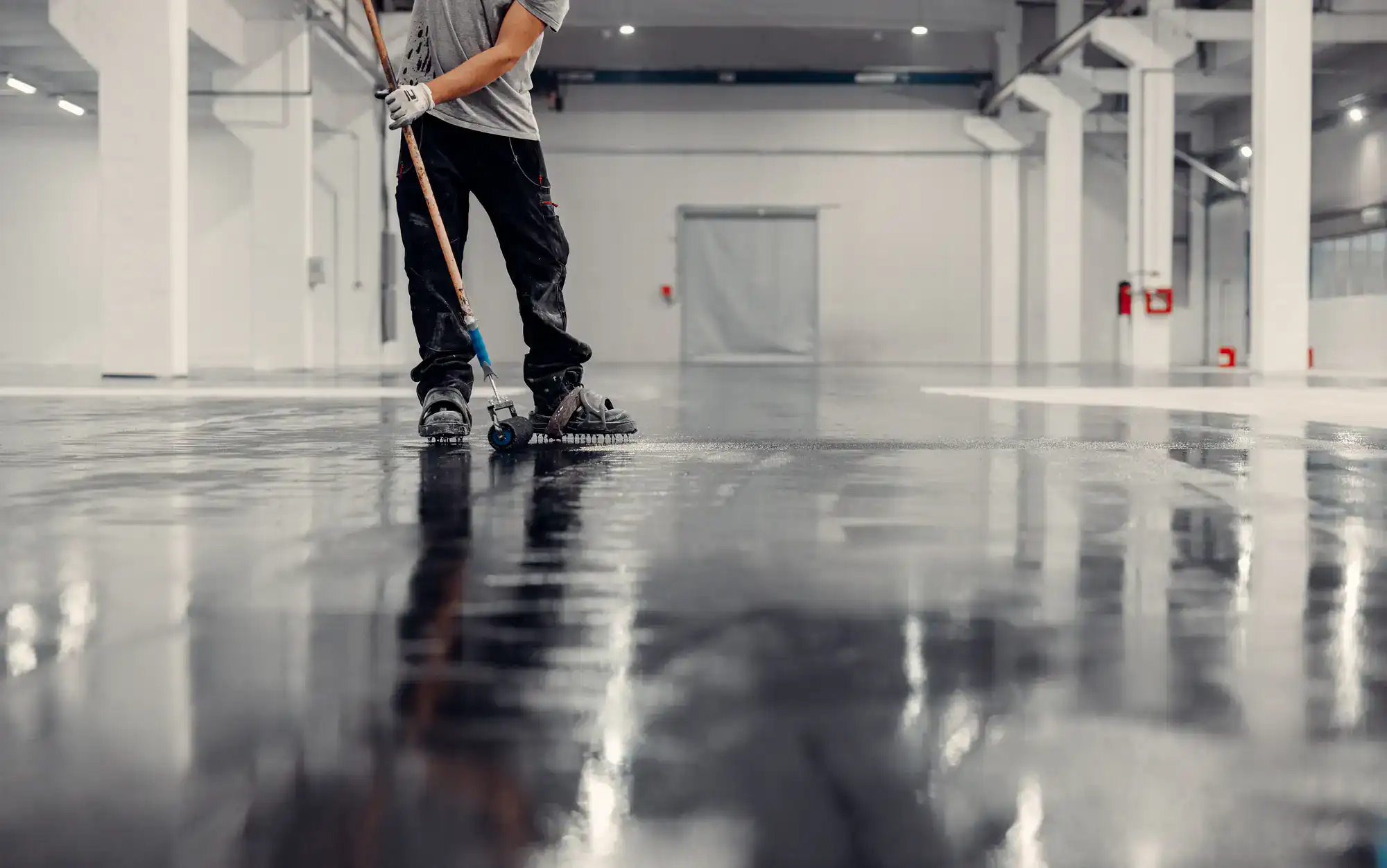
Polished epoxy flooring in a commercial garage with a worker cleaning surface.

Epoxy Flooring Installation Process Florida

What the Process Looks Like From Your Driveway

It starts before we touch your floor. We assess your slab its age, condition, and moisture emission levels. This step is non-negotiable in Winter Garden. If your home is in a newer Horizon West community, your concrete may still be releasing moisture from the original pour, which can take up to a year to stabilize. If you’re in an established neighborhood near Lake Apopka, older slabs have their own wear patterns. Either way, the assessment determines what prep is actually required not what’s cheapest to skip.

Surface preparation comes next. The concrete is diamond-ground to open the pores and create a mechanical bond for the coating. If a moisture vapor barrier is needed based on the assessment results, it goes down before any epoxy touches the slab. This is the layer that most budget installs leave out and the reason so many Florida garage floors start failing within two years.

Once the base coat is applied, a UV-stable polyaspartic topcoat finishes the job. In Winter Garden’s climate, that topcoat matters. Standard epoxy alone will yellow and chalk under Central Florida’s year-round sun exposure. The polyaspartic layer holds the color and gloss. From there, you get a full walkthrough, a clear cure timeline, and a follow-up call to make sure everything looks the way it should.

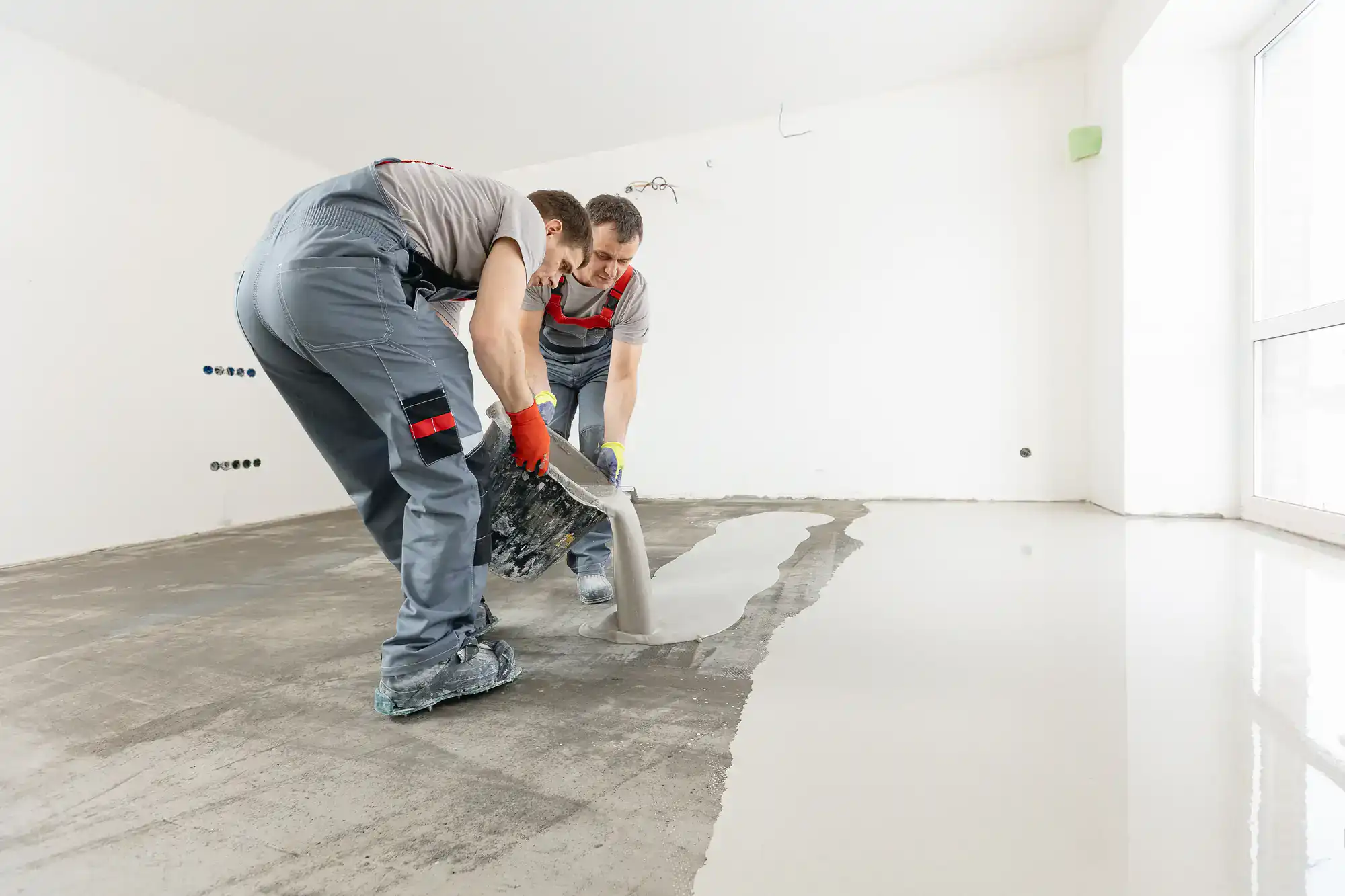
Workers applying epoxy flooring in a bright, empty room in Altamonte Springs, FL.

Concrete Floor Coating Services Winter Garden

Built for Winter Garden Conditions, Not Just Winter Garden Zip Codes

We handle residential and commercial epoxy flooring across Winter Garden and the surrounding West Orange County area. On the residential side, that includes garage floors, interior concrete surfaces, and pool deck areas all installed with Florida’s moisture, heat, and UV conditions factored in from the start. On the commercial side, we work with property managers and business owners along the SR 50 corridor, in the Winter Garden Village area, and in the downtown Plant Street district who need durable, low-maintenance flooring that holds up under real daily use.

Every project includes a pre-installation slab assessment, surface preparation, and a UV-stable topcoat as standard not as upsells. If your project scope exceeds $5,000, we’ll walk you through the Notice of Commencement process required by Florida Statute, which needs to be filed with the Orange County Comptroller’s Office and submitted to the City of Winter Garden’s building department. Most homeowners don’t know that step exists until after something goes wrong with a contractor who skipped it.

If you’re in an HOA-governed community like Stoneybrook West, it’s worth confirming any coating color or finish restrictions with your association before scheduling. We can work within those guidelines just something to verify on your end before the project kicks off.

Worker applying epoxy flooring in a bright, empty room with large window.

Why do so many epoxy floors peel in Winter Garden and Central Florida?

The short answer is moisture. Winter Garden’s water table is high, and Florida’s rainy season which runs from May through October and accounts for 60 to 70 percent of the area’s annual rainfall keeps the ground saturated for months at a time. That moisture doesn’t stay in the soil. It migrates upward through concrete slabs via vapor pressure, and when a coating is applied over it without proper testing or a vapor barrier, the trapped moisture creates osmotic blistering. Those bubbles grow, pop, and break the adhesion bond between the coating and the slab.

This is the most common cause of epoxy failure in Winter Garden and throughout Central Florida, and it’s entirely preventable. The fix isn’t a better product it’s a better process. Moisture vapor testing before installation, and a vapor barrier when emission rates are elevated, are what separate a floor that lasts from one that starts peeling before the second summer. Any contractor who doesn’t mention moisture testing upfront is either skipping it or doesn’t know why it matters.

A properly installed epoxy floor in Winter Garden should last anywhere from 10 to 20 years with normal use and basic maintenance. The variables that shorten that lifespan are almost always installation-related, not product-related. Skipped moisture testing, inadequate surface prep, or a topcoat that isn’t UV-stable will all reduce the floor’s longevity significantly often cutting it down to two to five years before visible degradation sets in.

In Central Florida specifically, UV exposure is a year-round factor, not just a summer concern. A standard epoxy system without a UV-stable polyaspartic topcoat will begin to amber and chalk within 18 to 24 months in a garage with a south- or west-facing door. The topcoat is what holds the color and gloss over time. When the installation process accounts for Florida’s climate from the start moisture, heat, and UV the floor performs the way it’s supposed to for the long haul.

In both Winter Garden communities, yes but for slightly different reasons. In Stoneybrook West, where most homes were built between 2001 and the late 2000s, the concrete slabs are now 15 to 20 years old and entering a phase where surface wear is visible and protective coating adds real functional value. Homes in this community are also in a price range where buyers notice finish quality, and a well-done garage floor contributes to the overall presentation of the property.

In Horizon West, the dynamic is different. These are newer homes with newer slabs, and many buyers want to coat the garage immediately after closing. The caution here is that new concrete retains elevated moisture for up to 12 months after placement, which requires careful testing before any coating goes down. When the timing and prep are handled correctly, epoxy flooring in a Horizon West home is a smart early upgrade it protects the slab from the start and personalizes the space in a way that bare concrete simply doesn’t.

For a standard surface coating applied to an existing concrete slab which covers the majority of residential garage floor epoxy projects a building permit is typically not required. However, Winter Garden operates its own independent building department, separate from Orange County’s permitting system. If your project involves concrete removal, slab repair, or any structural modification, permit requirements apply and they go through the City of Winter Garden directly, not through Orange County’s Fast Track portal.

The other threshold to know is Florida’s Notice of Commencement requirement. For any project valued at $5,000 or more, a NOC must be filed with the Orange County Comptroller’s Office, and a certified copy needs to be submitted to the Winter Garden Building Department. This is a legal requirement that protects homeowners it establishes a clear record of the contractor and the scope of work, which matters if a lien or dispute arises later. We handle this process transparently so there are no surprises on the back end.

The dry season November through April is the most favorable window for epoxy flooring installation in Winter Garden. Lower humidity, temperatures in the 55 to 80 degree range, and the absence of daily afternoon thunderstorms create ideal curing conditions. Demand from homeowners tends to spike in the fall and again in late winter as people plan projects around this window, so scheduling earlier in the dry season gives you more flexibility.

That said, installation during the rainy season isn’t impossible it just requires more planning. Epoxy and polyaspartic coatings need specific temperature and humidity conditions to cure correctly, and contractors who don’t account for weather when scheduling risk rushing a coat ahead of incoming rain. We build weather contingency planning into every project schedule from the start, which means if you’re working within the May through October window, there’s a clear plan for how weather delays are handled not a scramble when a storm rolls in off Lake Apopka.

A few questions that will tell you a lot quickly: Do you test for moisture vapor before installation, and do you install a vapor barrier if levels are elevated? What topcoat do you use, and is it UV-stable? Are you registered as a contractor with the City of Winter Garden specifically not just Orange County? Those three questions alone will separate contractors who understand Florida conditions from those applying a generic process to a climate that doesn’t forgive shortcuts.

Beyond the technical questions, ask how they handle weather delays during the rainy season and whether your project cost is presented in writing before work begins. In a market with as many active epoxy flooring providers as Winter Garden has, pricing transparency and clear communication aren’t standard practice they’re differentiators. A contractor who can answer these questions directly and without hesitation is one who has done this work in this area and knows what it actually takes to get it right.

Other Services we provide in Winter Garden