Epoxy Flooring in Tangerine, FL

Lakeside Living Demands a Floor That Can Handle It

Tangerine’s proximity to four lakes means your concrete is fighting moisture year-round. We install epoxy flooring systems built to hold up not peel off after the first rainy season.
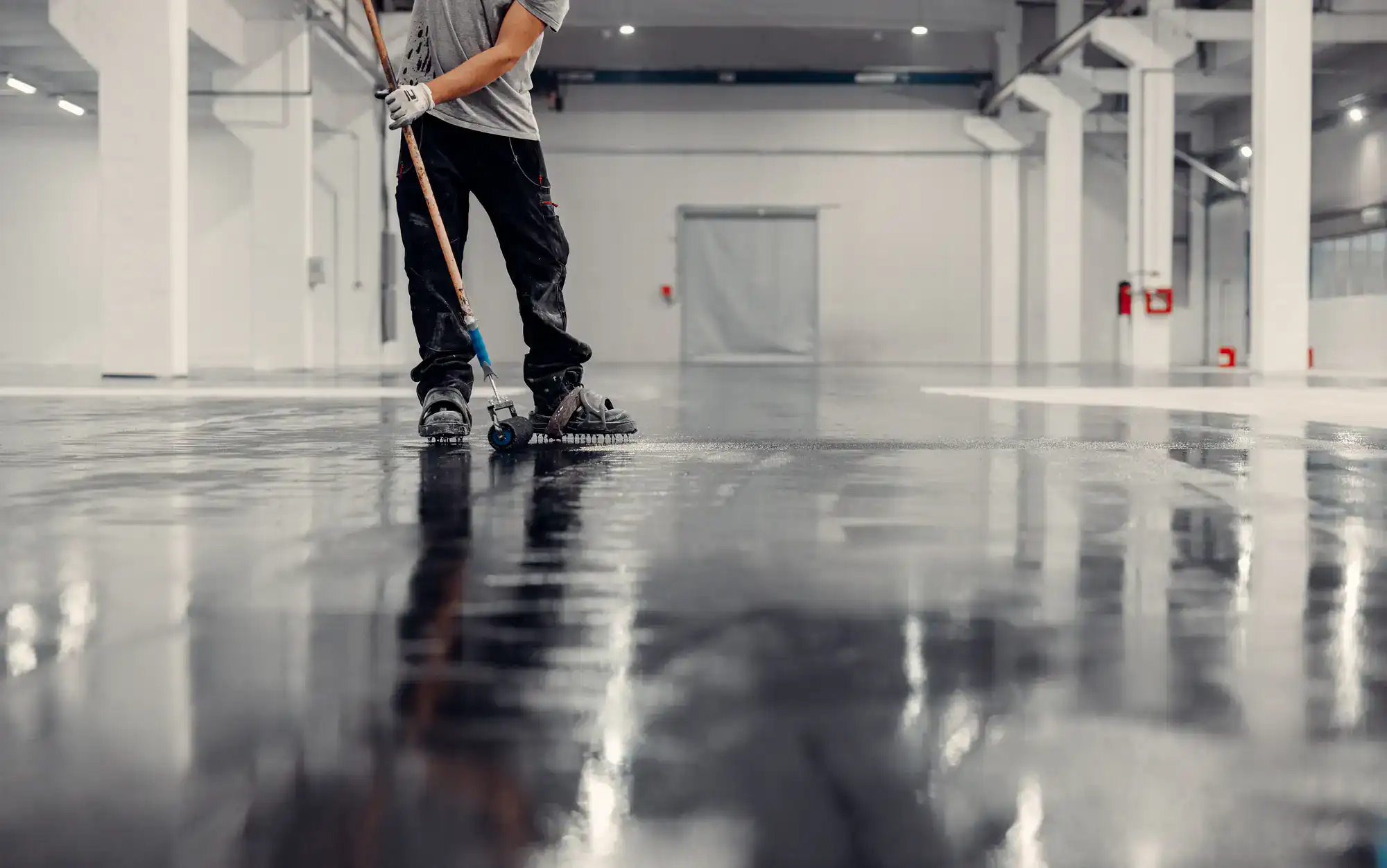
Applying epoxy coating on a concrete floor in a commercial space.

Hear From Our Clients

[Add Trustindex Slider Here]
Worker applying epoxy coating on a concrete floor in a commercial space.

Concrete Floor Coating Tangerine FL

A Floor That Stops Failing and Starts Working

Most epoxy failures in Tangerine come down to one thing: moisture. Your slab sits on a high water table, surrounded by lakes on multiple sides, and from May through October, the rain is relentless. When a contractor skips moisture testing and goes straight to coating, you get bubbling, peeling, and a floor that looks worse than what you started with. That is not a coating problem it is a preparation problem.

When the prep is done right, the difference is immediate and lasting. A properly installed epoxy floor seals your concrete against oil, water, and the kind of heat that pushes Florida garage temperatures past 100 degrees in summer. It protects the slab itself, not just the surface, which matters when your home is worth $400,000 and your garage is where your boat, bikes, and gear actually live.

For homeowners in Stoneybrook Hills or the older lakeside properties near Lake Ola, the floor you get reflects the care that went into it. Done correctly, it does not require redoing in two years. It holds, it cleans easily, and it looks like it belongs in a home you are proud of.

Epoxy Floor Contractor Near Tangerine FL

We Know What Tangerine's Concrete Actually Faces

We are a masonry services company that works across the northwest Orange County corridor including Tangerine and the communities along U.S. 441 toward Mount Dora. This is not a metro contractor making a long drive out to your zip code. This stretch of Orange County, from Apopka up through Zellwood and into Tangerine, is our regular service territory.

That matters because the conditions here are specific. Tangerine is not a dry inland suburb. It is a community built around lakes, with a water table that affects every concrete slab in the area. Our installation approach reflects that reality from moisture testing before any coating goes down to the primer and topcoat systems we select for Florida’s heat and humidity.

We keep pricing transparent, track every project step, follow up after the job is done, and respond quickly when something needs attention. Those are not extras. They are how we run every project.

Polished epoxy flooring in a commercial garage with a worker cleaning surface.

Garage Floor Epoxy Process Tangerine FL

From Bare Concrete to Finished Floor No Guesswork

It starts with an honest assessment of your slab. Before we mix or apply any product, we evaluate your concrete for cracks, surface condition, and moisture vapor emission. In Tangerine, that last step is non-negotiable. The proximity to Lakes Dora, Beauclair, Carlton, and Ola means the local water table stays elevated, and slabs that look fine on the surface can still be pushing moisture vapor upward. Skipping that test is how you end up with a floor that peels in six months.

Once your slab clears testing, we begin surface preparation. Diamond grinding opens the concrete’s pores, removes any previous coatings or contaminants, and gives the epoxy something real to bond to. This step is what separates professional installation from a big-box kit. After grinding, we apply a penetrating primer to block residual vapor before the base coat goes down.

From there, we build the coating system in layers base coat, decorative elements if you select them, and a UV-resistant topcoat that handles Florida sun without yellowing or softening. Most residential garage floors in Tangerine are ready for light foot traffic within 24 hours. Full cure typically follows within several days, depending on conditions. You will know exactly where the project stands throughout no chasing down updates.

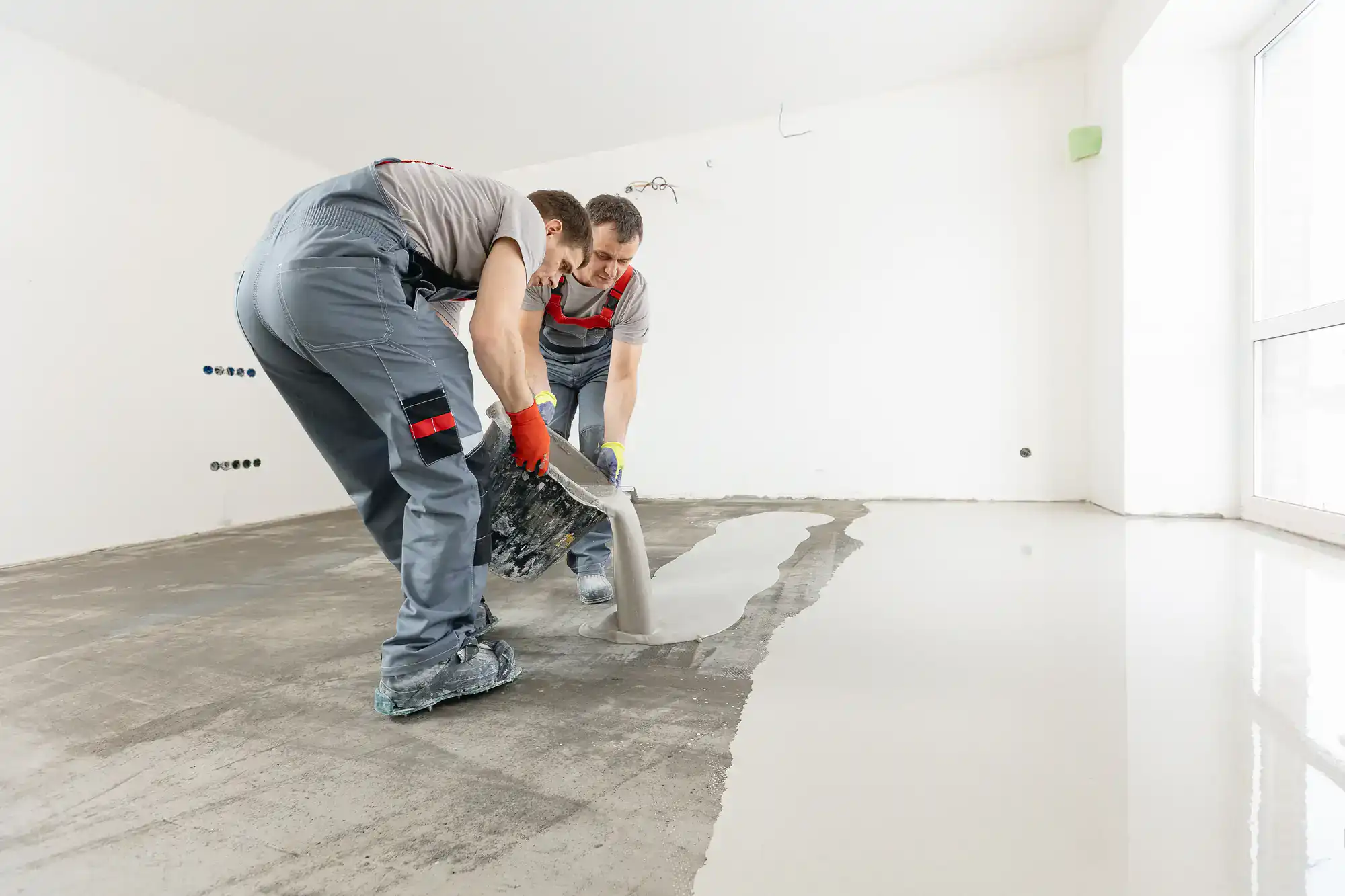
Worker applying epoxy flooring in a bright, empty room with large window.

Polyaspartic and Epoxy Coating Tangerine FL

Built for the Slab Under Your Specific Roof

Tangerine’s housing stock is not uniform, and our flooring approach should not be either. Older homes in the historic core near the Tangerine Community Hall may have concrete that has been exposed to decades of Florida weather surface oxidation, hairline cracks, and moisture intrusion that needs to be addressed before any coating is applied. Newer construction in surrounding developments like Stoneybrook Hills has fresh slabs that still need proper cure confirmation and moisture testing before the first coat goes down. We adapt our process to what is actually in front of us.

For residential garages, our standard system includes diamond grinding, moisture vapor testing, a penetrating primer, a high-build epoxy base coat, and a polyaspartic topcoat with UV resistance. Polyaspartic topcoats are specifically suited for Florida conditions they cure faster, handle temperature extremes better than standard epoxy finishes, and resist the UV degradation that breaks down lesser products within a single summer.

Epoxy flooring is classified as a surface treatment under Orange County’s residential building code, so most residential installations in Tangerine do not require a permit. That said, any contractor working in Florida above a certain project threshold is required to carry a valid license through the Florida Department of Business and Professional Regulation. We operate fully licensed and insured something worth confirming with any contractor before work begins on your property.

Workers applying epoxy flooring in a bright, empty room in Altamonte Springs, FL.

Why does epoxy flooring peel so quickly on Tangerine garage floors?

The most common reason is moisture vapor pushing up through the concrete slab from below. In Tangerine specifically, the water table is elevated year-round because the community is surrounded by four lakes. That means even a slab that looks and feels dry on the surface can be emitting enough moisture vapor to break the bond between the concrete and the coating especially if no vapor barrier primer was used.

The second most common reason is inadequate surface preparation. Consumer-grade epoxy kits do not include diamond grinding, which is the step that actually opens the concrete’s pores and creates a mechanical bond. Without it, the coating sits on top of the surface rather than bonding to it. Add Florida’s heat garage slabs regularly hit 90 to 100 degrees in summer and that bond fails faster than it would in a cooler climate. We address both issues before the first drop of coating is applied.

A professionally installed epoxy system with a polyaspartic topcoat, applied over a properly prepared and moisture-tested slab, can realistically last 10 to 20 years in Florida conditions with basic maintenance. The key word is professionally. The systems we use are not the same products sold in hardware store kits they are thicker, more chemically resistant, and formulated to handle the thermal cycling that Florida garages go through daily.

That said, longevity depends on use. A garage floor that sees daily vehicle traffic, oil drips, and heavy equipment will wear differently than a lightly used space. Periodic cleaning and avoiding harsh chemical spills extend the life of any coating. In Tangerine’s climate, UV exposure is also a factor for any coated surface near windows or open garage doors which is why a UV-resistant polyaspartic topcoat is the right finish choice here, not a standard epoxy top layer that can yellow and soften under direct sun.

In most cases, no. Epoxy flooring applied to an existing residential concrete slab whether it is a garage, patio, or interior floor is classified as a surface treatment under Orange County’s residential building code. Surface treatments do not typically trigger a permit requirement because they do not alter the structure of the slab or the building.

Where it gets more nuanced is if the project involves significant crack repair, slab leveling, or any modification to the concrete itself. Those repairs may fall under a different classification depending on scope. The more important licensing question is whether your contractor holds a valid Florida contractor’s license through the Department of Business and Professional Regulation. Florida law requires that contractors performing work above a certain dollar threshold be properly licensed, and homeowners can be left financially exposed if an unlicensed worker is injured on their property. It is worth asking for license and insurance documentation before any work begins a contractor who is reluctant to provide it is a contractor worth reconsidering.

Epoxy is the base coat system it bonds to the concrete, fills the surface profile created by grinding, and provides the structural foundation of the floor coating. Polyaspartic is typically used as the topcoat layer. It is more flexible, cures faster, handles UV exposure without yellowing, and is more resistant to the thermal expansion and contraction that happens when a Florida garage slab heats up and cools down repeatedly through the day.

For homeowners in Tangerine, the distinction matters practically. A standard epoxy-only system without a polyaspartic topcoat can yellow, chalk, and soften under direct sun especially on garage floors with south or west-facing doors that receive afternoon sun exposure. A full system that uses epoxy as the base and polyaspartic as the finish layer gives you the adhesion strength of epoxy and the durability and UV resistance of polyaspartic on top. That combination is the appropriate choice for Central Florida’s climate, not a compromise between the two.

The standard recommendation is to wait at least 28 days after a concrete slab is poured before applying any coating. New concrete needs time to cure and release the excess moisture that is part of the curing process. Apply a coating too early and you are trapping that moisture beneath the surface, which leads to the same bubbling and delamination that happens when moisture vapor testing is skipped on an older slab.

For new construction in Tangerine including the developments surrounding Stoneybrook Hills and other newer subdivisions along the U.S. 441 corridor the slab has usually been poured months or even years before the homeowner moves in, so the 28-day window is not typically an issue. What still matters is moisture vapor testing, because Florida’s humidity and the local water table mean new slabs can still carry elevated moisture levels well after the initial cure period. A quick calcium chloride or relative humidity test before installation confirms the slab is ready and protects your investment from the start.

For a standard two-car garage in Tangerine roughly 400 to 500 square feet a professional epoxy flooring system with surface prep, moisture testing, base coat, and polyaspartic topcoat typically runs between $1,500 and $3,500 depending on the condition of the slab, the coating system selected, and any decorative elements like flake or metallic finishes. Larger garages or floors requiring significant crack repair or resurfacing work will fall toward the higher end of that range.

The gap between that number and a $150 big-box kit is not markup it is the grinding equipment, the commercial-grade products, the moisture testing, the labor time, and the warranty behind the work. In a community where median home values are around $420,000, a floor coating that fails in 18 months and needs to be stripped and redone costs more in the long run than getting it done correctly the first time. We provide transparent pricing before any work begins, so the number you agree to is the number on your final invoice no line items that appear after the job is done.

Other Services we provide in Tangerine