Licensed and insured concrete and masonry contractors serving Central Florida. Quality work, honest pricing, no surprises.
Contact Info
Hear From Our Clients
A properly installed epoxy floor does more than look clean. It stops absorbing oil, resists moisture, and holds up to years of use without peeling, bubbling, or chalking. That’s the baseline. What you actually get is a surface that doesn’t embarrass you, doesn’t require constant maintenance, and doesn’t fail two summers in.
South Apopka sits right on the edge of Lake Apopka one of the largest lakes in Florida and that proximity means your concrete slab is dealing with ground moisture and vapor transmission that most contractors don’t even test for. When moisture pushes up through a slab and there’s a coating on top with no vapor barrier primer underneath, it delaminates. You’ve probably seen it. That’s not a product failure. That’s a prep failure, and it’s preventable.
We’ve worked on dozens of slabs throughout South Apopka and the surrounding unincorporated Orange County area. The pattern is consistent: moisture-related failures happen when the prep work gets rushed or skipped. A coating-only applicator will grind it flat and move to the next job. We test the slab, address what we find, and build the system that actually works for this location.
We’re a masonry services company which means epoxy flooring isn’t a side offering. It’s part of a full concrete skillset that includes crack repair, surface restoration, and substrate prep. When your slab needs more than a coat of color, the same crew handles it. No subcontractors, no second mobilization fee, no one pointing fingers at someone else’s work.
South Apopka is unincorporated Orange County not the City of Apopka which means permitting, code enforcement, and contractor licensing all run through the county. We operate fully licensed and insured under Florida state and Orange County requirements. In a community without a city building department to vet contractors for you, that distinction matters more than most homeowners realize until something goes wrong.
Transparent pricing is how every job starts. You get an itemized quote surface prep, moisture assessment, primer, coating system, topcoat, and any concrete repair before anyone picks up a grinder. No estimates that balloon once the crew shows up.
It starts with an honest look at what you’re working with. Before any product touches your floor, the slab gets inspected for cracks, surface contamination, moisture vapor transmission, and structural condition. In South Apopka, that moisture test isn’t optional it’s the step that determines whether your coating lasts or fails. Concrete near Lake Apopka pulls ground moisture differently than a slab in a drier inland location, and the prep has to reflect that.
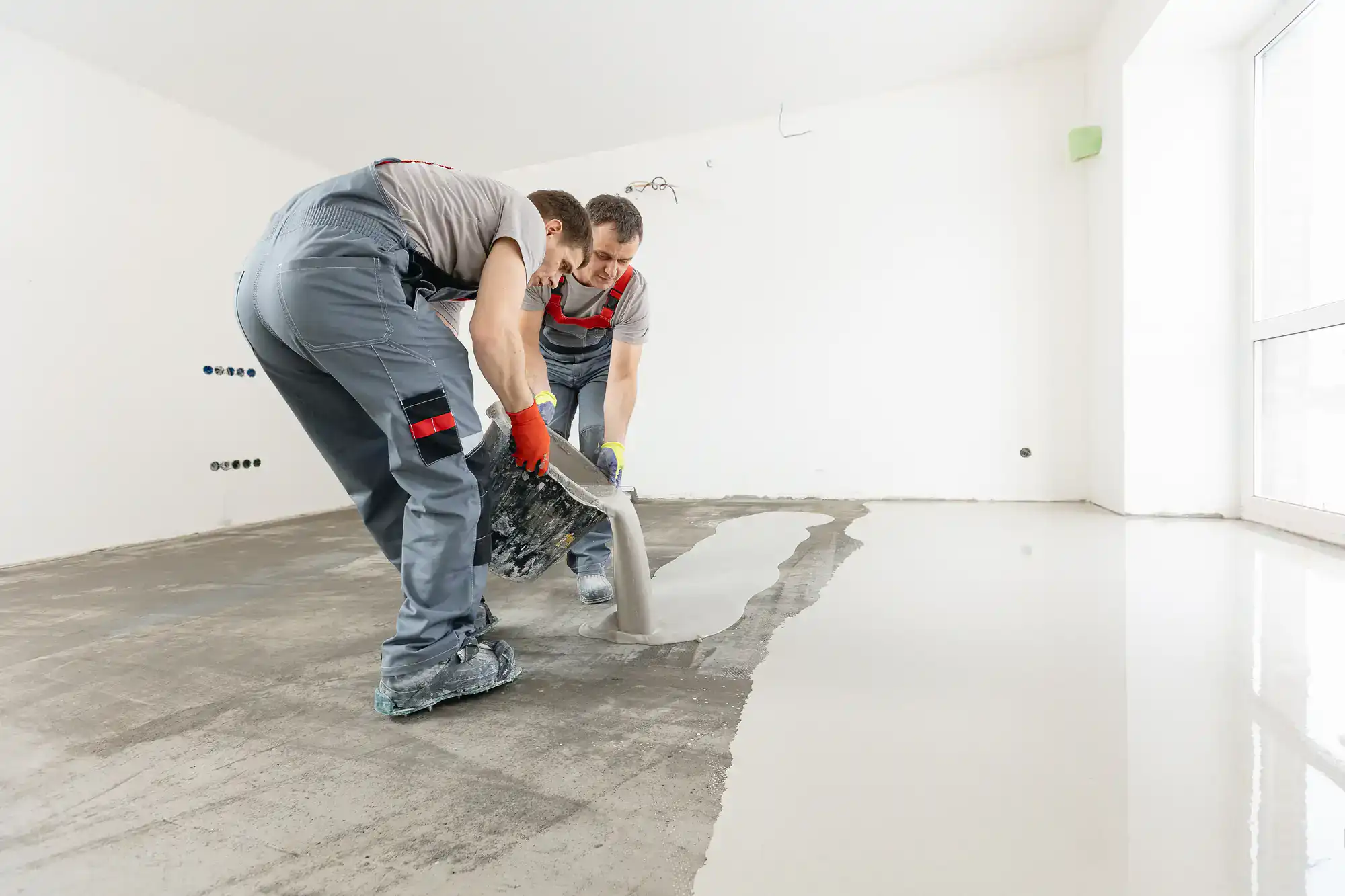
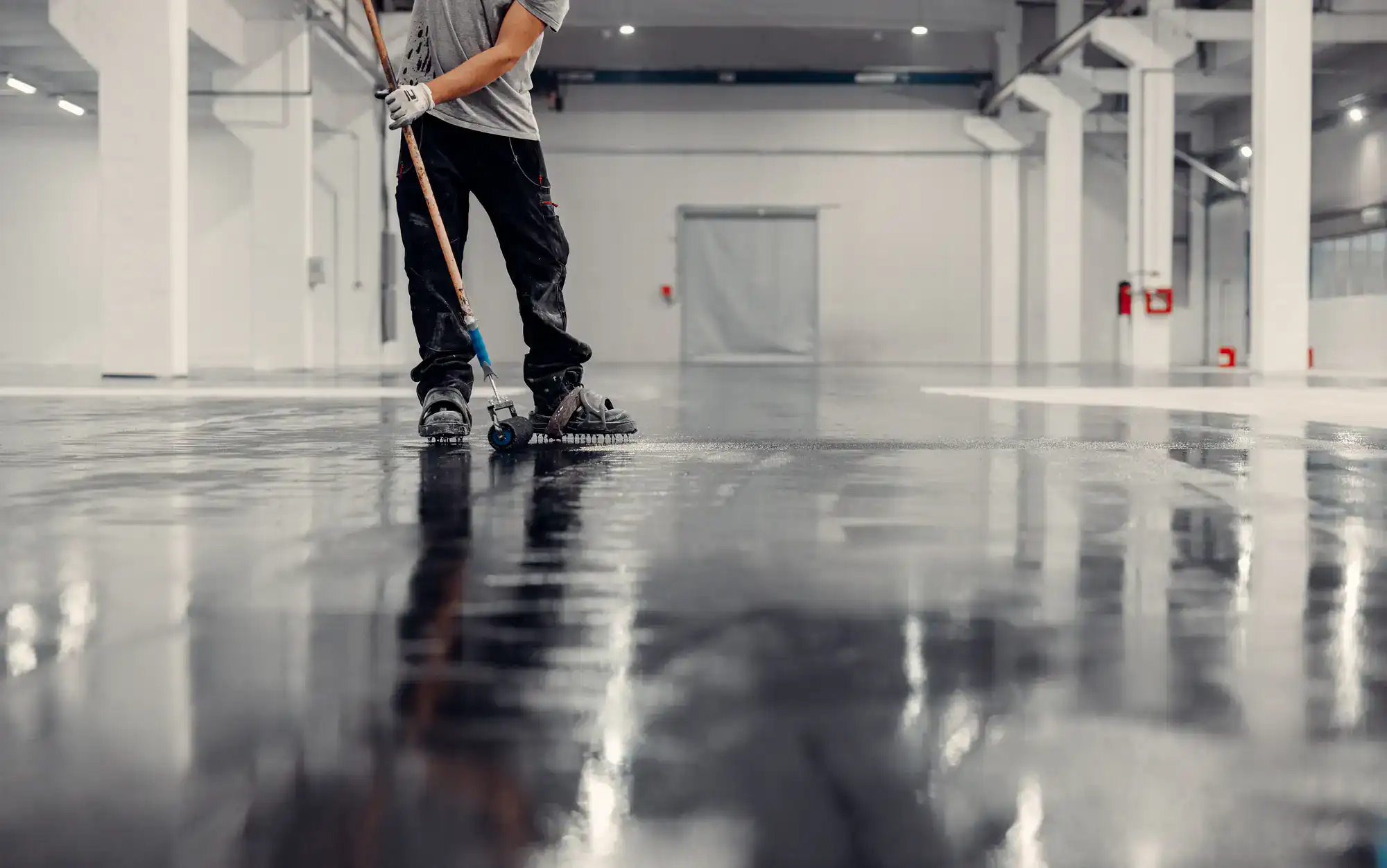
Once the slab assessment is done, surface preparation begins. For older concrete which is common in South Apopka neighborhoods that typically means diamond grinding to open the surface profile, removal of oil stains or old coatings, and crack repair if needed. All of that happens in-house. After prep, a vapor barrier primer goes down, followed by the base coat, color system, and a UV-stable polyaspartic topcoat that won’t yellow or chalk in Central Florida’s sun.
Scheduling accounts for Florida’s rainy season. From May through October, afternoon humidity spikes can compromise an open application if a contractor isn’t watching conditions. We time jobs around morning windows and monitor for dew point throughout the day. After the work is done, you’ll hear from us a follow-up call to confirm the floor cured correctly and answer any questions about care and maintenance.
Ready to get started?
Most epoxy flooring jobs fail because of what doesn’t happen before the coating. We build the full scope into every installation moisture testing, surface grinding, crack repair, contamination removal, vapor barrier primer, and UV-stable topcoat. For South Apopka homeowners with older slabs, that prep work is often the difference between a floor that holds for ten years and one that peels before the next rainy season hits.
The UV-stable polyaspartic topcoat matters specifically here. Standard epoxy systems use aromatic chemistry that breaks down under Florida’s year-round sun yellowing, fading, and chalking within a couple of years. If your garage faces west toward the afternoon light off US 441, or you have a carport that catches indirect UV exposure, that topcoat isn’t a luxury. It’s what keeps the floor looking the way it did on day one.
For commercial or light-industrial properties along the Apopka corridor, the same process applies with coatings specified for heavier traffic loads, chemical exposure, or forklift use depending on the application. Because South Apopka is governed by Orange County not the City of Apopka all work is completed in compliance with Orange County requirements. Residential garage floor coatings typically don’t require a building permit under county code, but any structural concrete repair identified during inspection will be handled correctly and documented.
It holds up well but only when it’s installed correctly for Florida’s conditions. The failure mode you’ll see with cheap or improperly installed epoxy isn’t a coating problem. It’s a moisture problem. When vapor pushes up through a concrete slab and there’s no vapor barrier primer underneath the coating, the bond breaks and the floor bubbles or peels. This is more common in areas like South Apopka where proximity to Lake Apopka and Central Florida’s water table means ground moisture is a real and ongoing factor.
A properly installed system with on-site moisture testing, a vapor barrier primer, and a UV-stable polyaspartic topcoat handles Florida’s humidity without issue. The key is that those steps actually happen before the coating goes down. If a contractor skips moisture testing because it adds time, you’ll find out within the first rainy season. That’s the question worth asking any contractor you talk to: what does your moisture prep look like, and do you test before you coat?
Standard cure time for a professionally installed epoxy system is 24–72 hours before light foot traffic, and most contractors recommend waiting 5–7 days before parking a vehicle on it. In Central Florida’s climate, that window can stretch slightly depending on ambient humidity and temperature at the time of installation. During South Apopka’s rainy season May through October jobs are scheduled with weather contingency built in, because an afternoon humidity spike during the cure window can affect the final finish if the floor isn’t protected.
The polyaspartic topcoat systems we use cure faster than standard epoxy alone, which matters when you’re working around a Florida summer schedule. You’re typically back in your garage within 24 hours for foot traffic and 48–72 hours for vehicles. Those timelines are confirmed at the end of every job not estimated upfront and then adjusted after the fact.
For a standard residential garage floor coating in unincorporated Orange County which is where South Apopka falls a building permit is typically not required. Epoxy coatings applied to existing concrete surfaces are classified as surface finishes rather than structural alterations under Orange County’s code, so most residential installations move forward without a permit application.
Where it gets more nuanced is if your slab needs structural concrete repair crack injection, slab lifting, or any modification that goes beyond surface prep. That type of work may require a permit depending on scope, and it needs to be performed by a properly licensed contractor. Because South Apopka isn’t governed by the City of Apopka’s building department, you’re dealing with Orange County’s process directly. We’re licensed and insured under Florida state and Orange County requirements, and any permit-required work is handled correctly and documented before the job closes.
Peeling epoxy almost always comes down to one of three things: inadequate surface preparation, moisture vapor pushing up through the slab, or a coating system that wasn’t suited for Florida’s UV and humidity conditions. In South Apopka, the moisture factor is especially common. Older concrete slabs in this neighborhood have been through years of Florida’s wet-dry cycles, and if the surface wasn’t properly ground and primed before the coating went down, the bond was compromised from day one.
The fix isn’t just recoating. A new coat over a failed surface will fail the same way. The existing coating needs to be fully removed, the concrete ground back to a clean surface profile, and moisture testing done before anything new goes down. If vapor transmission is the culprit, a vapor barrier primer is part of the solution. We handle the full remediation in-house not just the cosmetic layer on top which is what makes the repair actually last.
Epoxy is the base coating system it bonds to the concrete, provides chemical resistance, and gives you the color and texture layer. Polyaspartic is a topcoat applied over the epoxy that adds UV stability, scratch resistance, and a faster cure time. In Florida, and specifically in a sun-exposed area like South Apopka, the polyaspartic topcoat is what keeps your floor from yellowing or chalking within a few years of installation.
Standard epoxy systems use aromatic chemistry that breaks down under UV exposure it’s the reason so many garage floors look dull and discolored after a couple of Florida summers. A polyaspartic topcoat uses aliphatic chemistry that holds its color and gloss under direct and indirect sunlight. If your garage faces west and catches the afternoon sun off US 441, or you have a covered carport that gets reflected UV, the topcoat is what protects the finish long-term. It’s not an upgrade for appearance it’s a functional requirement for a Florida installation that’s meant to last.
For a standard two-car garage roughly 400–500 square feet professional epoxy flooring in the South Apopka area typically runs between $1,200 and $2,500 depending on the condition of the existing slab, the coating system specified, and whether crack repair or additional surface prep is needed. Single-car garages come in lower; larger or more damaged slabs come in higher. The range exists because the prep work varies significantly from one slab to the next, and older concrete in an established neighborhood like South Apopka often requires more surface work than a freshly poured slab in a new subdivision.
What you’re paying for in that range is the full scope: moisture testing, diamond grinding, any crack repair, vapor barrier primer, base coat, color system, and UV-stable polyaspartic topcoat. We provide an itemized quote before any work begins, so you see exactly what’s included and what it costs no line items that appear after the deposit clears. If the inspection turns up something that changes the scope, you’re told before the work starts, not after.
Other Services we provide in South Apopka