Licensed and insured concrete and masonry contractors serving Central Florida. Quality work, honest pricing, no surprises.
Contact Info
Hear From Our Clients
Most epoxy failures in Oakland come down to one thing: moisture. When a slab hasn’t been properly tested and prepped before coating, the humidity trapped underneath pushes right through and lifts the surface within months. In Oakland, that risk is amplified. Sitting on the southern shore of Lake Apopka Florida’s fourth-largest lake the ground moisture and ambient humidity here are consistently higher than what you’d find even a few miles inland. A coating that might hold up fine in a drier part of Orange County can bubble and peel here if the installer doesn’t know what they’re doing.
When it’s done right, the difference is immediate and lasting. Your garage goes from a stained, porous slab that absorbs oil, collects grime, and shows every scuff to a surface that’s sealed, chemical-resistant, and easy to clean after a muddy ride on the West Orange Trail. If you’re using the garage as a workshop, a gym, or just a high-traffic space for gear and bikes, that matters daily not just when company comes over.
The homes going up in Oakland Trails, Longleaf at Oakland, Hull Island, and Oakland Park are moving-in-ready but the bare concrete floors aren’t. Coating a new slab before it absorbs stains and years of use is significantly easier and more cost-effective than trying to restore one that’s been neglected. Either way, the result is a floor that holds up through Florida’s rainy season, resists the heat, and doesn’t need to be redone every few years.
We’re a masonry company first. That distinction matters more than it might sound. Understanding concrete how it cures, how it holds moisture, how it responds to Florida’s heat and humidity is what separates a coating that lasts from one that fails. We don’t just roll product onto a floor and move on. We assess the slab, test for moisture, prep the surface properly, and select the right system for the conditions we’re actually working with.
We serve Oakland and the surrounding West Orange County corridor from the SR 50 communities along Oakland’s southern boundary to the historic neighborhoods on Oakland Avenue and the newer subdivisions growing up near the West Orange Trail. Whether it’s a brand-new slab in one of Oakland’s developing communities or an older garage floor in the historic downtown, we’ve worked on both and know what each one requires.
Transparent pricing, real follow-up after the job is done, and a team that shows up when we say we will that’s our standard here, not the exception.
The first step has nothing to do with coating. Before anything is applied, the slab gets assessed surface condition, existing damage, and critically, moisture vapor transmission. In Oakland, this step isn’t optional. Properties near Lake Apopka regularly show elevated moisture readings that would cause a standard coating to fail if ignored. If moisture levels are outside acceptable range, that gets addressed before the project moves forward. No shortcuts, no hoping for the best.
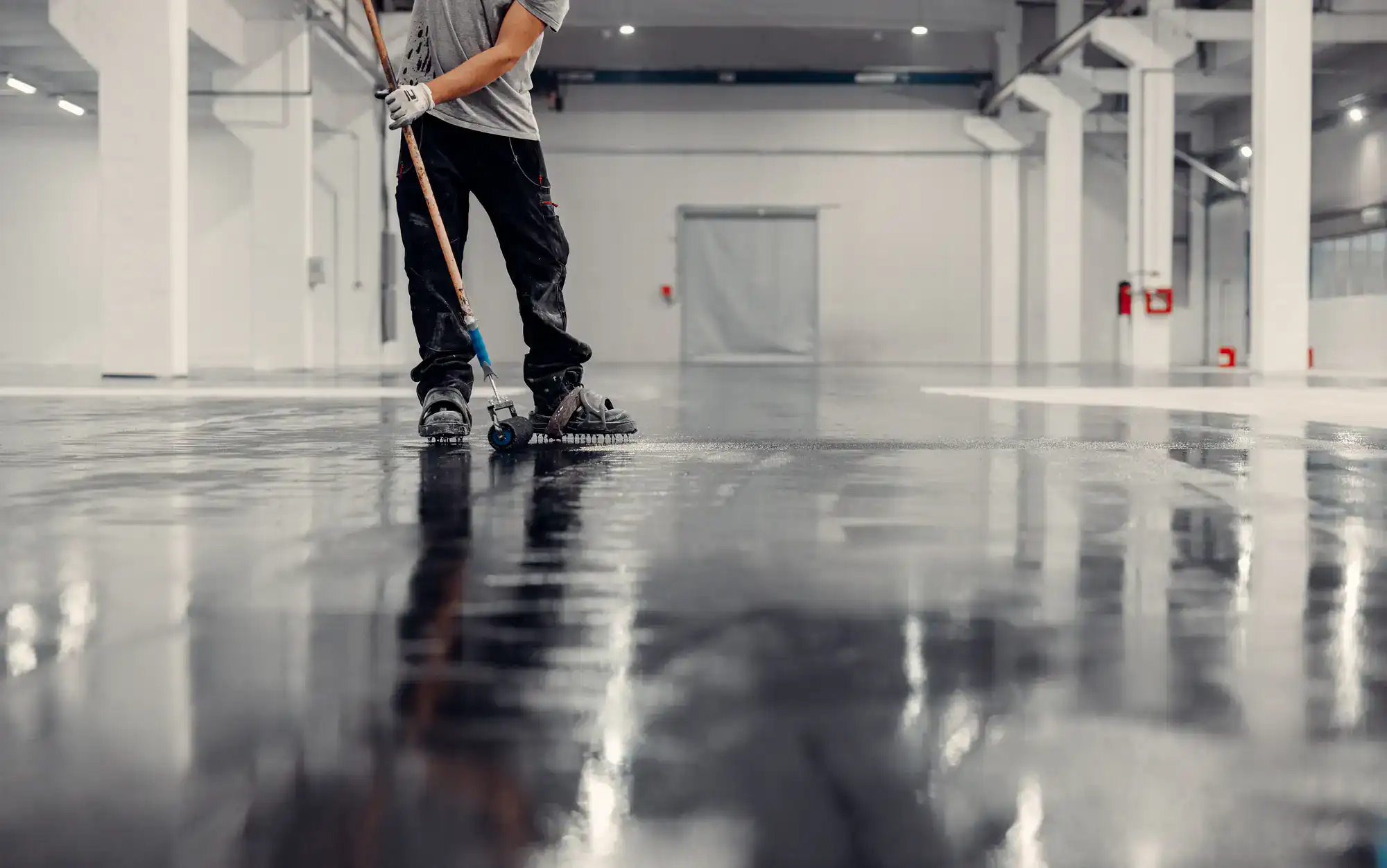
Once the slab passes assessment, surface preparation begins. This typically means diamond grinding to open the concrete’s pores and create the mechanical bond the coating needs to adhere properly. Any cracks, chips, or surface damage get repaired at this stage. Skipping prep is the single most common reason epoxy floors fail and it’s also the step that low-bid contractors are most likely to rush through or skip entirely.
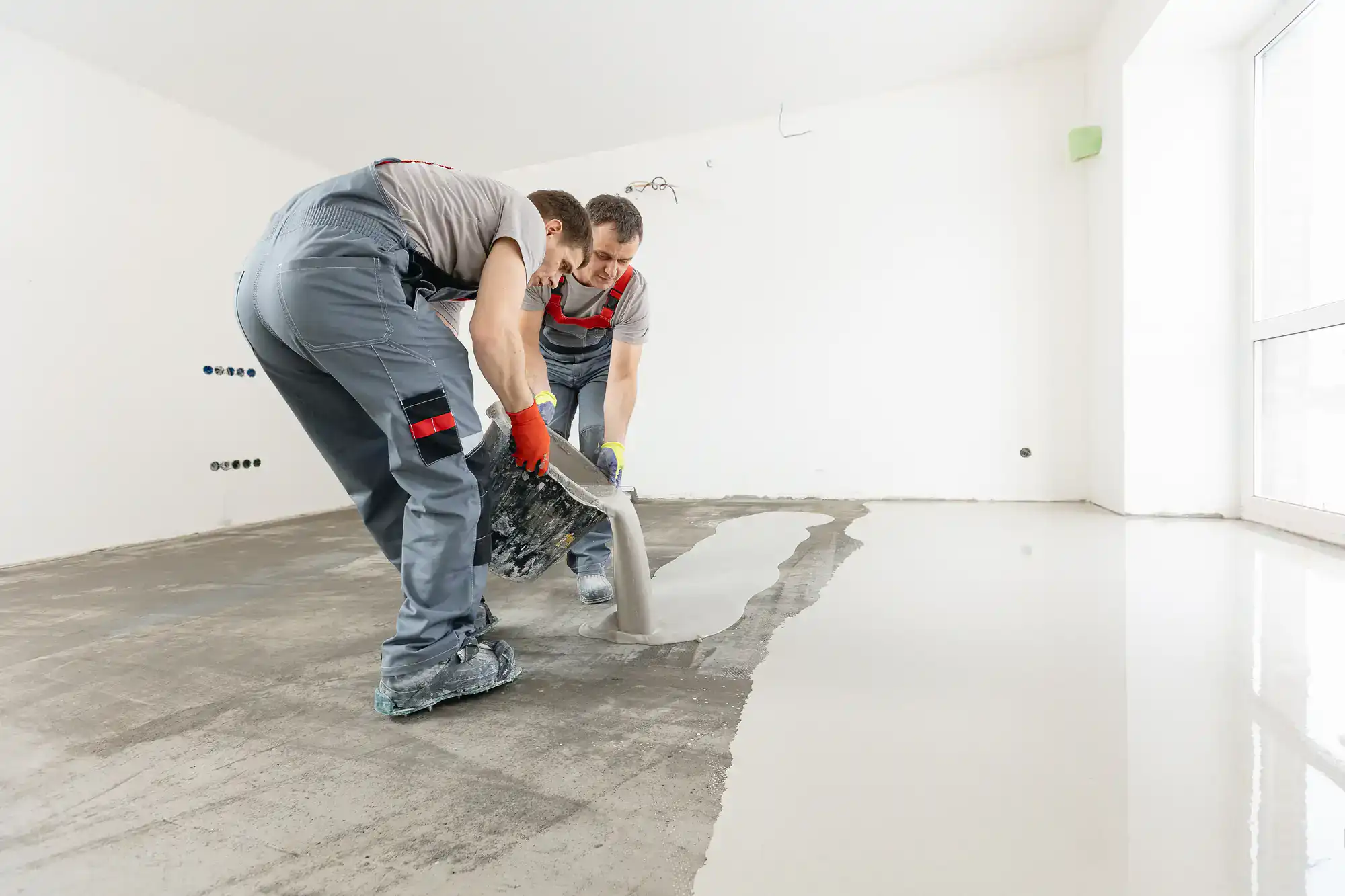
After prep, the coating system goes down in the right sequence primer, base coat, topcoat with appropriate cure time between layers. Oakland’s summer heat and humidity affect how products behave, so scheduling and timing matter. Work is typically planned for early morning hours during the warmer months to avoid surface temperatures that cause uneven curing. Once complete, we’ll walk you through the finished floor and follow up after a few days to confirm everything is performing as expected.
Ready to get started?
Epoxy flooring isn’t a single product it’s a system, and the right system depends on what the space is used for, what the slab looks like, and what the environment demands. For Oakland homeowners, that usually means a polyaspartic or hybrid epoxy coating for the garage: UV-stable so it won’t yellow in Florida’s sun, moisture-tolerant for lakeside conditions, and finished with a slip-resistant texture that holds up through the rainy season. Decorative options like flake or metallic finishes are available for homeowners who want the aesthetic upgrade alongside the functional one.
For commercial clients and property managers along the SR 50 corridor or managing multi-unit residential developments in Oakland’s growing subdivisions, we install heavy-duty epoxy systems rated for higher traffic loads anti-slip surfaces for safety compliance, seamless finishes that are easy to maintain, and efficient installation timelines that minimize downtime. Oakland’s building permits are processed through the town’s own Administration Building under the 8th Edition Florida Building Code, and we operate in full compliance with Orange County contractor licensing requirements. That’s not a small detail it directly affects your liability as a property owner if something goes wrong with an unlicensed crew.
Every project, residential or commercial, comes with itemized pricing upfront and real-time project tracking so you’re never left guessing where things stand.
Yes, and it’s one of the more important questions to ask any contractor before you hire them. Oakland’s position on the southern shore of Lake Apopka creates consistently elevated ambient humidity and increases the likelihood of moisture vapor pushing upward through your concrete slab a condition called moisture vapor transmission. When epoxy is applied over a slab with high moisture vapor levels, the coating loses adhesion from underneath and begins to bubble or peel, sometimes within the first year.
The fix isn’t complicated, but it requires that the contractor actually tests for it before starting. A calcium chloride or relative humidity probe test on your slab will tell you whether moisture levels are within the acceptable range for the coating system being used. If they’re not, a moisture-tolerant primer or vapor barrier system needs to go down first. Contractors who skip this step either because they don’t know to do it or because they’re trying to move fast are the reason so many Oakland homeowners end up with a failing floor after one rainy season.
A professionally installed epoxy system on a properly prepared slab can last 15 to 20 years in Florida with basic maintenance. The key phrase there is “properly prepared.” Florida’s heat, humidity, and UV exposure are hard on coatings that weren’t designed or installed for this climate water-based epoxy products that work fine in drier states often fail here within two to three years. The products that hold up in Central Florida are polyaspartic or solvent-based epoxy systems with UV-stable topcoats that won’t yellow or degrade under direct sun exposure.
Maintenance matters too. Keeping the floor clean, avoiding prolonged standing water after heavy summer storms, and not dragging sharp or heavy objects across the surface will extend the life significantly. If your floor develops a small chip or scratch, addressing it early prevents moisture from getting underneath the coating and spreading the damage. The rainy season here runs May through October and brings the majority of Florida’s annual rainfall that’s five to six months of elevated humidity and wet conditions that a low-quality coating simply won’t survive long-term.
For most residential garage floor epoxy projects, no permit is required. Applying an epoxy coating to an existing concrete slab is considered a surface treatment, not structural work, so it typically falls outside the permit requirement threshold under the 8th Edition Florida Building Code currently enforced by the Town of Oakland. That said, there are situations where permit questions do come up if you’re adding floor drains, doing any concrete cutting, or if the project is commercial in nature, it’s worth a quick confirmation with Oakland’s Building and Permit Department before work begins.
What does matter from a compliance standpoint is contractor licensing. Florida law requires that contractors performing work above certain thresholds hold the appropriate state or county license. Hiring an unlicensed contractor which is more common in the epoxy market than most homeowners realize can leave you personally liable for worker injuries on your property and can create complications with your homeowner’s insurance or a future home inspection. We operate with full licensing and insurance coverage in Orange County, so that’s one less thing you need to worry about.
The dry season roughly November through April is the most favorable window for epoxy flooring installation in Oakland. Lower humidity, more stable temperatures, and reduced rainfall during this period create conditions where the coating can be applied and cured without the complications that Florida’s summer months introduce. Concrete surface temperatures during the dry season are also more manageable, which matters because applying epoxy to an overheated slab in peak summer can cause the product to flash-cure unevenly and compromise the bond.
That said, epoxy can absolutely be installed during the rainy season with the right planning. The key is scheduling work for early morning hours before afternoon humidity peaks and daily thunderstorms roll in, using climate-appropriate product formulations, and monitoring dew point conditions on the slab surface before application begins. Oakland’s proximity to Lake Apopka means morning fog and elevated dew points are common even in the dry season, so a good installer checks surface conditions regardless of the time of year. If timing is flexible for you, late fall through early spring gives you the most straightforward installation window.
In most cases, yes but the prep work required goes up significantly, and any contractor who tells you otherwise without looking at the slab first is cutting corners. Oil-contaminated concrete requires degreasing and mechanical grinding to remove the contaminated layer before any coating will adhere properly. Oil doesn’t just sit on the surface it penetrates into the pores of the concrete over time, and if those pores aren’t opened and cleaned, the epoxy will bond to the oil residue rather than the concrete itself, and it will fail.
Cracks are a separate issue. Hairline surface cracks are common in Florida slabs and are typically filled and feathered before coating without any structural concern. Larger or actively moving cracks the kind caused by soil settlement or moisture-related slab movement need to be assessed more carefully. In some cases, a crack filler and flexible topcoat system can accommodate minor movement. In others, the underlying cause needs to be addressed first. Older homes in Oakland’s historic downtown neighborhoods are more likely to have concrete with decades of accumulated staining and surface wear, and those floors often need more intensive prep than a newer slab in one of Oakland’s recently built subdivisions.
For a standard two-car garage, most homeowners in Oakland pay between $1,200 and $2,500 for a professionally installed epoxy or polyaspartic floor coating. The range comes down to slab condition, square footage, the coating system selected, and how much surface preparation is required. A new slab in Oakland Trails or Longleaf at Oakland that just needs standard prep and a base system will come in on the lower end. An older garage floor in the historic part of town with oil staining, surface cracks, and elevated moisture readings will require more labor and materials, which moves the number up.
What’s worth understanding is what you’re actually comparing when you get multiple quotes. A significantly lower bid almost always means something is being skipped usually surface prep, moisture testing, or product quality. Those shortcuts show up within the first year in Florida’s climate, and at that point you’re paying to have the floor stripped and redone. We provide fully itemized quotes so you can see exactly what’s included at every line labor, prep, primer, coating layers, and any repair work and compare that against other bids on an equal footing rather than just looking at the bottom number.
Other Services we provide in Oakland