Epoxy Flooring in Lake Mary, FL

Garage Floors Built to Survive Lake Mary's Heat and Humidity

Lake Mary’s heat, humidity, and high standards demand more than a box-store kit. We install epoxy flooring built to last in Central Florida’s climate with transparent pricing and zero guesswork.
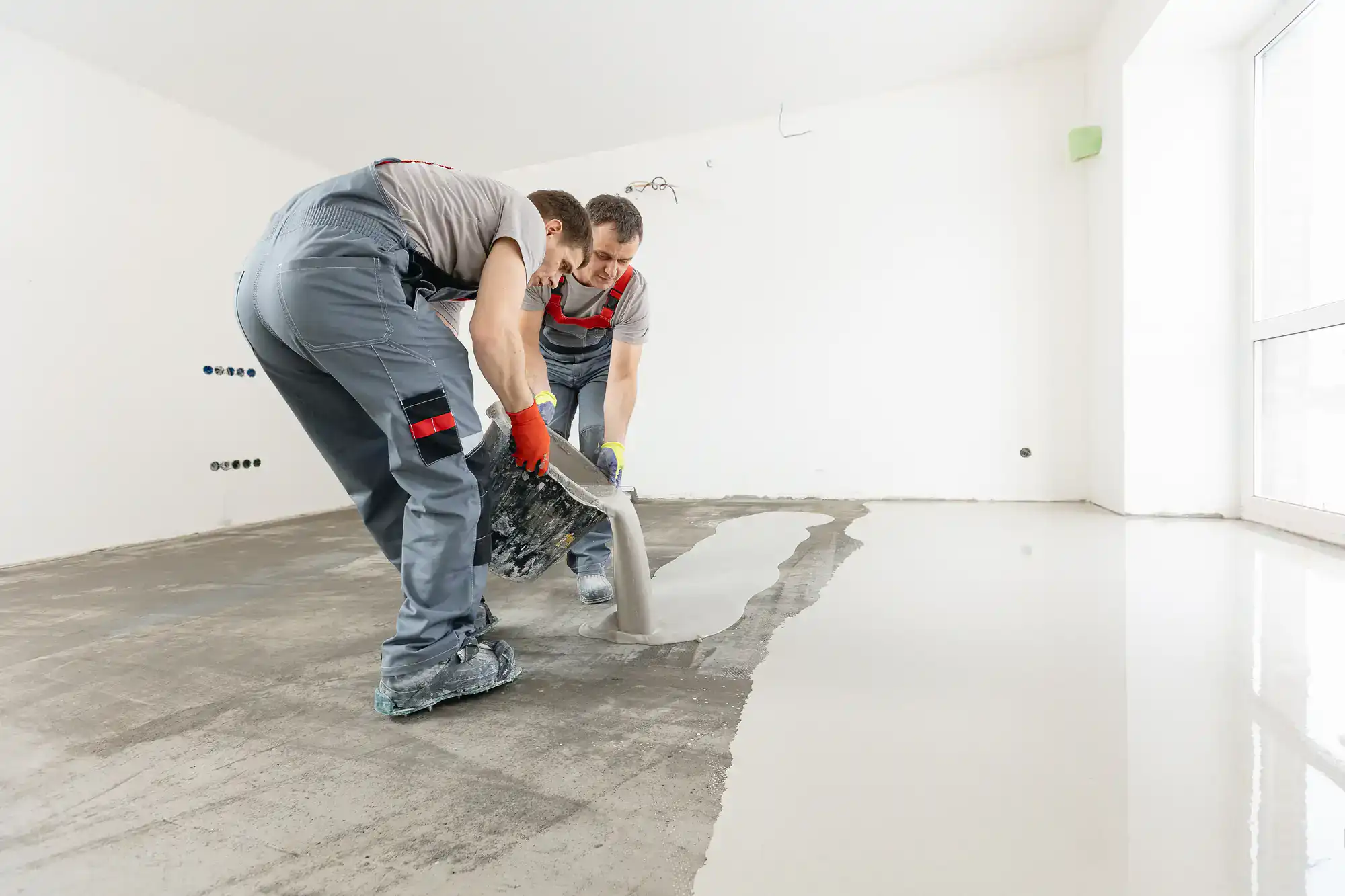
Workers applying epoxy flooring in a bright, empty room in Altamonte Springs, FL.

Hear From Our Clients

[Add Trustindex Slider Here]
Applying epoxy coating on a concrete floor in a commercial space.

Garage Floor Coating Lake Mary FL

A Floor That Survives What Florida Throws at It

Most epoxy floors in Lake Mary don’t fail because of bad luck. They fail because the contractor didn’t account for what’s actually happening beneath the surface. Florida’s flat, porous soils push moisture upward through concrete slabs constantly and during the May through October rainy season, that pressure intensifies. When a coating goes down over a slab with elevated moisture content, blistering and peeling follow within a year or two. It’s not a product problem. It’s a preparation problem.

When the job is done right, what you get is a floor that stays bonded, stays clean, and holds up under real use. No bubbling after the first summer. No yellowing from the garage door being open on a sunny afternoon. No chunks pulling up when your car rolls out on a hot August day a failure mode called hot-tire pickup that hits hardest in multi-car garages like the ones common throughout Heathrow and Timacuan.

Beyond durability, a finished floor changes how the whole space functions. It’s easier to clean, harder to stain, and significantly better at handling water intrusion during storm season. For homeowners in Lake Mary communities like Fountain Parke where solid concrete block construction creates specific moisture dynamics or anyone in the 32746 ZIP code investing in a property worth well above the Florida median, a properly installed epoxy floor is one of the most practical upgrades you can make.

Epoxy Floor Contractor Lake Mary FL

We Know Lake Mary's Concrete Like Most Contractors Know Nothing

We’re a masonry specialist not a generalist contractor who added floor coatings to the menu. That distinction matters more in Seminole County than most places, because the concrete slab beneath your floor is the real variable in whether an epoxy installation succeeds or fails here. Understanding how that slab behaves how it absorbs moisture, how it expands in Florida heat, how it needs to be prepared before anything goes on top of it is what separates a floor that lasts from one that doesn’t.

We serve Lake Mary and the surrounding area with the same approach we bring to every job: transparent pricing upfront, active communication throughout, and a follow-up after the work is done to make sure everything held up the way it should. No disappearing after the check clears. No vague estimates that shift once we’re on site.

Whether you’re in a gated community off Markham Woods Road or managing a commercial property near Colonial Center Parkway, you deserve a contractor who shows up prepared, communicates clearly, and delivers work that holds.

Worker applying epoxy flooring in a bright, empty room with large window.

Epoxy Flooring Process Lake Mary FL

What Actually Happens From First Call to Finished Floor

It starts with a real assessment not a quick glance and a number. Before any coating goes down, the concrete needs to be evaluated for moisture content, existing damage, and surface profile. In Lake Mary, that moisture step isn’t optional. Seminole County’s soil conditions mean slabs here draw water upward year-round, and applying a coating over a slab that hasn’t been properly tested is one of the fastest ways to end up with a floor that peels by next summer.

Once the slab checks out, surface preparation comes next. That means diamond grinding not acid etching alone to open the concrete’s pores and give the coating a mechanical bond. This is where most budget installations cut corners, and it’s exactly where the failure starts. After prep, a moisture-barrier primer goes down, followed by the base coat, decorative layer if applicable, and a UV-stable polyaspartic topcoat that won’t yellow or chalk under Central Florida’s sun.

Timing matters here too. Lake Mary’s rainy season runs May through October, and ambient humidity above 85% can prevent proper adhesion and curing. We schedule installations with that in mind early-morning starts during summer months, dry-season windows when possible and we track real-time conditions so the job doesn’t get rushed when the environment isn’t right. You’ll know the schedule, you’ll know the timeline, and you won’t have to chase us for updates.

Worker applying epoxy coating on a concrete floor in a commercial space.

Commercial and Residential Epoxy Coatings Lake Mary

Built for Lake Mary's Garages, Offices, and Everything Between

Epoxy flooring in Lake Mary covers a wider range of applications than most homeowners realize. On the residential side, the most common request is a garage floor and in communities like Heathrow and Steeple Chase, where HOA standards govern how properties look, a finished floor isn’t just a preference. It’s an expectation. We work within those HOA guidelines, coordinate access with community management where required, and deliver results that meet the visual standards your neighborhood holds.

On the commercial side, Lake Mary’s corporate corridor including the properties along Colonial Center Parkway and the Heathrow business park demands flooring that can handle heavy foot traffic, chemical exposure, and the operational reality that downtime costs money. We offer commercial-grade epoxy systems installed on nights and weekends when needed, with anti-static and slip-resistant options available depending on the space.

Every installation residential or commercial includes proper surface preparation, a moisture-barrier primer suited to Seminole County’s soil conditions, and a UV-stable topcoat designed for Florida’s sun exposure. Pricing is provided in writing before work begins, with no line items that appear after the fact. If your project is time-sensitive a pre-sale prep, a storm-damage repair, or a commercial turnaround with a hard deadline emergency response scheduling is available.

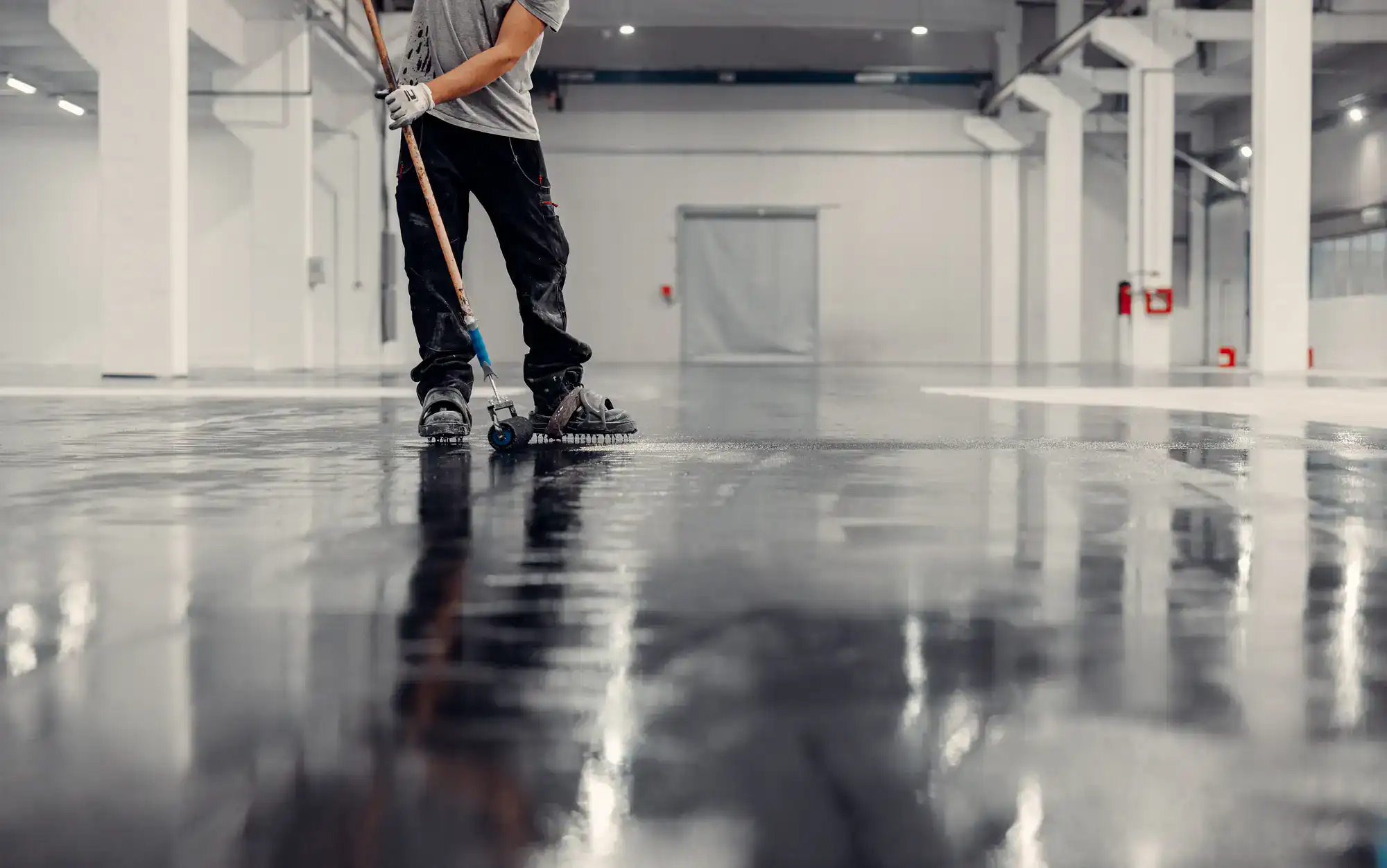
Polished epoxy flooring in a commercial garage with a worker cleaning surface.

Why do epoxy floors peel so quickly in Lake Mary's climate?

The short answer is moisture. Lake Mary sits in Seminole County, where the soil is flat and porous which means concrete slabs are constantly drawing ground moisture upward through a process called moisture vapor transmission. During Florida’s rainy season, which runs from May through October and accounts for roughly 60 to 70 percent of the region’s annual rainfall, that upward moisture pressure intensifies significantly. When an epoxy coating is applied over a slab with elevated moisture content, the result is osmotic blistering bubbles form beneath the coating, grow, and eventually rupture, causing the floor to delaminate and peel.

This is the single most common cause of epoxy failure in Central Florida, and it has nothing to do with how expensive the product was. It’s a preparation problem. A contractor who skips moisture testing, uses a standard primer instead of a moisture-barrier system, or applies coatings during high-humidity conditions is setting the floor up to fail regardless of what goes on top. Proper testing, the right primer, and climate-aware scheduling are what prevent it.

A properly installed epoxy floor in Lake Mary with correct surface preparation, a moisture-barrier primer, and a UV-stable polyaspartic topcoat should last anywhere from 10 to 20 years under normal residential use. The wide range comes down to how the floor was installed and how the space is used. A two-car garage in Heathrow that sees daily vehicle traffic, occasional chemical spills, and full Florida sun through an open door is a more demanding environment than a climate-controlled commercial space.

The factors that shorten that lifespan are almost always traceable back to installation shortcuts: skipping diamond grinding in favor of acid etching, using a standard epoxy without UV protection, or applying coatings during humid summer afternoons when ambient moisture is too high for proper curing. A floor installed the right way, with materials suited to Central Florida’s conditions, holds up. One installed quickly and cheaply typically starts showing problems within the first two summers.

For most residential epoxy installations in Lake Mary a garage floor, a patio, a basement slab no building permit is required. Epoxy coatings applied as a surface treatment to existing concrete, with no structural changes involved, generally fall outside the permit threshold under the Florida Building Code as locally adopted by Seminole County. The City of Lake Mary maintains a public Development Dashboard and Permit Portal where you can verify current requirements, and it’s always worth a quick check if your project involves drainage modifications or changes to a fire-rated assembly.

Commercial properties are a different story. If you’re managing a space in the Colonial Center Parkway corridor or the Heathrow business park and the flooring work involves chemical treatment systems, anti-static specifications, or alterations to existing drainage, Seminole County may require review before work begins. The more important licensing question for any property residential or commercial is whether your contractor holds a valid Florida contractor license and carries appropriate liability and workers’ compensation insurance. In Florida, hiring an unlicensed contractor for construction-related work can leave you personally liable for worker injuries. That’s a risk worth eliminating before anyone shows up on your property.

Hot-tire pickup is exactly what it sounds like a vehicle’s tires, heated from driving in Florida’s summer temperatures, chemically bond with the surface of an inferior epoxy coating. When the car moves, it pulls chunks of the floor up with it. It’s one of the most frustrating epoxy failure modes because it happens fast, it’s highly visible, and it’s completely preventable with the right materials.

In Lake Mary, this is a genuine concern particularly in the multi-car garages common throughout Heathrow and Timacuan, where residents often park high-value vehicles in spaces that see direct afternoon heat. Standard residential epoxy formulations, especially the single-coat systems sold in big-box stores, are not designed to handle the combination of Florida’s ambient heat and repeated hot-tire contact. Commercial-grade coating systems with proper hardener ratios and a polyaspartic topcoat are the appropriate solution. If a contractor doesn’t bring up hot-tire resistance when quoting your garage, that’s worth asking about directly.

For a standard two-car residential garage in Lake Mary roughly 400 to 500 square feet professional epoxy flooring with proper surface preparation, a moisture-barrier primer, and a decorative flake or solid-color finish typically runs between $1,500 and $3,000 depending on the system used and the condition of the existing concrete. Larger garages, three-car configurations common in Heathrow, or slabs with existing damage that requires repair will push that number higher. Metallic epoxy or premium polyaspartic systems with more involved decorative finishes can range from $3,000 to $5,000 or more for the same square footage.

Commercial installations in Lake Mary’s office parks are priced differently typically per square foot, with the rate varying based on system type, prep requirements, and scheduling constraints like nights-and-weekends work to avoid business disruption. What matters most in any quote is understanding what’s included: surface preparation method, primer type, number of coats, topcoat specification, and warranty terms. A lower number that excludes moisture-barrier primer or uses acid etching instead of diamond grinding is not a better deal it’s a floor that will need to be redone sooner.

You can install epoxy flooring year-round in Lake Mary, but the timing does affect the process and the outcome. Florida’s dry season roughly October through April offers the most favorable conditions: lower ambient humidity, cooler morning temperatures, and a reduced chance of afternoon thunderstorms interrupting the curing window. If you have flexibility in your schedule, this is the window where installations go most smoothly and curing conditions are most consistent.

Summer installations between May and October aren’t off the table, but they require more care. Ambient humidity above 85 percent can prevent epoxy from bonding and curing correctly, and Lake Mary’s summer afternoons regularly approach or exceed that threshold. The practical solution is early-morning start times before afternoon humidity peaks along with moisture-tolerant formulations or fast-curing polyaspartic systems that are less sensitive to ambient conditions. A contractor who doesn’t account for real-time environmental conditions before applying a coating in a Central Florida summer is taking a shortcut that the floor will eventually reveal. Scheduling with seasonal awareness isn’t a luxury in Seminole County’s climate, it’s part of doing the job correctly.

Other Services we provide in Lake Mary