Licensed and insured concrete and masonry contractors serving Central Florida. Quality work, honest pricing, no surprises.
Contact Info
Hear From Our Clients
If your garage or workshop floor is cracking, staining, or turning into a dusty mess every time it rains, that’s not bad luck that’s what happens to untreated concrete in north-central Florida. The combination of heavy summer rainfall from May through October, a high water table, and humidity that regularly sits above 80% means your slab is under constant moisture pressure. Bare concrete absorbs that moisture from below and above, and over time it shows efflorescence, surface pitting, and eventually real structural damage that costs far more to fix than a coating would have cost to apply.
A properly installed epoxy system seals the slab completely. Moisture can’t penetrate. Oil drips from vehicles, chemical spills from equipment, and the constant foot traffic of a working household all wipe clean instead of soaking in. For Lake Butler homeowners many of whom use their garages and outbuildings for real work, not just parking that durability isn’t a luxury. It’s the whole point.
There’s also a longer-term reality worth considering. Lake Butler’s housing stock is predominantly established homes on larger lots, not new construction. The concrete slab in your garage or shop has probably been there for decades. Protecting it now extends its life significantly and keeps you from facing a much more disruptive and expensive slab repair down the road. An epoxy coating applied today is an investment in the floor you already have.
We operate with a straightforward approach: you know the price before the work starts, you can track where your project stands at any point, and someone follows up after the job is done to make sure the floor is performing the way it should. That’s not a policy that exists to sound good it’s how we run the business.
In a small community like Lake Butler, where Union County’s tight-knit character means a bad contractor experience travels fast, that kind of accountability matters. Most of the epoxy flooring providers showing up in local search results are based in Jacksonville or Duval County a long drive away, with travel fees and scheduling gaps to match. We bring professional-grade work and transparent process to Lake Butler without the runaround.
Our specialization is masonry anything masonry which means the crew working on your floor understands concrete from the ground up, not just as a surface to coat. That depth of knowledge shows in the prep work, and the prep work is what determines how long an epoxy floor actually lasts.
The first step is an honest assessment of your concrete. Before any coating goes down, the slab needs to be evaluated for moisture content, existing cracks, surface contamination, and overall condition. In Lake Butler’s climate with humidity regularly above 80% and a water table that stays high through the rainy season this step isn’t optional. Skipping it is exactly how epoxy floors fail within a year. We check the dew point, measure surface moisture, and confirm the slab is ready before any product is applied.
Surface preparation comes next and it’s the most labor-intensive part of the job. The concrete is ground or shot-blasted to open the surface profile, which is what allows the epoxy to bond properly rather than just sitting on top. Any cracks or divots are filled and leveled. This is where masonry expertise genuinely matters knowing what the concrete needs, not just following a coating manufacturer’s checklist.
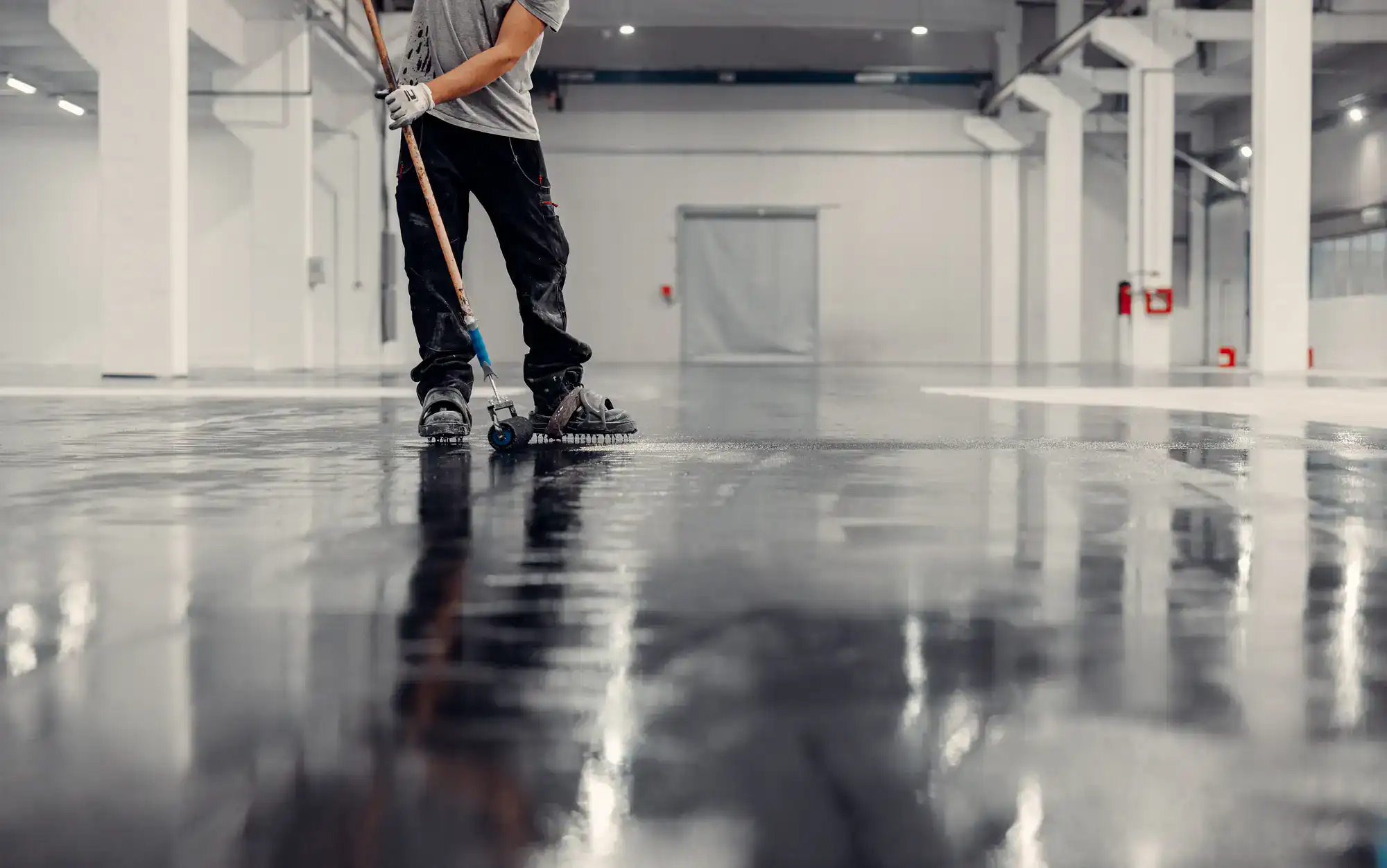
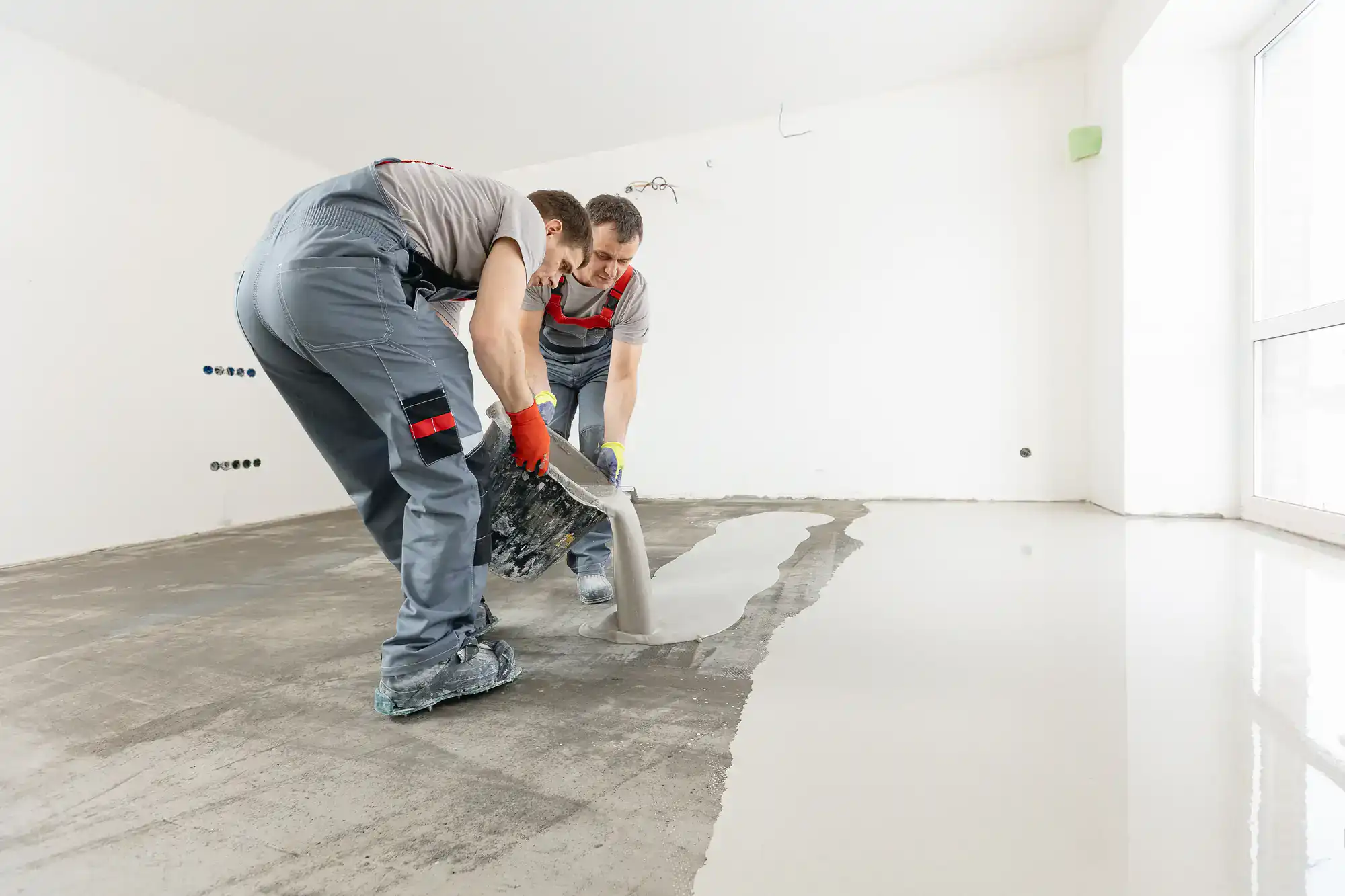
Once the surface is ready, we apply the epoxy system in layers: a penetrating primer that bonds to the concrete, a base coat, and a topcoat that determines the finish and durability level. Most residential jobs in Lake Butler are completed in one to two days. The floor is ready for light foot traffic within 24 hours and fully cured for vehicle and equipment use within 72 hours. You get a clear timeline upfront, project tracking throughout, and a follow-up call after to confirm everything looks and performs the way it should.
Ready to get started?
Every epoxy flooring job we complete starts with the prep work that most homeowners don’t see but absolutely feel in the long-term performance of the floor. That means concrete grinding or shot-blasting to create a proper bond profile, moisture testing specific to north Florida slab conditions, crack and joint repair, and a full surface clean before any coating is applied. In Union County, where older homes on larger lots are the norm, slabs often have years of oil accumulation, surface oxidation, or minor cracking that needs to be addressed before a coating will hold.
The coating systems we use are commercial-grade the same products used in working garages, agricultural facilities, and light industrial spaces, not the big-box store kits that peel within a season. For residential garages and workshops, the standard system delivers a hard, chemical-resistant surface with a clean finish. For commercial clients agricultural operations, auto shops, or the kind of working spaces that support Lake Butler’s corrections and trades workforce we offer heavier-duty systems with higher film thickness and chemical resistance. If you’re in the Flying Tiger area and need hangar floor coating, that’s a specialized application we handle as well.
Licensing, insurance, and Florida Statute 489 contractor compliance are in place which matters when you’re hiring someone to work on your property and you want actual legal protection if something goes wrong. Transparent pricing means the quote you receive is the price you pay.
Yes, and it’s one of the most important factors in whether an epoxy floor holds up or fails early. Epoxy requires the concrete surface to be dry and above the dew point at the time of application if the surface temperature is too close to the ambient air temperature, condensation forms on the slab and the coating won’t bond properly. In Lake Butler, where humidity regularly sits above 80% and the rainy season runs from May through October, this is a real and consistent challenge.
We account for this by testing surface moisture levels before any product goes down and scheduling work around conditions that allow for proper adhesion. The dry season November through April is generally the most reliable window for installation, though summer work is possible with the right preparation and timing. This is one of the clearest reasons why a DIY kit from a hardware store tends to fail in north Florida: the instructions don’t account for what your specific slab and your specific climate are doing on the day you apply it.
A professionally installed epoxy floor in a residential garage or workshop setting typically lasts 10 to 20 years with basic maintenance sweeping, occasional mopping with a neutral cleaner, and avoiding harsh solvents that can break down the topcoat over time. The actual lifespan depends heavily on two things: the quality of the surface preparation and the quality of the coating system used.
In Lake Butler specifically, the age of the housing stock matters here. Older concrete slabs may have more surface variation, prior repairs, or oil saturation that requires more thorough prep before a coating will bond correctly. When that prep is done right, the floor performs for the long haul. When it’s skipped or rushed which is common with low-bid contractors driving in from Jacksonville or Duval County you’re looking at peeling and delamination within a few years. The prep work is the investment. The coating is just what you see.
For a standard epoxy coating applied to an existing concrete slab a garage floor, workshop, or outbuilding a building permit is typically not required in Union County. Epoxy flooring is a surface treatment, not a structural modification, so it generally falls outside the permit threshold under Florida’s building code framework.
That said, if your project involves any drainage modifications, structural repairs to the slab itself, or is part of a larger renovation that triggers a permit requirement, the Union County Building Department would need to be involved. Their standard review process runs 7 to 10 business days for plans requiring Building Official review, with simpler permits issued in about 2 business days. If there’s any question about whether your specific project requires a permit, it’s worth a quick call to the county before work begins. A contractor who is properly licensed under Florida Statute 489 as we are will be straightforward with you about what’s required rather than glossing over it to close a sale faster.
Both are polymer-based concrete coatings, but they behave differently and suit different situations. Epoxy is a two-part system that bonds deeply into the concrete and builds a thick, hard film. It’s extremely durable under heavy loads and chemical exposure, which is why it’s the standard choice for working garages, agricultural shops, and commercial spaces. The tradeoff is cure time epoxy takes longer to fully harden, which means the floor is out of service for longer during and after installation.
Polyaspartic coatings cure much faster sometimes within a few hours and tend to be more UV-stable, meaning they won’t yellow as quickly under direct sunlight. In north-central Florida, where garage doors stay open and sunlight exposure is high, that UV resistance can be a real advantage for spaces with significant light exposure. Polyaspartic is also more flexible, which can help in environments with significant temperature swings. For most Lake Butler homeowners with a standard working garage, a quality epoxy system is the right call. For spaces with heavy UV exposure or where you need the floor back in service the same day, polyaspartic is worth discussing. We can walk you through which system fits your specific space.
Yes chemical and oil resistance is one of epoxy flooring’s primary practical advantages, and it’s a significant reason why it’s the right choice for the kind of active garages and workshops common in Lake Butler. Whether you’re doing your own vehicle maintenance, storing agricultural equipment, or running a small repair operation, oil drips and fluid spills are part of the reality. On bare concrete, those spills soak in immediately, stain permanently, and create a surface that’s increasingly difficult to clean over time. On an epoxy-coated floor, they sit on the surface and wipe up cleanly.
The level of chemical resistance depends on the coating system and the topcoat used. Standard residential epoxy handles motor oil, brake fluid, gasoline, and most common household chemicals without issue. For heavier commercial applications a shop floor that sees transmission fluid, hydraulic fluid, or agricultural chemicals regularly a thicker system with a higher-grade topcoat is the right specification. The key is matching the coating system to what the floor will actually experience, which is something we assess during the initial evaluation rather than applying a one-size-fits-all product.
Union County is a small, rural market the smallest county in Florida at 249 square miles and most flooring contractors concentrate their operations in higher-density metro areas like Jacksonville or the Gainesville corridor. What that means practically for Lake Butler homeowners is that the providers showing up in your search results are often driving 60 to 90 minutes to reach you, and that distance creates real friction: longer scheduling windows, potential travel fees built into the quote, and less accountability if something needs to be addressed after the job is done.
We serve Lake Butler and Union County directly, with the same transparent pricing, project tracking, and post-job follow-up that applies to every job regardless of location. There are no travel premiums buried in the estimate and no de-prioritization because the job is in a smaller market. For a community where contractor options are limited and word-of-mouth carries significant weight, that consistency matters. Lake Butler residents deserve the same quality of service and communication as any larger market and that’s the standard we hold ourselves to here.
Other Services we provide in Lake Butler